Dropshipping is not dead, but the old way of doing it is getting harder. Launching a generic store, importing random trending products, copying supplier descriptions, and relying only on ads is no longer enough. Customers have more choices, ad costs are higher, and many products become crowded quickly.
Market saturation does not mean there is no opportunity left. It means weak stores are easier to ignore. If multiple sellers offer the same products, same images, same pricing, and same delivery experience, customers will usually choose the cheapest option or the brand they trust most.
The future of dropshipping belongs to stores that think beyond quick product testing. To survive and grow, you need a clear niche, reliable suppliers, stronger branding, better customer experience, and a content strategy that builds long-term demand.
What Market Saturation Really Means in Dropshipping
Market saturation happens when too many sellers target the same audience with similar products, similar offers, and little differentiation. The product may still have demand, but it becomes harder to profit because customers have too many nearly identical choices.
In dropshipping, saturation often shows up in a few ways. A product goes viral, hundreds of stores copy it, ads become expensive, margins shrink, and customers start seeing the same item everywhere. At that point, the easiest version of the opportunity has already passed.
This does not mean the whole dropshipping model is saturated. Dropshipping is simply a fulfillment method. What becomes saturated is usually the product angle, niche, ad creative, or audience targeting.
For example, a posture corrector may feel saturated if every store uses the same video ad and claims. But a store focused on ergonomic work-from-home accessories, with better guides, bundles, product education, and a specific customer segment, may still find room to grow.
The real issue is sameness. If your store looks, sounds, and sells like every other dropshipping store, market saturation will affect you faster.
How to Future-Proof Your Dropshipping Store
Future-proofing a dropshipping business is not about avoiding competition completely. It is about building a store that can keep growing even when products, ads, and trends become crowded. The strategies below will help you move beyond short-term product chasing and create a stronger business with better niche selection, sharper branding, reliable sourcing, stronger customer experience, and repeatable growth channels.
1. Choose a Niche With Long-Term Demand
A future-proof dropshipping business starts with the right niche. Instead of choosing products only because they are trending, look for categories connected to ongoing needs, lifestyle habits, or repeat buying behavior.
A short-lived trend can bring quick sales, but it may disappear just as fast. A strong niche gives your store room to grow with multiple products, content ideas, bundles, and customer segments.
Good niche traits include:
- Clear customer problems
- Repeat purchase potential
- Multiple product types
- Strong content opportunities
- Emotional or lifestyle appeal
- Room for branding
- Products that can be bundled
- Demand beyond one viral trend
The goal is to avoid building your store around one product only. A one-product store can work for testing, but it is risky long term. If demand drops or competition increases, your entire business becomes vulnerable.
A niche store gives you more flexibility. You can test new products, build collections, create SEO content, run email campaigns, and increase customer lifetime value.
2. Build a Brand, Not Just a Store
Generic dropshipping stores are the easiest to replace. A brand gives customers a reason to choose you even when similar products are available elsewhere.
Branding is not just a logo or color palette. It is the way your store feels, the type of customer you serve, the problems you solve, and the trust you create throughout the buying journey.
A strong dropshipping brand should answer:
- Who is this store for?
- What problem does it solve?
- Why should customers trust it?
- What makes the shopping experience better?
- What kind of products belong here?
- What should customers remember after visiting?
For example, instead of creating a general pet store, you could build a brand around travel-friendly pet products for dog owners. This gives your store a clearer identity and makes your product selection feel intentional.
Your brand should appear in your product pages, collection names, blog content, emails, packaging inserts where possible, and customer support tone.
Customers may forget a random product listing, but they are more likely to remember a store that speaks directly to their needs.
3. Source Better Products and Suppliers
Product quality is one of the strongest ways to protect your business from saturation. If you sell the same low-quality item as everyone else, price becomes the main deciding factor. If your products are better presented, better sourced, and better matched to your audience, you have more room to compete.
Supplier reliability also affects customer trust. Late shipping, poor packaging, wrong variants, and inconsistent quality can damage your brand quickly.
When choosing products, look beyond the cheapest price. Review:
- Product quality
- Shipping options
- Processing time
- Supplier ratings
- Customer reviews
- Product images
- Variant accuracy
- Return policies
- Stock consistency
- Product descriptions
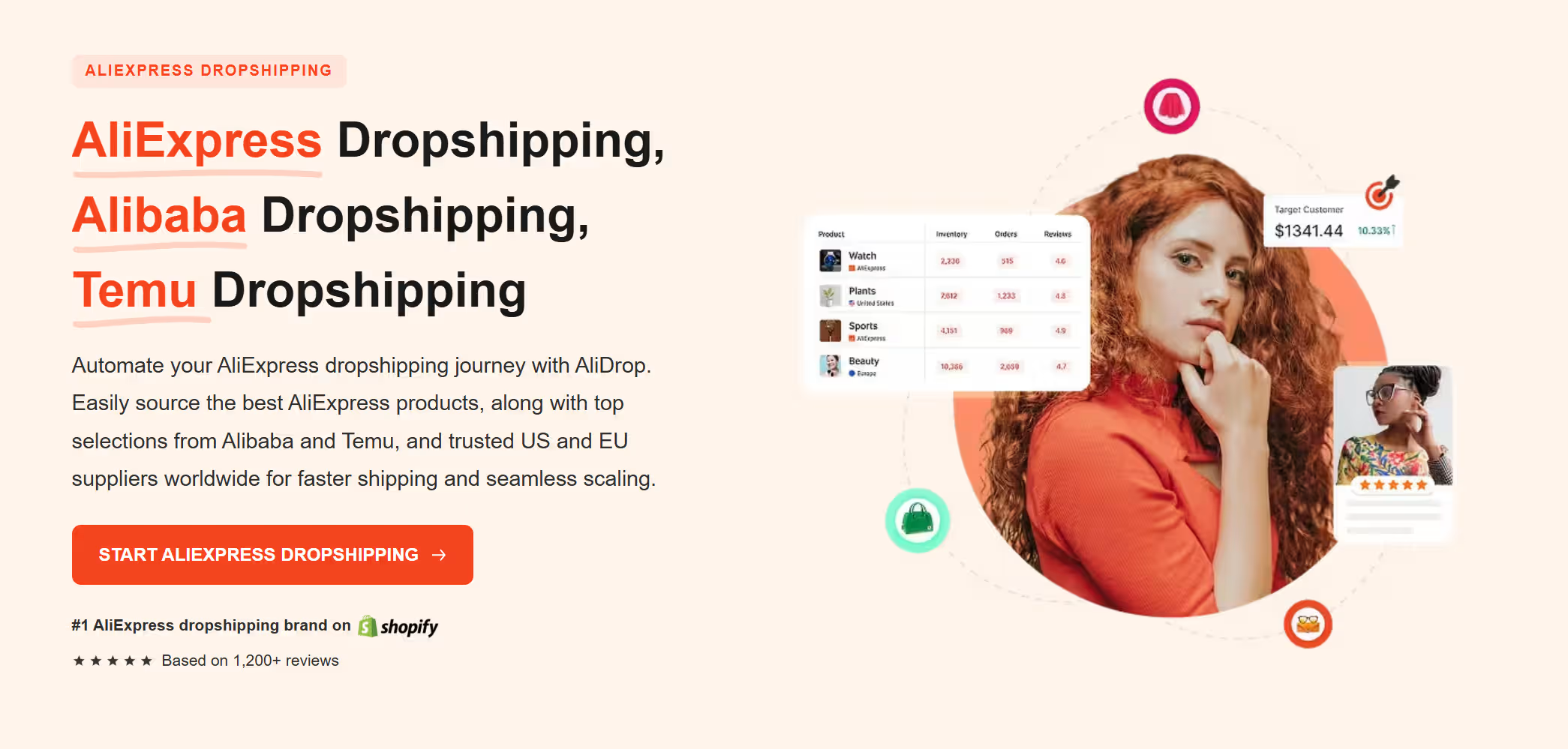
For AliExpress dropshipping, AliDrop helps simplify product sourcing and store management by making it easier to import products and manage product listings. This can save time, especially when testing new items or building niche collections.
Still, do not rely only on supplier claims. Order samples for important products when possible. Testing products helps you check quality, create original content, understand packaging, and write better product descriptions.
A future-proof store does not sell products blindly. It curates products with intention.
4. Differentiate Your Product Pages
Many dropshipping stores use the same supplier images, descriptions, titles, and product benefits. This makes them look copied and lowers trust.
Your product page should make the item feel easier to understand and more valuable. Even if other stores sell a similar product, your page can stand out through better copy, clearer visuals, stronger FAQs, and more useful buying guidance.
Improve your product pages by adding:
- Clear benefit-focused titles
- Original product descriptions
- Better image sequencing
- Use-case examples
- Size and compatibility details
- FAQs
- Shipping information
- Care instructions
- Bundle suggestions
- Trust badges where relevant
Avoid generic phrases like “high quality” or “must-have product” unless you explain what they mean. Customers want specifics.
For example, instead of writing “This organizer is perfect for travel,” explain how it helps separate toiletries, prevents small items from getting lost, and fits easily inside a suitcase or carry-on.
A better product page reduces doubt. It also makes your store harder to compare directly with competitors.
5. Create Offers Competitors Cannot Easily Copy
If your only offer is one product at one price, competitors can copy it quickly. A better approach is to create offers that combine products, education, service, and positioning.
Offers can include bundles, kits, guides, discounts, email bonuses, or niche-specific collections.
Examples include:
- New puppy starter kit
- Work-from-home desk setup bundle
- Travel packing essentials set
- Skincare tool routine bundle
- Small apartment organization kit
- Car cleaning essentials pack
- Fitness recovery starter kit
Bundles help increase average order value and make your store feel more curated. They also make price comparison harder because customers are no longer comparing one identical item.
You can also add value through content. A travel accessories store could offer a free packing checklist. A pet store could offer a puppy care guide. A fitness store could offer a beginner home workout plan.
These small additions make the shopping experience feel more complete.
6. Use Content Marketing to Build Organic Demand
Paid ads can help you test products, but relying only on ads makes your business fragile. If ad costs rise or performance drops, your sales can slow overnight.
Content marketing gives your store a longer-term growth channel. Blog posts, buying guides, tutorials, comparison articles, short videos, and emails can attract customers before they are ready to buy.
Good content helps your store rank for search terms, educate buyers, and build trust.
Useful content ideas include:
- Best products for a specific problem
- How-to guides
- Product comparison posts
- Mistakes to avoid
- Gift guides
- Beginner guides
- Checklists
- Product care tips
- Niche trend explainers
For example, a home organization store could publish articles on organizing small kitchens, decluttering closets, storage ideas for apartments, and pantry organization tips. Each article can link naturally to relevant products.
Content also helps you escape saturation. Instead of competing only on ads, you build authority around your niche.
7. Improve Customer Experience Before and After Purchase
Customer experience is one of the easiest ways to stand out in a crowded dropshipping market. Many stores focus only on getting the sale, then ignore what happens after checkout.
A future-proof store should make the entire process feel smooth, clear, and trustworthy. Improve customer experience by focusing on:
- Clear shipping expectations
- Easy-to-understand product pages
- Fast customer support
- Helpful order updates
- Simple return policies
- Honest product claims
- Mobile-friendly store design
- Post-purchase emails
- Product usage tips
Even small improvements can make a difference. A customer who receives clear updates and helpful support is more likely to trust your store, even if shipping takes longer than expected.
Post-purchase communication is especially important. Send emails that explain how to use the product, how to care for it, or what related products may help.
A satisfied customer is more valuable than a one-time sale. They can return, leave reviews, refer friends, and engage with your brand again.
8. Use Data to Spot Saturation Early
A future-proof dropshipping business does not rely on guesswork. You need to track performance so you can see when a product, ad, or niche is becoming harder to scale.
Saturation often shows up in your numbers before it becomes obvious. Watch for signs like:
- Rising ad costs
- Falling conversion rates
- Lower click-through rates
- More competitors selling the same item
- Increased refund requests
- Lower profit margins
- Repeated customer objections
- Declining organic engagement
If a product starts weakening, do not panic. Look for ways to reposition it, improve the offer, update creatives, create bundles, or test a related product.
For example, if a single kitchen gadget becomes crowded, you could shift toward a full “small kitchen tools” collection. If a beauty tool is overused in ads, you could create educational content around routines, care tips, or comparisons.
Data helps you adapt before your store loses momentum.
9. Diversify Traffic Channels
Relying on one traffic source is risky. If your entire store depends on one ad platform or one viral video, your growth can disappear quickly.
A more resilient dropshipping business uses multiple channels. You do not need to master all of them at once, but you should gradually build a mix.
Useful traffic channels include:
- SEO
- Blog content
- Short-form video
- Email marketing
- Influencer partnerships
- Affiliate marketing
- Social media communities
- Paid ads
- Retargeting campaigns
- Marketplace traffic
Each channel plays a different role. SEO builds long-term discoverability. Email improves repeat sales. Short-form video helps with product discovery. Influencers add trust. Paid ads help test and scale.
Start with two or three channels that match your niche. For visual products, short-form video may be essential. For problem-solving products, SEO and blog content can work well. For lifestyle products, influencers can help create trust faster.
Diversification protects your business from sudden changes.
10. Keep Testing New Products Within Your Niche
Future-proofing does not mean sticking with the same products forever. It means testing new products without losing your brand focus.
Your niche should guide your product testing. If your store serves new pet owners, test products that match that audience. If your store focuses on home office comfort, test accessories that improve workspaces.
Smart product testing includes:
- Watching customer questions
- Reviewing search trends
- Checking competitor gaps
- Testing small batches of products
- Creating landing pages
- Running small ad tests
- Promoting products through email
- Comparing product page performance
Avoid chasing every viral item. A random trending product may bring short-term sales, but it can confuse your brand if it does not fit your audience.
The best product tests feel like natural extensions of your store. They help customers solve related problems and give you more ways to increase order value.
11. Build Retention Into Your Store
Many dropshipping stores focus only on new customers. That makes growth expensive because every sale depends on fresh traffic.
Retention helps protect your store from saturation because it increases the value of each customer. If customers return, you do not need to rely only on new visitors.
Build retention through:
- Email campaigns
- Loyalty offers
- Product bundles
- Helpful post-purchase content
- Seasonal collections
- Personalized recommendations
- Reorder reminders
- Review requests
- Exclusive discounts
Some niches naturally support repeat purchases, such as beauty, pet care, fitness, home supplies, accessories, and hobby products. But even non-consumable products can support repeat buying if you create complementary collections.
For example, someone who buys a travel organizer may later buy packing cubes, luggage tags, toiletry bags, or compression bags.
Retention turns your store from a one-time product seller into a brand customers revisit.
Conclusion
Market saturation is real, but it does not mean dropshipping is over. It means low-effort stores have less room to succeed.
To future-proof your dropshipping business, focus on what competitors cannot copy easily: your niche positioning, brand voice, product curation, customer experience, content strategy, and ability to adapt. Do not rely on one product, one ad, or one trend.
Build a store that solves real problems for a specific audience. Source better products, create stronger offers, improve product pages, and use content to bring in customers organically.
With a focused strategy and support from AliDrop, dropshippers can move beyond short-term product chasing and build stores that are more resilient against market saturation.
FAQs zur Zukunftssicherung Ihres Dropshipping-Geschäfts
Ist Dropshipping mittlerweile zu gesättigt?
Dropshipping selbst ist nicht das Problem. Was gesättigt wird, sind generische Produkte, kopierte Shops und überstrapazierte Marketingansätze. Shops mit klaren Nischen, starkem Branding, zuverlässigen Lieferanten und einem besseren Kundenerlebnis können immer noch mithalten.
Wie vermeide ich gesättigte Dropshipping-Produkte?
Vermeiden Sie es, Produkte nur deshalb auszuwählen, weil sie viral sind. Suchen Sie nach Artikeln, die mit langfristigen Bedürfnissen, wiederkehrenden Käufen, Nischen-Communities oder spezifischen Kundenproblemen verbunden sind. Prüfen Sie auch, ob Sie das Angebot mit Bundles, Inhalten oder einer besseren Positionierung verbessern können.
Welche Nischen eignen sich besser für langfristiges Dropshipping?
Nischen mit anhaltender Nachfrage funktionieren in der Regel besser. Beispiele hierfür sind Haustierprodukte, Home Organization, Beauty-Tools, Fitness-Accessoires, Babyprodukte, Reiseprodukte, Hobbyartikel und Work-from-Home-Accessoires.
Wie kann ich meinen Dropshipping-Shop hervorheben?
Konzentrieren Sie sich auf Branding, Produktauswahl, bessere Produktseiten, originelle Inhalte, klaren Kundensupport und hilfreiche Kaufberatung. Ein Shop, der nützlich und vertrauenswürdig wirkt, ist schwerer zu ersetzen als eine generische Produktliste.
Sollte ich immer noch bezahlte Anzeigen für Dropshipping nutzen?
Ja, bezahlte Anzeigen können immer noch beim Testen und Skalieren helfen, sollten aber nicht Ihre einzige Traffic-Quelle sein. Kombinieren Sie Anzeigen mit SEO, E-Mail-Marketing, Kurzvideos, Influencer-Inhalten und organischen sozialen Medien.


%201.svg)