

For years, you could ship cheap products straight from overseas suppliers to your customers and skip import duties entirely, as long as each parcel stayed under a set value. That loophole is what made low-cost dropshipping so easy to start. It is now gone.
The rule that let small, low-value parcels enter duty-free has been pulled, so blind shipping direct from overseas now runs into duties, carrier fees, and customs holds. The cheap-product, slow-shipping playbook no longer pays.
You do not have to quit, though. The model still works if you change how you source, ship, and brand. Below, you'll see what changed, why, and the exact moves that keep a store profitable afterward.
What Is AliExpress Dropshipping?
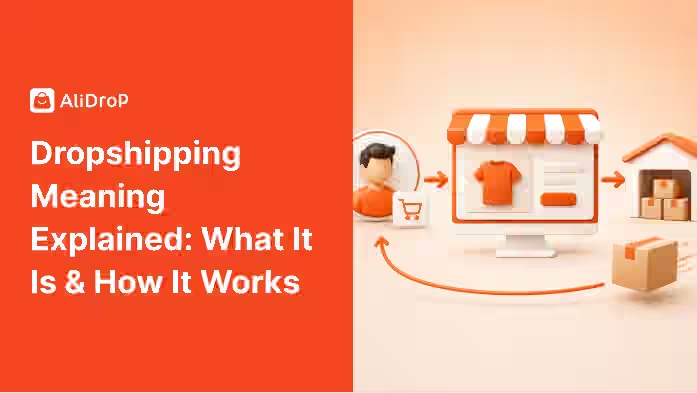
AliExpress dropshipping is a way to run an online store without holding any stock. You list products from AliExpress suppliers in your own shop, set your own price, and only buy the item once a customer orders. The supplier then ships it, often straight to your customer, so you never touch inventory or packing.
It became popular because the startup cost is low and the product range is huge. You can test many products without buying them upfront, which makes it a low-risk way to start selling. The catch is that you depend on the supplier for quality and shipping speed, and on the import rules that decide what each parcel costs to bring across a border. Those import rules are exactly what changed.
How Does AliExpress Dropshipping Work?
The process is simple, which is part of why so many people start with it.
You set up a store, usually on Shopify, then import products from AliExpress with their photos and descriptions. You mark up the price to cover your costs and profit. When a customer buys, you order the product from the supplier, who ships it to the customer under your store name.
Here is the basic flow:
- Pick and import products: Choose items from AliExpress suppliers and add them to your store with prices you set.
- Market the store: Run ads or content to bring buyers to your product pages.
- Receive an order: A customer pays your retail price at checkout.
- Forward it to the supplier: You buy the item at the supplier's price and send your customer's address.
- Supplier ships it: The product goes to your customer, and you keep the margin between the two prices.
For a long time, the math worked because the product was cheap and the parcel crossed the border duty-free. You could sell a low-cost item, ship it slowly from overseas, and still profit. That setup is what import changes have broken, which is why the next section matters.
How Is AliExpress Dropshipping Changing After the End of the De Minimis Rule?
De minimis is the customs rule that let low-value parcels enter a country duty-free, below a set value limit. It is the quiet engine that made cheap, direct-from-overseas dropshipping profitable for years. Major markets have now suspended or removed it, and that single change rewrites the math for AliExpress dropshipping in 2026.
In the United States
The United States suspended its $800 de minimis exemption, first for China and Hong Kong in 2025, then for every other country a few months later. By 2026, customs authorities made that suspension indefinite across all shipping modes, including international mail.
Now every commercial parcel, however small, needs a formal customs entry, a 10-digit HTS product code, and full duties, plus any extra tariffs tied to where the product is made. Many postal services worldwide even paused US-bound parcels while they built systems to collect the new charges, and the flow of small parcels into the country dropped sharply. A cheap item that once crossed free can now carry a real duty bill on every order.
In the European Union
The European Union is removing its €150 duty-free threshold for low-value parcels starting in July 2026. In its place, an interim flat duty of €3 per item applies to consignments under €150 sent to EU shoppers, and it is charged to the seller or importer rather than collected from the buyer at delivery.
A separate handling fee is expected later in 2026, and new product data requirements kick in toward the end of the year. By around 2028, the interim duty gives way to full duties based on each product's classification, run through a new digital customs system. Import VAT, already required on all goods since 2021, still applies on top.
What This Means for AliExpress Dropshipping?
The message across both markets is the same: the era of price arbitrage is over. Selling a cheap, unbranded product shipped slowly and directly from AliExpress no longer clears customs cheaply or quickly.
Every direct parcel now risks duties, carrier fees, and clearance delays that eat thin margins and frustrate buyers. The shift reaches beyond these two markets too, with the United Kingdom moving to remove its own low-value relief and other countries reviewing their thresholds. The sellers who keep winning are the ones who change how they source and ship.
2026 Survival Guide: AliExpress Dropshipping After the De Minimis Rule Ended
AliExpress dropshipping is not dead, but it now demands a smarter setup than blind, direct shipping. The duties and fees only sink stores that keep running the old playbook. Here is how to stay profitable now that the de minimis rule has ended.
1. Move Fulfillment Closer to Your Customers
The biggest fix is to stop shipping every order one by one across a border. Instead, buy your proven products in bulk, send them to a warehouse inside your customer's region, and ship locally from there. One bulk shipment clears customs once, and local delivery takes days instead of weeks.
Tools like Alidrop make this easier by connecting your store to suppliers beyond China. You can source from its network of best US and EU suppliers, which ship from inside those markets and sidestep the per-parcel customs that now hit direct overseas orders.
2. Use Dropshipping to Validate Winners First
Dropshipping is now best used as a testing tool, not the whole business. You list a product, run a small amount of traffic, and see what actually sells before you spend money on stock. That keeps your risk low while you hunt for a winner.
The Alidrop marketplace helps here by showing trending, high-converting products you can test fast. Once an item proves itself with real orders, you move it into bulk and local fulfillment instead of shipping it parcel by parcel.
3. Buy in Bulk and Consider Private Label
Once a product sells, ordering it in volume cuts your per-unit cost and lets you ship it from a local warehouse. Bulk also opens the door to private label, where you put your own branding on the product so it stops looking like a generic listing.
For larger orders and custom production, you can source through Alibaba suppliers, who handle bulk runs and custom packaging. Owning the branding is also what lets you charge enough to cover the new duties and still keep a healthy margin.
4. Build a Real Brand, Not a Generic Store
Higher costs only work when customers see real value, and that comes from a brand they trust. A clean store, a clear niche, custom images, and genuine reviews turn a one-time buyer into a repeat one, which matters more now that each sale costs more to win.
You can start up a branded store fast with an AI Shopify store builder, then fill product pages using an AI product description writer that drafts listings you edit in your own voice. The point is to look like a real company, not a reshipped catalog.
5. Diversify Where You Source
Leaning on one country for every product is now a risk, since duties and rules can shift by origin. Spreading your sourcing across regions keeps you flexible and helps you find faster, closer options for each item.
Beyond AliExpress and Alibaba, you can also pull trending products through Temu suppliers and compare shipping options before you commit. The aim is to match each product to the supplier that ships it fastest and cheapest to your market.
6. Get Your Customs Data Right
Accurate paperwork is now part of the job, not an afterthought. Missing or wrong data causes holds, delays, and penalties that cost far more than getting it right the first time.
For every product you ship across a border, line up:
- HTS or HS codes: The correct classification code sets the duty rate, so a wrong code means wrong charges or a stuck parcel.
- Clear product descriptions: Vague labels like "accessories" raise flags, while precise descriptions clear faster.
- Identifiers like SKU and EAN or UPC: Standard product codes help customs match and process your goods without guesswork.
7. Be Upfront About Duties and Total Cost
Surprise fees at the door are a top reason customers refuse parcels and leave bad reviews. Show the full landed cost, the product, shipping, duties, and tax, before checkout so there are no shocks on delivery.
You can also decide who pays the duties. Under a delivered-duty-paid setup, you cover duties upfront for a smoother experience, while a delivered-duty-unpaid setup leaves the customer to pay on arrival. Paying them yourself usually means fewer refusals and happier buyers, as long as you price it in.
What to Expect in the Near Future?
The duty-free era is closing for good, not loosening, so plan for a stricter setup ahead. The cheap-and-slow approach has no comeback path, and any pricing that still assumes duty-free entry will keep eroding.
In the United States, the suspension is set to become permanent law, with full elimination of the exemption scheduled for 2027. The European Union's flat interim duty is a bridge, and by around 2028 it gives way to standard duties based on each product's classification, run through a new digital customs system. Extra handling fees are also on the way in the EU.
More markets are heading the same direction. The United Kingdom and others are reviewing or removing their own low-value reliefs, so sourcing and shipping across borders will keep gaining paperwork, not losing it.
The practical result points one way: local stock and fast shipping win. Big overseas platforms are already moving inventory into US and EU warehouses so they can deliver in days, and smaller sellers who do the same will compete on speed instead of losing on slow, dutiable parcels. Customers already treat fast, local delivery as the baseline, so building that now protects you from the next rule change too.
Mistakes to Avoid After the De Minimis Rule Ended
A few habits from the old model now actively hurt you. Steer clear of these:
- Shipping every order direct from overseas: Parcel-by-parcel shipping triggers duties, fees, and delays on each order, which destroys thin margins. Bulk and local fulfillment fix this.
- Undervaluing shipments to dodge duties: Declaring a lower value to cut duties is a serious customs violation that can bring heavy fines, seized goods, or shipping bans. Accurate declarations are the only safe path.
- Selling generic, unbranded products: Without a brand, you compete only on price, and the new costs leave no room to win that way. Branding is what supports a higher price.
- Hiding duties until delivery: Surprise charges at the door drive refusals and refunds. Show the full landed cost before checkout instead.
- Relying on one supplier country: Rules and duties shift by origin, so a single-source setup leaves you exposed. Spread sourcing across regions.
Conclusion
The duty-free shortcut that powered cheap, direct shipping is gone, but the business itself is far from over. What changes is how you operate: source closer to your buyers, ship in bulk to local warehouses, get your customs data right, and build a brand people pay a little more to trust. Treat direct shipping as a way to test products, then move your winners into local stock.
If you want a faster start, you can try Alidrop for free and source from suppliers built for this new setup. Adapt now, and you'll be ready while slower sellers are still stuck.
AliExpress Dropshipping De Minimis FAQs
Is AliExpress dropshipping dead after the de minimis rule ended?
No, but the old version of it is. Shipping cheap products one by one direct from overseas no longer clears customs cheaply, so that exact playbook stops working. The model still earns when you validate products with dropshipping, then sell proven winners from bulk local stock under your own brand. The change is in method, not in whether the business can work.
What is the de minimis rule in simple terms?
De minimis is a customs rule that let low-value parcels enter a country duty-free, as long as they stayed under a set value. It existed to save customs the hassle of charging tiny amounts on small shipments. Major markets have now suspended or removed it, so even small parcels face duties and formal customs steps that they skipped before.
Do I have to pay duties on AliExpress orders now?
In most major markets, yes. Parcels that once entered duty-free now face import duties, and in some cases extra fees, on each shipment. A better option is to ship proven products in bulk to a local warehouse, where one customs entry covers the whole batch. That keeps per-order costs and delays far lower than shipping each parcel across a border.
How can I avoid high duties and customs delays?
You cannot avoid the duties, but you can manage them. Buy winning products in bulk and ship them to a warehouse inside your customer's region, so one shipment clears customs instead of hundreds. Keep your product codes and descriptions accurate to prevent holds, and never undervalue shipments, since that brings fines. Local stock plus clean paperwork is the practical fix.
Can I still use AliExpress for dropshipping?
Yes. AliExpress still works well for finding and testing products before you commit to stock. Use it to validate what sells with small orders, then move proven items into bulk and local fulfillment, or to suppliers closer to your market. Treating it as a research and testing source, rather than your only shipping method, fits the new rules far better.
Why does branding matter more after the de minimis changes?
Because duties and fees raise your costs, you need customers who will pay a bit more, and that comes from trust in a brand. A generic store competes only on price, which no longer leaves room for profit. A real brand, with a clear niche and a good experience, earns repeat buyers and supports the higher price the new costs require.


%201.svg)