

If you’ve searched for dropship Malaysia, you’re already thinking in the right direction.
Malaysia is one of Southeast Asia’s fastest-moving ecommerce markets, and dropshipping is a practical way to enter it without investing heavily in inventory. You can launch quickly, test demand, and start earning without renting storage or buying products upfront. But here’s the reality: dropshipping in Malaysia is not “easy money.”
It’s a business model that works best when you understand:
- which platforms Malaysians actually buy from
- what it costs to start and operate realistically
- how supplier and shipping decisions affect trust
- how to avoid the mistakes that ruin margins
- what marketing strategies work locally
This guide breaks everything down clearly—platforms, costs, tips, and a step-by-step plan that’s actually usable.
Is Dropshipping in Malaysia Worth It?
Yes—dropshipping can work very well in Malaysia, especially when you take a structured approach. The Shopify-focused dropshipping guide for Malaysia highlights why this model is popular: it reduces startup risk because you don’t need to buy inventory in bulk, and you can start small while testing what people actually want to buy.
That alone makes dropshipping appealing to:
- first-time entrepreneurs
- students
- side hustlers
- small business owners
- anyone who wants ecommerce income without large upfront investment
Malaysia’s ecommerce ecosystem supports dropshipping because:
- shoppers are comfortable buying online
- platforms like Shopee and Lazada dominate ecommerce behavior
- logistics options are stronger than before
- social commerce is growing fast (TikTok, Instagram, live selling)
- digital payments are widely used
That said, the market is competitive. Many sellers offer the same products, so your success depends on how well you build trust, differentiate your product page, and deliver a strong buying experience.
How Dropshipping Works in Malaysia (Simple Breakdown)
Dropshipping works like this:
- You create a store or list products on a platform
- You sell products without stocking inventory
- When a customer places an order, you forward it to the supplier
- The supplier ships directly to the customer
- You keep the profit margin
Dropshipping is attractive because it removes the need for storage and inventory purchases, making it easier to start with limited capital while still operating a real ecommerce business.
But what matters most is the system you build around it:
- reliable suppliers
- clear delivery expectations
- customer support workflows
- product selection strategy
- marketing plan
Because even though dropshipping removes inventory, it does not remove responsibility.
Best Platforms for Dropshipping in Malaysia
Dropshipping in Malaysia usually happens through one of three channels:
- standalone ecommerce store platforms
- marketplaces
- social commerce
Each platform has different strengths, costs, and growth potential. Let’s break down what works best for dropship Malaysia sellers depending on goals.
1. Shopify (Best for Building a Long-Term Brand)
Shopify is one of the most popular platforms for dropshipping because it gives you full control.
The Shopify Malaysia dropshipping guide highlights Shopify’s value for beginners because of how simple it is to set up a storefront, integrate apps, and start selling without technical complexity.
Why Shopify works for dropship Malaysia
- full control over branding and design
- professional store experience builds trust
- you own your customer data
- easier upsells, bundles, and repeat sales
- multi-channel selling is possible (social, ads, SEO, email)
Challenges
- monthly subscription cost
- you must drive traffic (ads, SEO, influencers)
- customer support is fully your responsibility
Best for
- founders who want a serious ecommerce brand
- sellers who want to scale beyond Malaysia
- dropshippers who want higher profit margins
- entrepreneurs planning to build an asset long-term
Shopify is a long-term play. It takes more effort early, but gives you more control and higher scalability.
2. WooCommerce (Best for Flexibility and SEO Growth)
WooCommerce is a WordPress-based ecommerce platform. It gives you more flexibility than Shopify but requires more setup.
WooCommerce works well if you plan to build a content-driven store using:
- SEO blogs
- long product guides
- category content
- Google search traffic
Why WooCommerce can work for Malaysia
- no monthly SaaS fee (but you pay hosting)
- strong SEO potential
- custom design flexibility
- scalable with the right setup
Challenges
- requires technical maintenance
- hosting, security, and plugins must be managed
- setup may take longer than Shopify
Best for
- entrepreneurs comfortable with WordPress
- sellers using SEO as a primary growth channel
- long-term ecommerce projects
3. Shopee (Best for Fast Local Sales)
Shopee is one of the biggest ecommerce platforms in Malaysia. Many beginners choose Shopee because:
- it has built-in traffic
- Malaysians already trust the platform
- it’s easier to start without a full website
DHL’s Malaysia platform comparison points out that marketplaces are often the first entry point for new dropshippers because they provide customer traffic and purchasing trust without requiring heavy advertising upfront.
Why Shopee works
- easy to launch quickly
- customers already searching to buy
- platform trust increases conversion
- built-in payment and shipping systems
Challenges
- heavy competition on price
- platform rules can be strict
- you don’t own the customer relationship
- difficult to build a premium brand
Best for
- beginners validating products
- sellers targeting Malaysia locally
- price-sensitive product categories
- faster testing without heavy marketing spend
Shopee is excellent for product validation and early traction.
4. Lazada (Best for Scaling With Marketplace Trust)
Lazada is another dominant marketplace in Malaysia. It’s often seen as slightly more structured than Shopee but offers strong trust and buyer behavior.
Why Lazada works
- high buyer trust
- good infrastructure for scaling
- strong for sellers who want volume
- often supports better brand perception than low-cost platforms
Challenges
- marketplace competition is still high
- onboarding can feel more structured
- pricing pressure exists
Best for
- sellers scaling proven products
- brands wanting marketplace trust
- entrepreneurs focusing on volume
5. Social Selling (TikTok, Instagram, WhatsApp)
Social commerce is massive in Malaysia. Many dropshippers now sell through:
- TikTok Shop and live selling
- Instagram reels
- WhatsApp communities
- Facebook groups
This method works especially well for:
- trending products
- impulse-buy products
- problem-solving products
- visually demonstrable products
Pros
- faster organic exposure when content works
- trust builds through video and creator style
- lower startup cost
- people buy emotionally through social proof
Cons
- consistent content required
- product quality must match expectations
- customer support and returns can become harder if unmanaged
Social selling is often the fastest way to create demand, especially for first-time dropship Malaysia sellers who don’t want to invest heavily in ads early.
How Much Does Dropshipping in Malaysia Cost?
Let’s talk honestly about money. Most dropship Malaysia guides either exaggerate how cheap it is or ignore key costs like marketing and returns.
In reality, your dropshipping costs fall into these buckets:
- setup costs
- platform costs
- product sourcing and sample testing
- marketing costs
- shipping and operational costs
Let’s break it down properly.
Startup Costs (One-Time)
Domain and branding
Even if you start on marketplaces, having a proper brand name and identity helps.
Costs may include:
- domain name
- logo and store visuals
- product photo templates
- basic brand guidelines
Store setup tools
If you use Shopify or WooCommerce:
- theme (free or paid)
- apps/plugins (optional)
- email setup and basic pages (privacy, refund policy, terms)
If you sell on Shopee or Lazada:
- setup is minimal, but product listing quality becomes your main “cost” in effort.
Monthly Operating Costs
Platform subscription and fees
- Shopify has a monthly subscription
- WooCommerce requires hosting and optional plugin costs
- Shopee and Lazada have selling fees, platform rules, and sometimes promotion costs
Tools and automation
Optional but common costs include:
- product import tools
- email marketing tools
- analytics tools
- customer support tools
You can start lean and add tools only once revenue grows.
Marketing Costs (Where Most Beginners Fail)
This is the biggest cost category—and the most important. If you don’t market, you don’t sell. Common marketing channels in Malaysia:
- TikTok and influencer marketing
- paid ads (Facebook, Instagram, TikTok)
- Shopee/Lazada internal promotions
- SEO blog content (for Shopify/WooCommerce)
A smart beginner approach is:
- choose one channel
- master it
- expand later
Trying everything at once is how most stores burn cash.
Shipping & Logistics Costs (Often Overlooked)
Shipping is not just operational—it’s strategic. How important logistics and delivery experience are for customer satisfaction, especially when you’re operating without inventory and relying on shipping partners.
Malaysian buyers care about:
- delivery speed
- tracking updates
- packaging condition
- clear delivery timelines
- easy return communication
Even if your supplier handles shipping, you still own the customer experience.
Shipping Options for Dropshipping in Malaysia
Shipping can make your store profitable or destroy it. Here are the main shipping models:
Supplier Direct Shipping (Global suppliers)
This is common for AliExpress or international suppliers.
Pros
- wide product selection
- low cost per item
- easy testing variety
Cons
- slower delivery
- customer impatience
- higher risk of lost packages
- return handling is harder
If you’re using global suppliers, you must set honest delivery expectations.
Local Supplier Dropshipping (Malaysia-based suppliers)
Pros
- fast delivery
- stronger customer trust
- easier returns
- better customer satisfaction
Cons
- lower product variety
- sometimes higher product cost
- margin may be tighter
This is often the best approach if you plan to sell primarily to Malaysian customers.
Courier & Logistics Platforms (Flexible shipping support)
Some Malaysian dropshippers use courier aggregation or booking platforms to compare shipping rates and streamline delivery logistics, especially when managing local deliveries.
This can help if you:
- work with local suppliers
- bundle products
- handle some shipping in-house
Best Products to Sell for Dropshipping in Malaysia
The biggest misconception: “Any trending product will work.”
That’s not true. A good dropship Malaysia product must fit:
- Malaysian buying habits
- delivery timelines
- price expectations
- return risk tolerance
- social selling potential
Categories like beauty, health, home essentials, phone accessories, and lifestyle items as common winners.
Strong product characteristics include:
- clear problem-solving benefit
- visual appeal for content marketing
- low risk of damage
- minimal sizing or fit issues
- room for markup after shipping and fees
Product categories that often perform well:
- skincare tools and accessories
- phone accessories
- home and kitchen solutions
- car accessories
- fitness and wellness products
- baby and parenting items
- pet accessories
- home organization products
How to Choose Reliable Suppliers for Dropshipping in Malaysia
Your supplier is your business partner. If your supplier fails, you fail.
DHL’s Malaysia dropshipping comparison highlights supplier reliability and logistics as core decision factors when choosing platforms and building a sustainable dropshipping model. Use this checklist:
Shipping reliability
- delivery speed to Malaysia
- tracking availability
- courier consistency
- lost package rate
Product quality consistency
- real product photos
- packaging standards
- quality matching product description
- reliable manufacturing or sourcing
Communication
- response speed
- stock updates
- willingness to solve issues
Returns handling
- refund process
- replacement policy
- dispute resolution reliability
Scalability
- can handle more orders as you grow
- stable inventory supply
- ability to restock fast
The best tip: place a sample order first. If you wouldn’t be happy receiving the product yourself, don’t sell it.
Legal and Business Considerations in Malaysia
Dropshipping is legal in Malaysia. But if you want to scale, treat it like a real business:
- keep transaction records
- follow marketplace rules
- be honest about delivery and returns
- register your business when revenue becomes consistent
- avoid misleading product claims
Understanding business fundamentals early helps avoid issues later, especially once sales grow and customer complaints become more frequent.
It’s not complicated—but it’s essential.
How to Start Dropshipping in Malaysia (Step-by-Step)
Now let’s make this actionable.
Choose your platform
Pick based on your goals:
- Shopee if you want quick sales and local validation
- Shopify if you want brand control and long-term growth
- Lazada if you want marketplace scaling
- social selling if you’re confident with content
Pick a niche and product direction
Choose products based on:
- repeatable demand
- profit margin after shipping and fees
- low return risk
- ability to create bundles
- strong content potential
Avoid “random trending products” unless you can test quickly.
Validate before building too much
Validation options:
- list 10–20 products on Shopee and see traction
- post product demo content and measure engagement
- run small budget ads for testing
- check marketplace demand and reviews
The goal is proof before expansion.
Create high-quality listings
A winning listing includes:
- clear product title
- benefits-first description
- clean visuals and angle photos
- delivery timeline clarity
- FAQs for trust
- clear support communication
Set up a basic customer service system
The importance of customer service responsiveness, especially when shipping delays happen or customers ask about delivery.
Simple system:
- reply quickly
- set expectations honestly
- handle complaints with empathy
- keep customers updated proactively
Customer service becomes your brand advantage.
Market using one primary channel
Choose one:
- TikTok and influencer content
- paid ads
- Shopee promotions
- SEO content
- WhatsApp selling groups
Then improve that channel before adding a second.
Scale based on data, not emotions
Scale means:
- increase conversion rate
- increase average order value
- reduce refunds and disputes
- improve shipping reliability
- build repeat customers
Not “list more products.”
Practical Tips That Actually Work for Dropship Malaysia Sellers
Let’s get into the strategies that make the biggest difference.
Build trust before trying to scale
In Malaysia, trust drives conversion. You build trust through:
- accurate product descriptions
- honest shipping expectations
- clean branding
- consistent customer support
- good reviews and social proof
This matters more than clever ads.
Don’t compete purely on price
Price wars destroy margins. Instead, differentiate using:
- better product bundles
- cleaner listing visuals
- stronger product explanation
- better customer experience
- better post-purchase communication
Use short-form video for faster sales
Short-form product demo videos outperform static images for many categories. Simple formats:
- before/after
- problem/solution
- quick “how it works”
- unboxing style
- customer review style
Video builds trust faster than text.
Run structured product testing
Don’t guess. Test with a system:
- pick one product
- create two creatives
- test two audiences
- measure conversion and refund risk
- scale only if performance is stable
This is how serious dropshippers grow reliably.
Keep your business lean early
Start simple:
- one platform
- one niche
- a small product range
- one marketing channel
- one supplier group
Then expand only when the foundation is stable.
Where AliDrop Fits in Dropshipping in Malaysia
If your model includes AliExpress sourcing, your biggest pain points are usually:
- finding reliable suppliers and products
- importing listings efficiently
- managing order workflows
- updating products and inventory cleanly
- reducing operational friction
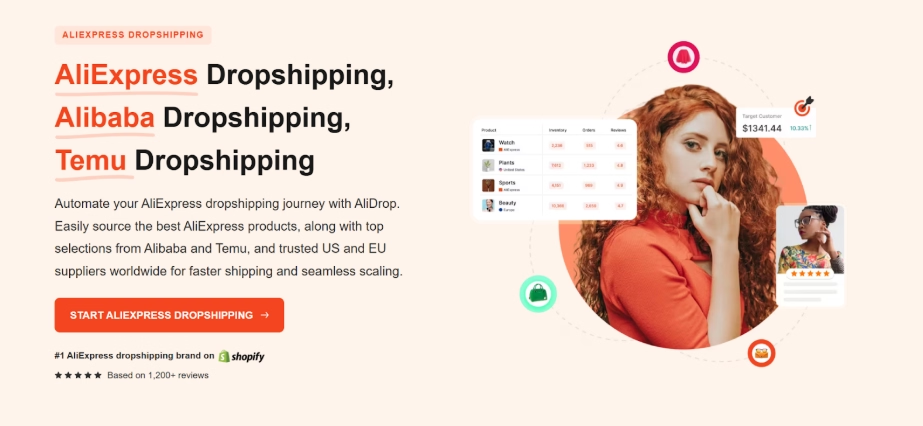
That’s where AliDrop becomes valuable.
AliDrop helps streamline AliExpress dropshipping workflows so you can spend less time on repetitive tasks and more time on what grows your store—product testing, marketing, and optimization.
For many dropship Malaysia sellers, the ability to simplify and speed up operations is what allows them to scale without burnout.
Common Dropshipping Mistakes in Malaysia (Avoid These)
Most dropship Malaysia stores fail for predictable reasons. Avoid these and you’ll already be ahead of most beginners.
Over-promising shipping speed
If shipping takes longer than expected, customers cancel and complain. Best practice:
- under-promise
- over-deliver
Always set realistic delivery expectations.
Choosing products with high return risk
Avoid products that:
- break easily
- have sizing problems
- have unclear quality
- mismatch photos and real product
Returns kill margin and trust.
Using untested suppliers
Always test suppliers with sample orders. If you haven’t received the product yourself, you don’t fully know what you’re selling.
Scaling before building customer support
As sales grow, support volume increases. If you scale without support readiness, you lose reviews and trust quickly.
Not building brand trust
Even if you sell on marketplaces, customers buy from sellers they trust. Better visuals, faster responses, and clear policies make you win.
Conclusion
Dropshipping in Malaysia is a real opportunity, but it only becomes profitable when you approach it with structure. The market supports ecommerce growth, and platforms like Shopee, Lazada, and Shopify make it easier than ever to start selling. But success depends on choosing the right platform, managing costs realistically, selecting reliable suppliers, and delivering an experience that builds customer trust.
If you’re serious about building a long-term dropshipping business, focus on fundamentals: good products, honest shipping timelines, clean listings, and strong customer support. Combine that with a clear marketing strategy and structured product testing, and you’ll create a system that grows steadily instead of relying on luck.
And if your dropshipping model involves AliExpress sourcing, AliDrop helps simplify workflows so you can spend less time on repetitive operations and more time on the actions that grow revenue—product testing, marketing, and store optimization.
Top FAQs About Dropshipping in Malaysia
Is dropshipping legal in Malaysia?
Yes, dropshipping is legal. You must follow marketplace policies, provide accurate product descriptions, and register your business once you begin earning consistently.
Which platform is best for dropshipping in Malaysia?
Shopee is great for beginners and quick local sales. Shopify is best for long-term brand growth. Lazada supports scaling through marketplace trust.
How much money do I need to start dropshipping in Malaysia?
You can start lean, but you need a realistic budget for platform fees, marketing testing, and operational costs like refunds and replacements if issues occur.
Can I do AliExpress dropshipping in Malaysia?
Yes, but supplier quality and shipping speed matter. Using the right tools and having clear delivery expectations is essential to avoid complaints and cancellations.
What products work best for dropship Malaysia?
Problem-solving products with strong visual appeal, low return risk, and reliable supply tend to work best—especially in categories like beauty, lifestyle, home essentials, and accessories.


%201.svg)