

Getting people to trust a new dropshipping store is not easy. Customers may like your product, but they still wonder if your store is reliable, whether the product works as shown, and whether the purchase is worth the money. This is why product reviews and user-generated content matter so much.
For dropshipping stores, micro-influencer marketing can be one of the most affordable ways to build trust. Instead of spending hundreds or thousands on big influencers, you can work with smaller creators who have engaged audiences and are more open to low-budget collaborations.
The best part is that you do not always need a large budget. With the right approach, dropshipping stores can get product reviews, short videos, photos, testimonials, and social proof for under $50 per creator. Sometimes, creators may even accept a free product, affiliate commission, or small performance-based offer.
What Is Micro-Influencer Marketing?
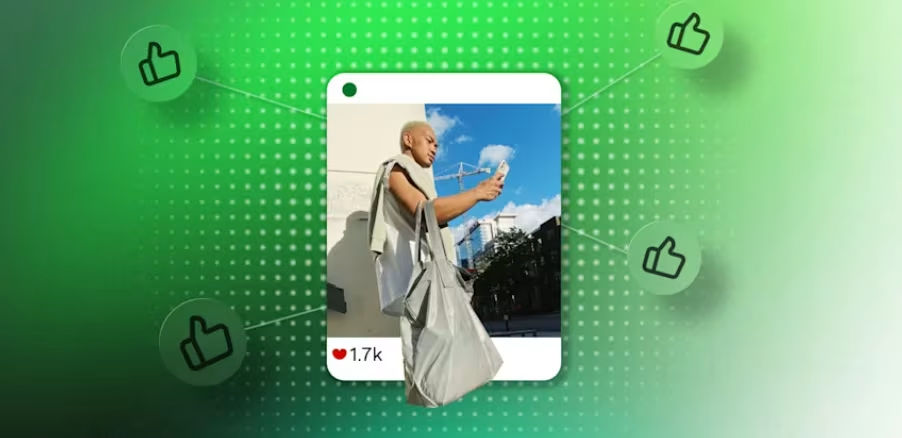
Micro-influencer marketing is the process of partnering with smaller creators who have a focused audience. These creators may not have celebrity-level reach, but they often have stronger relationships with their followers.
For dropshipping stores, this can be more valuable than paying for a large influencer who has broad reach but low buying intent. A pet creator reviewing a grooming tool, a home organizer showing a storage product, or a beauty creator demonstrating a skincare accessory can feel more trustworthy than a generic ad.
Why Micro-Influencers Work for Dropshipping
Micro-influencers work because their content usually feels personal. Their followers often see them as relatable people, not distant celebrities. When they recommend a product, it can feel like a suggestion from a friend rather than a polished advertisement.
This is helpful for dropshipping because customers often need extra reassurance before buying from a new store. A creator review can show the product in use, explain the benefit, and reduce doubts.
Micro-influencers can help dropshipping stores:
- Build trust faster
- Create product review content
- Generate user-generated content
- Test product-market fit
- Improve product pages
- Collect real social proof
- Create content for ads
- Reach niche audiences
- Reduce dependence on cold paid ads
Instead of launching ads with only supplier images, you can use real creator content that feels more authentic.
Micro-Influencer vs Nano-Influencer
Micro-influencers are often described as creators with around 10,000 to 100,000 followers. Nano-influencers usually have smaller audiences, often between 1,000 and 10,000 followers.
For under-$50 product review campaigns, nano and smaller micro-influencers can both be useful. In fact, nano creators may be more open to product-only collaborations, especially if your product fits their content style.
The best creator is not always the one with the biggest audience. A smaller creator with strong engagement and the right niche can be more useful than a larger creator whose followers are not interested in your product.
Why Product Reviews Matter for Dropshipping Stores
Product reviews help customers see that the item is real, useful, and worth considering. In dropshipping, where many stores use similar product images and descriptions, real reviews can make your store feel more credible.
A review from a creator gives shoppers more than a written testimonial. It shows the product being used in a real environment, which helps customers picture themselves using it too.
Reviews Reduce Buyer Hesitation
Customers hesitate when they do not have enough information. They may wonder if the product looks the same in real life, whether the quality is acceptable, or whether the item solves the problem shown in your ad.
Influencer reviews can answer these doubts naturally. A good product review can show:
- The product size
- How it works
- How it looks in real life
- What problem it solves
- Who it is useful for
- How easy it is to use
- Whether the creator genuinely likes it
This type of content is more believable than a product page alone.
Reviews Create Content You Can Reuse
A micro-influencer review is not only useful for the creator’s audience. It can also become content for your own store and marketing channels if you get permission.
You can use creator content on:
- Product pages
- Landing pages
- Social media posts
- Instagram Stories
- TikTok videos
- Email campaigns
- Retargeting ads
- Organic reels
- Product review sections
Always confirm usage rights before repurposing content. A creator may agree to post a review for under $50, but paid ad usage or long-term content usage may require a separate agreement.
Can You Really Get Product Reviews for Under $50?
Yes, but expectations matter. Under $50 usually works best when you target nano-influencers, smaller micro-influencers, beginner creators, or creators who already love the product category.
You may not get a highly polished video package for $50. But you can often get a short review, unboxing clip, photo post, Story mention, or simple user-generated content video.
What Under $50 Can Get You
A low-budget campaign may include:
- One Instagram Story
- One TikTok-style review video
- One short unboxing clip
- Three to five product photos
- A short testimonial
- A product demo
- A simple “before and after” video
- A review in exchange for free product plus small fee
- An affiliate commission offer
The key is to keep the task simple. A creator is more likely to accept a $30 to $50 deal if the deliverable is clear and easy.
What You Should Not Expect
For under $50, you should avoid asking for too much. If your brief feels demanding, creators may ignore it or quote a higher price.
Avoid asking for:
- Multiple edited videos
- Long-form YouTube reviews
- Permanent feed posts from larger creators
- Exclusive rights
- Whitelisting rights
- Professional studio production
- Multiple revision rounds
- Paid ad usage forever
Keep the first collaboration small. If the content performs well, you can offer a better paid partnership later.
How to Find Micro-Influencers for Dropshipping Products
Finding the right creator is more important than finding the cheapest creator. A poor-fit influencer can create content, but it may not bring trust, engagement, or sales.
Start with your product niche. If you sell pet products, look for pet owners, dog trainers, cat creators, or home cleaning creators. If you sell travel accessories, look for travel creators, packing content creators, digital nomads, students, or lifestyle creators.
Search by Niche Hashtags
Hashtags are one of the easiest ways to find small creators manually. Search for hashtags that match your product category, niche, and audience.
Examples include:
- #petmom
- #dogowner
- #catlover
- #homeorganization
- #smallspaceliving
- #travelhacks
- #amazonfinds
- #tiktokmademebuyit
- #beautytools
- #desksetup
- #kitchenfinds
- #momlifehacks
- #budgetfinds
Do not only search broad hashtags. Niche hashtags often reveal smaller creators with more relevant audiences.
Look at Comment Sections
A useful trick is to check the comment sections of larger creators in your niche. Many smaller creators comment on bigger accounts to get visibility. Some of them may be perfect for low-budget collaborations.
Look for people who:
- Create similar content
- Have engaged followers
- Post regularly
- Respond to comments
- Have a clear niche
- Already review products
- Use natural storytelling
This method takes time, but it can help you find creators who are not already flooded with brand deals.
Check Your Own Followers and Customers
If your store already has social followers or customers, start there. Someone who already follows your brand or bought from you is more likely to create authentic content.
Look for followers who:
- Post consistently
- Have a small but engaged audience
- Create content in your niche
- Comment on your posts
- Tag brands or products
- Share lifestyle or review-style videos
These creators are easier to approach because they already have some connection to your store.
How to Vet Micro-Influencers Before Reaching Out
Not every creator with followers is worth working with. Before offering a product or payment, check whether their audience is real, relevant, and engaged.
The goal is to avoid fake followers, inactive audiences, and creators who do not match your product.
Check Engagement Quality
Do not judge creators only by follower count. Engagement quality matters more. Look for:
- Real comments, not only emojis
- Followers asking questions
- Creator replying to comments
- Consistent likes across posts
- Story views if they share them
- Natural conversations
- Recent posts with active engagement
A creator with 5,000 engaged followers can be more useful than one with 50,000 passive followers.
Review Content Style
The creator’s content should match your product. If their page is full of fitness content, a pet product may feel random. If they create home organization videos, a storage product may fit naturally.
Ask yourself:
- Does this product fit their usual content?
- Would their followers care about it?
- Can they show the product naturally?
- Is their video quality acceptable?
- Do they explain products clearly?
- Do they sound trustworthy?
You are not only buying reach. You are borrowing the creator’s trust.
Watch for Red Flags
Avoid creators who show signs of low-quality or fake influence. Red flags include:
- Sudden follower spikes
- Very low engagement
- Repeated generic comments
- Too many unrelated sponsorships
- Poor communication
- No clear niche
- Content that does not match your brand
- Fake-looking likes or comments
- Refusal to share basic performance details
A cheap influencer is not a good deal if the content does not help your store.
How to Pitch Micro-Influencers on a $50 Budget
Your outreach message should be short, personal, and easy to understand. Do not send long generic messages that look copied and pasted.
Creators receive many poor outreach messages. A personalized pitch stands out.
What to Include in Your Pitch
A good outreach message should include:
- The creator’s name
- A genuine reason you like their content
- The product you want to send
- What you are asking for
- What they receive
- A simple next step
- Your brand/store name
Keep the offer clear. If your budget is under $50, say what you can offer politely.
Example Outreach Message
Hi [Name], I loved your recent video about [specific topic]. Your content feels really practical, and I think our [product name] could fit naturally with the kind of tips you share.
We are looking for a few creators to test the product and share an honest short review. We can send the product for free and offer $40 for one short video or Story review.
Would you be open to taking a look? I can send the product details and example brief if it feels like a fit.
Thank you,
[Your Name]
This message is simple, respectful, and clear. It does not overcomplicate the offer.
Offer Product Plus Small Payment
For low-budget campaigns, product plus payment usually works better than cash alone. A creator may accept $30 to $50 if the product is useful, interesting, and aligned with their audience.
You can structure the offer as:
- Free product plus $25 for one Story
- Free product plus $40 for one short review video
- Free product plus $50 for one unboxing and testimonial
- Free product plus affiliate commission
- Free product plus discount code commission
If the creator asks for more, you can negotiate fewer deliverables instead of forcing the price down.
What to Ask for in a Product Review
The best low-budget reviews are simple, natural, and easy for the creator to produce. Do not over-script the content. If it feels too controlled, it may lose authenticity.
Give the creator a clear brief, but allow them to speak in their own style.
Simple Deliverables That Work
For under $50, ask for one clear deliverable. Good options include:
- One 15 to 30-second TikTok-style video
- One Instagram Story review
- One short unboxing clip
- Three product photos
- One before-and-after demo
- One testimonial video
- One “how I use it” clip
If you ask for too much, the creator may reject the offer or deliver lower-quality content.
What the Review Should Cover
A useful review should show the product clearly and explain why it matters. Ask the creator to include:
- What the product is
- How they use it
- What problem it solves
- What they liked
- Who it is useful for
- A natural call to action
- Any honest notes or limitations
Do not ask creators to make false claims. Honest reviews are more believable and safer for your brand.
How to Use Micro-Influencer Content in Your Dropshipping Store
Once you receive content, do not let it sit in your inbox. Use it strategically across your store and marketing channels. Micro-influencer content can improve trust, product pages, social proof, and ad creatives.
Add Reviews to Product Pages
A creator review can make your product page feel more real. Add a short quote, product photo, or review video near the product description or review section.
For example: “Loved how easy this was to use on my sofa and car seats. It picked up more pet hair than my regular lint roller.”
This kind of review feels specific and practical.
Use Content for Organic Social Posts
Post creator content on your own social channels if you have permission. It can help your store look active and trustworthy.
Use it for:
- Reels
- Stories
- TikTok posts
- Pinterest idea pins
- YouTube Shorts
- Product highlight posts
Add simple captions that explain the product benefit and invite people to visit your store.
Test Winning Content in Ads Later
If a creator review gets good organic engagement, you can consider using it as ad creative. But make sure you have written permission for paid usage.
Paid usage rights are different from organic posting. Some creators charge extra for ads because their face, voice, and content are being used to sell beyond their own audience.
How to Track Results From Under-$50 Campaigns
Even small influencer campaigns should be tracked. If you do not measure results, you will not know which creators, products, or content styles are worth repeating.
Keep tracking simple at first.
Use Discount Codes and Links
Give each creator a unique discount code or link. This helps you understand which creator sent traffic or sales.
For example:
- SARA10
- PETLOVER15
- TRAVELHACKS10
- EMILYFINDS
Track code usage, clicks, sales, and customer behavior. Even if sales are low, you may still learn which content angles attract attention.
Measure More Than Sales
Early influencer campaigns are not only about immediate revenue. They also help you gather content, reviews, and product feedback.
Track:
- Content quality
- Engagement
- Comments
- Website visits
- Add-to-cart activity
- Conversion rate
- Creator communication
- Audience fit
- Cost per usable asset
A $40 review that gives you a strong video for your product page may still be valuable even if it does not bring instant sales.
Mistakes to Avoid With Low-Budget Influencer Marketing
Low-budget influencer marketing can work well, but only if you manage it properly. Many dropshippers waste time by working with poor-fit creators or asking for too much.
A small budget requires a smarter process.
Choosing Based Only on Follower Count
Follower count does not guarantee sales. A creator with 8,000 engaged followers may perform better than one with 80,000 inactive followers. Focus on audience fit, content quality, and real engagement.
Sending Generic Outreach
Generic messages get ignored. Personalize your pitch with one or two details about the creator’s content. It shows that you actually reviewed their profile.
Not Confirming Usage Rights
If you want to use the content on your product page, social media, or ads, confirm that before the creator starts. Otherwise, you may not legally or ethically be able to reuse it.
Over-Scripting the Review
A review should sound natural. Give creators key points, but let them speak in their own voice. Over-scripted content feels like an ad and may perform poorly.
Conclusion
Micro-influencer marketing is one of the most practical ways for dropshipping stores to build trust without spending a huge budget. You do not need celebrity creators or expensive campaigns to get useful product reviews. With the right outreach, niche targeting, and simple deliverables, you can often get review content for under $50.
The key is to choose creators carefully. Look for audience fit, real engagement, natural content style, and clear communication. Keep the collaboration simple, offer a free product plus a small payment, and make sure you have permission to use the content where you need it.
For AliDrop sellers, micro-influencer reviews can help turn basic AliExpress products into more trustworthy offers. Use creator content to validate demand, improve product pages, strengthen social proof, and prepare better ad creatives.
FAQs About Micro-Influencer Marketing for Dropshipping Stores
How can dropshipping stores find micro-influencers on a small budget?
Dropshipping stores can find micro-influencers by searching niche hashtags, checking comment sections of larger creators, reviewing their own followers, and looking for creators who already post product reviews. Focus on audience fit and engagement quality instead of follower count alone.
Can I get influencer product reviews for under $50?
Yes, many nano and smaller micro-influencers may accept under-$50 collaborations, especially if the product fits their niche. You can offer a free product plus a small payment for one short review video, Instagram Story, product photo, or unboxing clip.
What should I ask a micro-influencer to include in a product review?
Ask the influencer to show the product clearly, explain how they use it, mention the problem it solves, share what they liked, and include a natural call to action. Keep the brief simple so the review feels authentic and not overly scripted.
Are micro-influencer reviews useful for dropshipping ads?
Yes, micro-influencer reviews can be useful for ads if you get permission to reuse the content. Creator videos often feel more natural than polished brand ads and can be tested later as social proof, retargeting content, or product demo creatives.
How can AliDrop sellers use micro-influencer content?
AliDrop sellers can use micro-influencer content on product pages, social media, email campaigns, and ad creatives. Reviews can help make AliExpress-sourced products feel more trustworthy, validate product demand, and improve buyer confidence before scaling.


%201.svg)