


Saba Mohebpour has already built one of the most recognisable names in the Shopify dropshipping ecosystem. Now, he is turning that experience into something bigger.
After scaling Spocket into a major ecommerce platform, Saba is moving from founder to strategic investor through ILA Capital. His new focus is clear: acquire profitable Shopify and Amazon apps that power the next generation of online stores.
With a $50 million acquisition strategy, Saba is not simply investing in software. He is backing the infrastructure behind modern e-commerce.
That move shows sharp market timing. Shopify merchants today do not run their stores with Shopify alone. They depend on apps for sourcing, reviews, upsells, customer support, shipping, analytics, AI automation, and fulfilment. These tools are no longer optional add-ons. They are the engine behind serious e-commerce growth.
Saba understands that engine better than most because he has already built it inside.
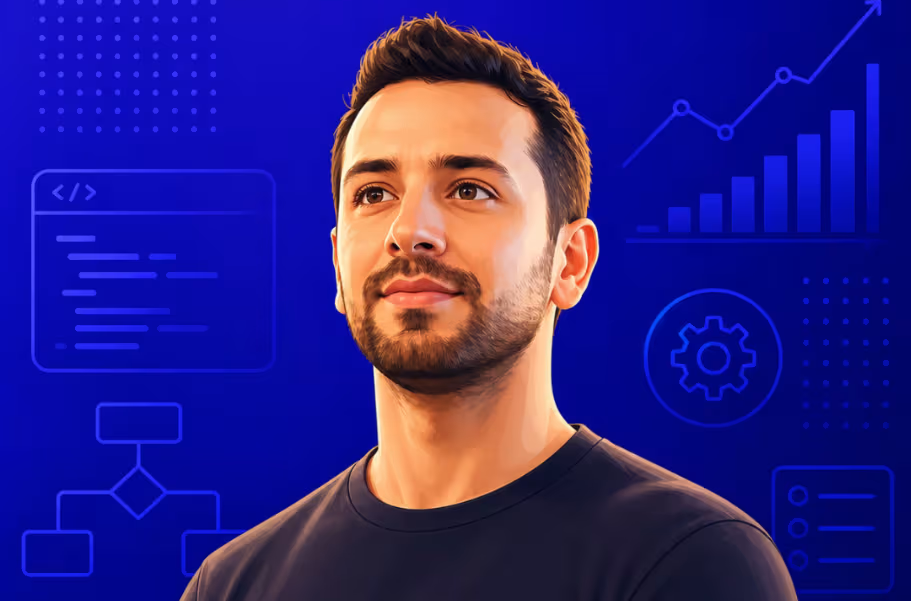
Why Saba’s Acquisition Strategy Makes Sense
Great e-commerce SaaS businesses often share a few traits. They solve painful merchant problems, generate recurring revenue, earn user loyalty, and become part of daily workflows.
Once a merchant depends on an app, replacing it is inconvenient. If an app stores customer reviews, powers product imports, manages fulfilment, or drives extra revenue, it becomes hard to remove.
That stickiness creates long-term value.
This is where Saba’s approach feels especially smart. Many Shopify apps are built by small teams or solo founders. Some already have product-market fit and steady revenue, but they lack the resources to scale further. With better operations, stronger marketing, improved onboarding, and product upgrades, these apps can become significantly more valuable.
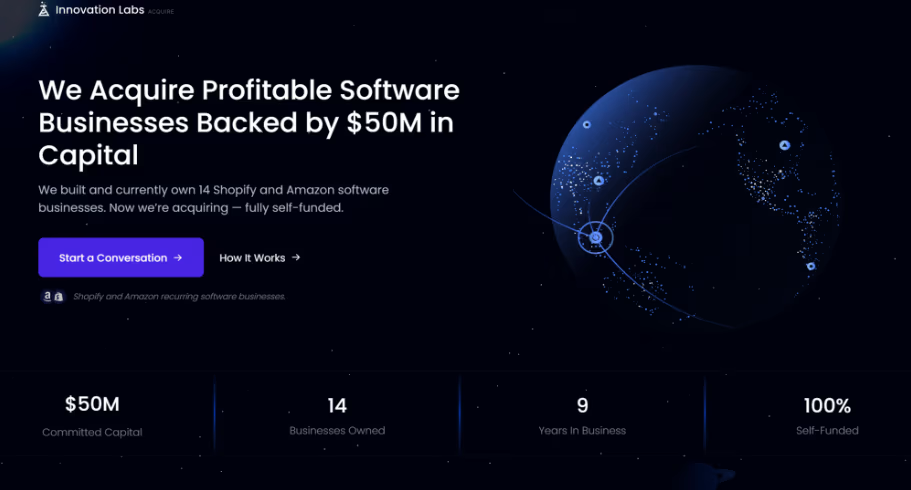
For founders, ILA Capital offers a real exit path. For merchants, it can mean better-supported tools. For Saba, it creates a portfolio of e-commerce assets built around proven demand.
From Founder to Ecommerce Operator-Investor
What makes Saba’s strategy powerful is not just the capital behind it. It is the operating experience behind the capital.
Building Spocket gave him direct insight into what merchants actually need. Dropshipping sellers care about faster shipping, reliable suppliers, better margins, automation, branding, support, and scalability. These are not theoretical problems for Saba. He has spent years solving them.
That gives him an edge many investors do not have.
A traditional buyer may look at revenue, churn, and margins. Saba can go deeper. He can understand why merchants install an app, whether it solves a real pain point, how sticky it is, and whether it can become more valuable with better product, support, distribution, or AI features.
That operator mindset is what makes his acquisition strategy stand out.
Why Shopify Apps Are the New Ecommerce Infrastructure
The Shopify app ecosystem has become one of the most important layers in e-commerce.
A store may start with a product and a theme, but growth requires more. Merchants need tools to increase conversions, automate workflows, manage suppliers, improve customer experience, recover carts, analyse sales, and scale operations.
That is why Shopify apps have become part of the infrastructure.
A review app builds trust. An upsell app increases average order value. A sourcing app helps merchants find and import products. An AI tool writes product descriptions, support replies, and ad copy. A shipping app improves the post-purchase experience.
Together, these apps form the operating system for modern e-commerce businesses.
Saba’s strategy recognises this shift early. Instead of chasing one ecommerce trend, he is targeting the software layer that supports thousands of merchants across many categories.
AI Makes the Opportunity Even Bigger
AI is adding another layer to this opportunity.
Merchants now need faster product research, better content, automated customer support, smarter pricing, image editing, inventory forecasting, and workflow automation. But most do not want to build AI systems from scratch. They want AI built directly into the apps they already use.
That makes e-commerce software even more valuable.
A sourcing app can recommend winning products. A reviews app can summarise customer sentiment. An email app can generate campaigns. A support app can answer common questions. An analytics app can turn store data into clear actions.
Saba’s background gives him a strong advantage here, too. Because he understands merchant workflows, he is well-positioned to identify where AI can create practical value instead of becoming another overhyped feature.
What This Means for Ecommerce Founders
Saba’s $50 million strategy sends a strong message to Shopify app builders and ecommerce SaaS founders: focused, profitable software matters.
You do not need to build the next Shopify to create a valuable company. A simple app that solves one painful problem extremely well can become a serious acquisition target.
Founders should focus on building products that merchants truly rely on. Apps that save time, increase revenue, reduce risk, improve support, or automate repetitive work are the ones buyers value most.
Clean code, low churn, strong reviews, reliable support, and clear documentation also make a business more attractive. In other words, the best acquisition targets are not just apps with revenue. They are apps with staying power.
Conclusion
Saba Mohebpour’s move into Shopify app acquisitions is a natural evolution for someone who has already built deeply within ecommerce.
With Spocket, he proved his ability to understand merchants, solve real operational problems, and build at scale. With ILA Capital, he is now applying that experience to a broader opportunity: acquiring and improving the software that powers online businesses.
His $50 million strategy is not just a bet on Shopify apps. It is a bet on the future of e-commerce infrastructure.
And if the next wave of ecommerce growth belongs to the tools behind the scenes, Saba is positioning itself exactly where that value is being created.


%201.svg)



%20(1).avif)
