

AliExpress dropshipping has always been popular because it made ecommerce feel accessible. You could find a product, add it to your store, sell it to a customer, and let the supplier handle fulfillment. For many beginners, the model was attractive because it did not require bulk inventory, warehousing, or a large upfront investment.
A big reason this worked so well was the $800 de minimis rule. For years, many low-value imports entering the United States could avoid regular duties if the shipment value stayed under the threshold. That made direct-from-China shipping cheaper and helped dropshippers keep prices competitive.
Now, that advantage has changed.
The U.S. removed duty-free de minimis treatment for China and Hong Kong shipments in May 2025 and expanded the suspension globally from August 29, 2025. This means low-value international packages are no longer automatically treated the way they were before. For AliExpress dropshippers, the impact is serious: costs can rise, shipping can become more complicated, and profit margins can shrink.
But this does not mean AliExpress dropshipping is dead. It means the old, low-effort version of dropshipping is much harder to run profitably. In 2026, sellers need to understand true product costs, choose better suppliers, price more carefully, and build stores that customers actually trust.
What Was the $800 De Minimis Loophole?
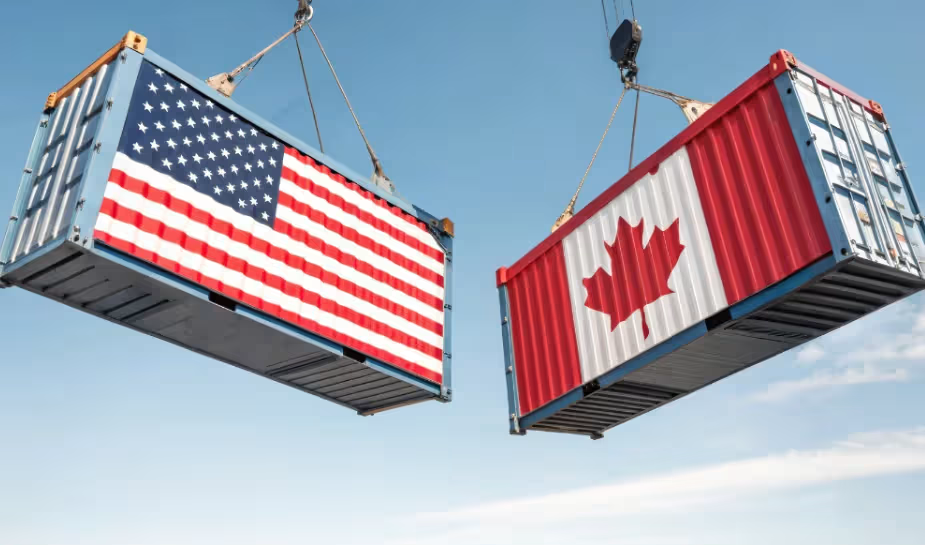
The $800 de minimis rule allowed eligible goods valued at $800 or less to enter the United States with simplified customs treatment. In many cases, these low-value shipments avoided normal import duties, making cross-border ecommerce faster and cheaper for both sellers and customers.
For AliExpress dropshipping, this rule was extremely important. Most dropshipping orders are small, individual packages shipped directly to customers. Since many of those orders were below $800, sellers often did not have to think deeply about import duties or customs costs.
Why Dropshippers Benefited From It
The de minimis rule helped dropshippers in several practical ways. It reduced the cost of fulfilling small orders, made international shipping easier to manage, and allowed sellers to test products without buying inventory upfront.
For example, a seller could source a low-cost product from AliExpress, list it at a higher retail price, and ship it directly to a U.S. customer. Because the package was usually low-value, import duties were often not a major concern in day-to-day operations.
This gave dropshippers several advantages:
- Lower product delivery costs
- Easier product testing
- Less customs complexity
- Better profit margins on low-ticket items
- More flexibility for new sellers
The rule made it possible for small stores to compete with larger retailers, especially when selling affordable products in categories like home gadgets, fashion accessories, beauty tools, pet products, and phone accessories.
Why It Became a Problem
The same rule that helped small sellers also created concerns. Critics argued that overseas sellers were using the exemption to avoid import costs that traditional retailers had to pay when bringing goods into the U.S. in bulk.
This created an uneven playing field. A domestic retailer importing a large shipment might pay duties and handle customs paperwork, while an overseas seller shipping one small package at a time could often avoid the same costs.
Over time, the rise of low-value ecommerce shipments made the issue much bigger. The policy shift was not only about dropshipping. It affected marketplaces, fast-fashion brands, overseas sellers, direct-to-consumer brands, and small ecommerce businesses that relied on cheap international shipping.
What Changed for AliExpress Dropshippers in 2025?
The biggest change is that sellers can no longer assume that a product under $800 will enter the U.S. duty-free. That assumption was a major part of the old dropshipping model, especially for sellers sourcing from China.
In 2025, the U.S. first removed duty-free treatment for low-value shipments from China and Hong Kong. Later, the suspension expanded globally. By 2026, AliExpress dropshippers need to operate with a new mindset: every product must be reviewed based on its true landed cost, not just the supplier price shown on the listing.
The New Reality for Low-Value Shipments
Before the change, many dropshippers focused mainly on product cost, shipping cost, and ad spend. Now, that is not enough.
Sellers need to consider:
- Import duties
- Customs-related fees
- Carrier handling charges
- Shipping method changes
- Product classification
- Country of origin
- Possible delivery delays
- Customer-facing taxes or charges
This does not mean every product becomes unprofitable. It means every product needs closer evaluation. A product that still has strong margins may continue to work well. A product with thin margins may become too risky to sell.
Why 2026 Will Feel Different
The real impact of policy changes often becomes clearer after sellers adjust their operations. In 2026, more dropshippers will feel the effect because old pricing formulas may stop working.
Products that once looked profitable may now need higher prices. Shipping policies may need to be rewritten. Suppliers may need to be replaced. Sellers may need to move winning products to faster or more reliable fulfillment options.
The dropshippers who adapt early will have an advantage. Those who continue using outdated strategies may struggle with lower profits, more customer complaints, and higher refund rates.
Is AliExpress Dropshipping Dead After US Tariffs?
No, AliExpress dropshipping is not dead. However, the simple “find a cheap product, mark it up, and run ads” model is becoming weaker.
AliExpress still gives sellers access to a huge range of products. It is still useful for testing product ideas, exploring niches, and starting without buying bulk inventory. The difference is that sellers now need to be much more strategic.
What No Longer Works Well
The old dropshipping playbook depended heavily on cheap sourcing and low-friction shipping. That approach is harder now because extra costs can quickly reduce profit.
These tactics are becoming riskier:
- Selling very cheap products with small margins
- Copying AliExpress product pages without improving them
- Ignoring duties and import fees
- Promising unrealistic shipping times
- Running ads before calculating true profit
- Selling products that are easy to compare on price
- Using random suppliers without checking reliability
A store may still get sales with these tactics, but sales alone do not mean the business is profitable.
What Still Works in 2026
Dropshipping still works when sellers focus on fundamentals. The opportunity is shifting from quick product flipping to better ecommerce execution.
A stronger approach includes:
- Choosing products with clear demand
- Selling products with enough margin room
- Creating better product descriptions
- Using bundles to increase order value
- Being transparent about shipping
- Testing ads carefully
- Working with reliable suppliers
- Moving proven products to better fulfillment options
The sellers who win in 2026 will not be the ones selling the cheapest products. They will be the ones creating better offers.
How US Tariffs Affect Dropshipping Profit Margins
Tariffs and import costs directly affect profitability. Even a small added cost can hurt if the product already has a thin margin. This is especially true for AliExpress dropshippers who sell low-ticket products and rely on paid advertising.
A product may look profitable when you only consider the supplier price. But once you include shipping, duties, fees, ad spend, refunds, and payment processing, the actual profit may be much smaller.
The Old Margin Calculation Is Not Enough
Many dropshippers used to calculate profit in a simple way: Product cost plus shipping plus ad spend equals total cost. That formula is now incomplete. Sellers need to think in terms of landed cost. Landed cost means the full cost of getting the product from the supplier to the customer.
A more realistic calculation includes:
- Supplier product cost
- Shipping cost
- Estimated duties
- Customs or carrier fees
- Payment processing fees
- Ecommerce platform fees
- Ad spend
- Refund or replacement buffer
- Customer support cost
If the product still has healthy profit after all of this, it may be worth testing. If not, the product may need a higher price, a bundle strategy, or a better supplier.
Why Low-Ticket Products Are Most Exposed
Cheap products are the most vulnerable because they have less room to absorb extra costs. A $7 product can quickly become unprofitable if shipping or import-related costs rise.
This does not mean sellers should avoid all affordable products. It means they need to avoid products where customers only care about price.
Low-ticket products are risky when they are:
- Generic
- Easy to find on marketplaces
- Hard to differentiate
- Low-margin
- Slow to ship
- Frequently returned
- Dependent on impulse buying
If a product cannot support better pricing, it may not be strong enough for the 2026 dropshipping environment.
How Product Research Needs to Change in 2026
Product research can no longer be based only on trends. A product can be popular and still be a poor choice if the numbers do not work. AliExpress dropshippers should now look for products that combine customer demand with strong margins, clear value, and manageable shipping requirements.
Questions to Ask Before Choosing a Product
Before adding a product to your store, ask practical questions:
- Can this product stay profitable after duties and fees?
- Is it light enough to ship affordably?
- Can it be sold at a higher perceived value?
- Does it solve a real problem?
- Is it easy to explain with images and copy?
- Can it be bundled with related products?
- Are there multiple suppliers available?
- Does the supplier offer reliable tracking?
- Will customers accept the delivery time?
If a product only looks good because it is cheap, it may not be the right choice.
Better Product Categories to Consider
In 2026, stronger products are usually those with clear benefits and enough pricing flexibility. Sellers should look for products that feel useful, giftable, or problem-solving.
Good options may include:
- Pet accessories with emotional appeal
- Home organization products
- Beauty tools with visible benefits
- Fitness accessories
- Car accessories
- Hobby products
- Giftable items
- Problem-solving kitchen tools
- Products that work well in bundles
These categories can still work because customers are often willing to pay more when the product solves a clear problem or feels valuable.
Pricing Strategies for AliExpress Dropshippers in 2026
Pricing is one of the most important changes after the end of the $800 loophole. Sellers need to stop guessing and start pricing based on real costs.
A product should not be priced only by copying competitors. It should be priced based on landed cost, customer demand, perceived value, and the margin needed to run the business.
Build a Buffer Into Every Price
Sellers should include a cost buffer in their pricing. This protects the store from unexpected fees, shipping changes, refunds, and ad cost increases.
Your price should leave room for:
- Import-related costs
- Discounts
- Ad testing
- Refunds
- Replacements
- Payment fees
- Profit
If a product only works with a very small margin, it may not be safe to scale.
Use Bundles to Improve Profitability
Bundles can help dropshippers increase average order value. Instead of selling one small item, sellers can group related products together and create a stronger offer.
For example:
- A pet grooming tool can be bundled with cleaning accessories.
- A beauty product can be bundled with replacement parts.
- A kitchen tool can be bundled with matching add-ons.
- A fitness item can be bundled with a storage pouch.
- A car accessory can be bundled with a cleaning cloth.
Bundles make the offer feel more complete and give sellers more room to absorb shipping or tariff-related costs.
Avoid Competing Only on Price
Price-based selling is dangerous because there will almost always be another store or marketplace offering something cheaper.
Instead of competing only on price, sellers should focus on:
- Better product pages
- Clearer benefits
- Stronger visuals
- Helpful FAQs
- Honest shipping details
- Better support
- Niche branding
- Trust-building content
Customers are more likely to pay a higher price when the buying experience feels reliable.
Why Shipping Transparency Matters More Now
Shipping has always been a challenge in AliExpress dropshipping. With new tariff rules and customs requirements, transparency is even more important.
Customers do not want surprises. If shipping takes longer than expected or extra charges appear without warning, trust breaks quickly.
What Your Shipping Policy Should Explain
A strong shipping policy should be clear, simple, and easy to find. It should explain what customers can expect before they place an order.
Include details such as:
- Estimated processing time
- Estimated delivery time
- Tracking information
- Possible customs delays
- Duties or taxes where applicable
- What happens if an order is delayed
- How customers can contact support
The goal is not to scare customers. The goal is to prevent confusion.
Why Overpromising Hurts Your Store
Some sellers promise fast delivery because they think it improves conversions. But if the order arrives late, the customer experience suffers.
Overpromising can lead to:
- Refund requests
- Negative reviews
- Chargebacks
- More support tickets
- Lower repeat purchases
- Poor brand trust
In 2026, clear expectations are better than unrealistic promises. A customer who understands the timeline is more likely to wait patiently.
Why US Warehousing and Better Fulfillment Matter
As cross-border shipping becomes more complicated, U.S. warehousing and regional fulfillment become more valuable. Products stored closer to the customer can often be delivered faster and with fewer surprises.
This does not mean every beginner needs to use U.S. warehousing immediately. It means sellers should think about better fulfillment once a product starts selling consistently.
When to Consider US Warehousing
U.S. warehousing makes the most sense when a product is already proven. If you have consistent sales and healthy margins, faster fulfillment can improve the customer experience.
Consider better fulfillment when:
- A product sells regularly
- Customers complain about shipping time
- Refunds are increasing due to delays
- Ad campaigns are scaling
- Margins are strong
- The product has repeat demand
- You want to build a long-term brand
For untested products, it may still make sense to use AliExpress first. Once a product proves itself, you can explore better fulfillment options.
Why a Hybrid Model Works Well
A hybrid model allows sellers to test products with AliExpress and then improve fulfillment for winners. This gives you flexibility without forcing you to buy inventory too early.
A simple hybrid path looks like this:
- Use AliExpress for product discovery.
- Test products with controlled budgets.
- Track real profit after all costs.
- Identify winning products.
- Find faster or regional fulfillment options.
- Improve product pages and branding.
- Scale only when the numbers are strong.
This approach keeps the low-risk benefit of AliExpress while reducing the long-term risks of slow shipping and changing import costs.
Conclusion
The end of the $800 de minimis loophole has changed AliExpress dropshipping in a major way. For years, many sellers benefited from low-value international shipments entering the U.S. with fewer duties and less customs friction. That helped keep products cheap, testing easy, and margins more flexible.
In 2026, dropshippers need to operate differently. Product cost alone is no longer enough. Sellers must calculate landed cost, choose products with stronger margins, write clearer shipping policies, and build stores that feel trustworthy.
AliExpress dropshipping is not dead, but it is no longer as forgiving as it used to be. The sellers who adapt will still find opportunities. The sellers who rely only on cheap products and old pricing formulas will struggle.
The loophole is gone, but the opportunity is still there. With smarter product research, better pricing, transparent shipping, and tools like AliDrop, sellers can still build profitable dropshipping stores in 2026.
FAQs About US Tariffs and AliExpress Dropshipping in 2026
What is the $800 de minimis loophole?
The $800 de minimis loophole allowed eligible low-value imports worth $800 or less to enter the U.S. with simplified customs treatment. For many AliExpress dropshippers, this helped reduce duties and made direct-from-China shipping more affordable.
Is AliExpress dropshipping still profitable in 2026?
Yes, AliExpress dropshipping can still be profitable in 2026, but sellers need to calculate true landed costs, including product price, shipping, duties, fees, ad spend, and refunds. The old model of selling cheap products with thin margins is much harder to sustain.
How do US tariffs affect AliExpress dropshippers?
US tariffs can increase the total cost of importing products, reduce profit margins, and create more shipping or customs-related challenges. Dropshippers may need to raise prices, improve product selection, use bundles, or work with suppliers offering better fulfillment options.
Should dropshippers stop using AliExpress after the de minimis changes?
No, dropshippers do not need to stop using AliExpress. However, they should use it more strategically. AliExpress is still useful for product research and testing, but sellers should prioritize products with stronger margins, reliable suppliers, and clear customer value.
How can AliExpress dropshippers stay profitable after the tariff changes?
Dropshippers can stay profitable by choosing higher-margin products, calculating landed costs before selling, creating bundles, being transparent about shipping, improving product pages, and using tools like AliDrop to build a more structured AliExpress dropshipping business.


%201.svg)