


One of the most common challenges dropshippers face when sourcing products from AliExpress is dealing with out-of-stock items. A product that was available yesterday might suddenly disappear or become unavailable when a customer places an order.
For ecommerce businesses that rely on third-party suppliers, inventory changes can happen quickly. If not handled properly, stock shortages can lead to delayed orders, unhappy customers, refunds, and negative reviews.
However, running into out-of-stock issues does not mean your dropshipping business is failing. In fact, experienced dropshippers often encounter this situation and develop systems to manage it effectively.
The key is learning how to respond quickly, communicate clearly with customers, and prevent stock issues from disrupting your store.
This guide explains how to handle out-of-stock situations with AliExpress suppliers and how to minimize their impact on your business.
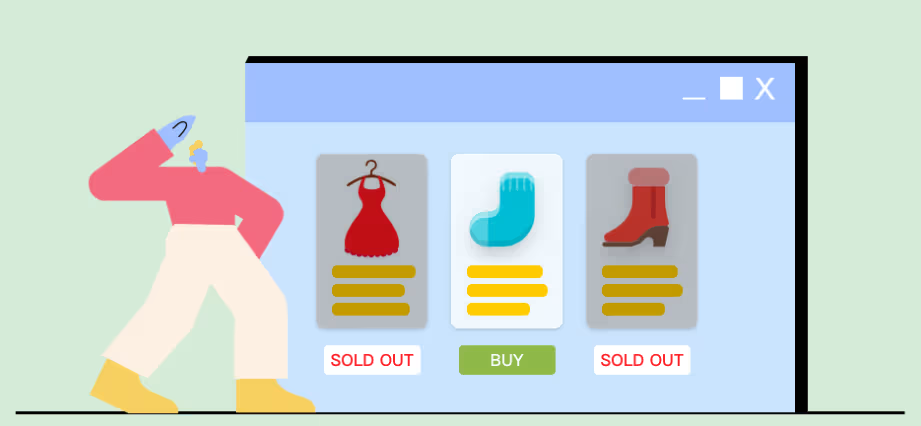
Why AliExpress Products Go Out of Stock
Understanding why stock shortages occur helps dropshippers prepare for them. Unlike traditional ecommerce businesses that store their own inventory, dropshipping stores depend on supplier availability.
High Demand for Trending Products
Many dropshipping stores focus on trending products that gain popularity quickly. When a product suddenly becomes popular, thousands of sellers may begin sourcing it simultaneously. This surge in demand can quickly deplete supplier inventory.
Because AliExpress suppliers often sell to multiple stores, stock levels may change rapidly.
Supplier Inventory Changes
Suppliers regularly update their product listings based on manufacturing capacity and warehouse availability. If a supplier runs out of stock or stops producing a product, the listing may show limited quantity or disappear entirely.
These inventory changes often happen without advance notice.
Seasonal or Supply Chain Issues
Certain products may go out of stock due to seasonal demand spikes or supply chain disruptions. For example, products related to holidays or seasonal trends may sell out quickly. Manufacturing delays or shipping issues can also temporarily affect stock availability.
How Out-of-Stock Issues Affect Dropshipping Stores
Stock shortages can impact several aspects of your ecommerce business. If not managed properly, they may damage customer trust and reduce sales.
Order Fulfillment Delays
When a product becomes unavailable after a customer places an order, the store owner must find an alternative supplier or cancel the order. This delay can frustrate customers who expect quick shipping.
Customer Dissatisfaction
Customers may feel disappointed if a product they ordered suddenly becomes unavailable. Without proper communication, this situation can lead to refund requests or negative reviews.
Lost Sales Opportunities
When a product goes out of stock, businesses may temporarily lose the ability to sell a popular item. If the product is a top seller, this can significantly impact revenue.
Preventing Out-of-Stock Issues Before They Happen
While stock shortages cannot always be avoided, dropshippers can reduce the likelihood of encountering them. Preparation and supplier monitoring are essential.
Work With Multiple Suppliers
Relying on a single supplier increases the risk of stock disruptions. Instead, identify multiple suppliers offering the same product. If one supplier runs out of inventory, you can quickly switch to another seller. Having backup suppliers helps maintain consistent order fulfillment.
Monitor Product Stock Levels Regularly
Dropshippers should check supplier stock levels frequently, especially for high-selling products. AliExpress listings often show the number of units remaining. Monitoring this information helps anticipate potential shortages.
Focus on Reliable Suppliers
Suppliers with strong sales history and high ratings are more likely to maintain stable inventory. They typically manage stock more efficiently and restock products faster. Choosing experienced suppliers reduces the chances of unexpected stock issues.
What to Do When a Product Goes Out of Stock
Even with careful planning, some products will inevitably become unavailable. When this happens, acting quickly is essential.
Contact the Supplier Immediately
The first step is to contact the supplier to confirm whether the product will be restocked.
Sometimes listings temporarily show “out of stock” even though the supplier expects new inventory soon. If restocking is expected quickly, you may choose to delay fulfillment slightly.
Find an Alternative Supplier
If the original supplier cannot restock soon, search for another AliExpress seller offering the same product. Because many suppliers sell identical or similar items, switching suppliers can often solve the problem. However, ensure that the new supplier has good reviews and reliable shipping before placing the order.
Offer a Similar Replacement Product
If the exact product is unavailable, consider offering customers a similar alternative. For example, if a specific product color is unavailable, suggest a different color option. Providing alternatives allows customers to still receive a product while avoiding cancellations.
Communicating With Customers During Stock Issues
Customer communication plays a crucial role when dealing with stock shortages. Transparent communication can turn a frustrating situation into a positive customer experience.
Inform Customers Immediately
If an order cannot be fulfilled due to stock shortages, notify the customer as soon as possible. Explain the situation clearly and provide available solutions. Quick communication demonstrates professionalism and builds trust.
Offer Options Instead of Apologies
Instead of simply apologizing, offer customers choices such as:
- waiting for restock
- selecting an alternative product
- receiving a refund
Giving customers control over the outcome improves satisfaction.
Provide Compensation When Necessary
In some cases, offering a small discount or coupon can help maintain goodwill. This gesture shows that you value the customer’s experience. Even minor incentives can turn a negative situation into a positive one.
Managing Out-of-Stock Products on Your Store
When a product becomes unavailable, store owners must decide how to manage the listing on their website. Different strategies can be used depending on the situation.
Temporarily Pause the Product Listing
If restocking is uncertain, temporarily removing the product from your store may be the best option. This prevents new customers from purchasing an unavailable item. Once inventory returns, the product can be reactivated.
Display “Out of Stock” Messages
Some stores keep listings active but mark them as out of stock. This approach allows customers to see the product while preventing new orders. It also helps maintain SEO traffic to the product page.
Replace the Product With Alternatives
If a product is permanently discontinued, replacing it with a similar item ensures your store continues generating sales. Maintaining alternative product options helps reduce revenue loss.
Using Automation to Prevent Inventory Problems
Manual monitoring of supplier stock levels can be time-consuming. Automation tools help dropshippers manage inventory changes more efficiently.
Inventory Sync Tools
Inventory management tools can automatically track supplier stock levels and update your store accordingly. If a supplier runs out of stock, the product can be automatically paused or hidden. This reduces the risk of accepting orders for unavailable products.
Automated Order Routing
Some dropshipping systems allow orders to be automatically routed to alternative suppliers. If one supplier lacks inventory, another supplier can fulfill the order. This ensures continuity in order fulfillment.
Managing AliExpress suppliers manually can become difficult as your store grows. This is where AliDrop can simplify the process.
AliDrop helps merchants import products, manage product listings, and streamline order processing from AliExpress. By organizing supplier data and product information more efficiently, store owners can monitor inventory changes and react quickly when products go out of stock.
AliDrop also helps merchants quickly replace unavailable products with new listings, reducing disruptions to their store.
This allows entrepreneurs to spend less time managing supplier issues and more time focusing on marketing and growth.
Use Inventory Alerts and Backup Listings to Prevent Order Disruptions
Out-of-stock issues can appear suddenly when working with AliExpress suppliers because inventory levels change frequently. If you wait until a product is completely unavailable, it may already affect customer orders and lead to delays or refunds. A smarter approach is to prepare in advance by monitoring stock levels and keeping backup suppliers ready.
By setting up inventory alerts and maintaining alternative product listings, you can respond quickly when stock shortages occur and keep your store running smoothly.
Set Up Inventory Monitoring for High-Selling Products
High-demand products are more likely to run out of stock quickly. Monitoring these items regularly helps you identify potential shortages before they affect your customers.
You can do this by:
- Checking supplier stock levels daily or weekly
- Monitoring inventory numbers shown on AliExpress listings
- Tracking sudden drops in available product quantities
- Keeping a list of your store’s best-selling products
When you notice inventory levels decreasing rapidly, you can start preparing alternatives before the product becomes unavailable.
Maintain Backup Suppliers for the Same Product
One of the most effective ways to avoid fulfillment problems is to identify multiple suppliers selling the same or similar product.
Many AliExpress items are offered by several sellers. Having backup suppliers ensures that you can still fulfill orders even if one supplier runs out of stock.
When selecting backup suppliers, make sure to check:
- Seller ratings and reviews
- Métodos de envio e prazos de entrega
- Imagens e descrições do produto
- Feedback do cliente sobre a qualidade do produto
Escolher alternativas confiáveis com antecedência facilita muito a troca de fornecedores.
Crie listas de produtos de backup com antecedência
Alguns dropshippers prepare listas de backup dentro de sua loja, mas mantenha-as inéditas ou ocultas. Isso permite que eles substituam rapidamente a lista principal se o fornecedor original ficar indisponível. Essa estratégia ajuda você a:
- Mantenha a disponibilidade contínua do produto
- Evite perder vendas de produtos populares
- Responda rapidamente a mudanças repentinas de fornecedores
Quando um produto fica fora de estoque, você pode ativar a lista de backup imediatamente.
Estratégias de longo prazo para reduzir os problemas de estoque
Empresas bem-sucedidas de dropshipping desenvolvem estratégias de longo prazo para minimizar interrupções no estoque. Essas estratégias ajudam a manter a disponibilidade consistente do produto.
Construa relacionamentos com fornecedores
A comunicação regular com os fornecedores ajuda você a se manter informado sobre as mudanças no estoque. Os fornecedores podem notificar parceiros confiáveis sobre reabastecimentos ou futuras faltas. Relacionamentos fortes melhoram a confiabilidade.
Concentre-se em produtos perenes
Os produtos populares geralmente se esgotam rapidamente. Produtos perenes com demanda consistente têm menos probabilidade de sofrer escassez repentina. A criação de um catálogo de produtos perenes reduz a dependência de tendências imprevisíveis.
Diversifique seu catálogo de produtos
As lojas que dependem de apenas alguns produtos são mais vulneráveis a interrupções de estoque. Expandir seu catálogo de produtos distribui o risco em vários itens. Se um produto ficar indisponível, outros produtos ainda poderão gerar receita.
O futuro do gerenciamento de estoque no Dropshipping
O dropshipping continua evoluindo à medida que a tecnologia de comércio eletrônico melhora. Desenvolvimentos futuros provavelmente tornarão o gerenciamento de estoque mais confiável.
Integração aprimorada de fornecedores
Mais plataformas estão se integrando diretamente aos fornecedores para fornecer atualizações de inventário em tempo real. Essas integrações reduzem as chances de vender produtos fora de estoque.
Monitoramento de inventário orientado por IA
As ferramentas de inteligência artificial são cada vez mais usadas para prever a demanda e detectar riscos de estoque. Esses sistemas podem alertar os comerciantes quando os níveis de estoque caem ou quando é provável que os produtos se esgotem.
Cadeias de suprimentos globais mais rápidas
À medida que as redes logísticas melhorarem, os fornecedores poderão reabastecer os produtos mais rapidamente. Cadeias de suprimentos mais rápidas reduzirão a frequência da escassez de estoque.
Considerações finais
Problemas de falta de estoque são uma parte normal da administração de um negócio de dropshipping com fornecedores do AliExpress. Embora a escassez de estoque possa atrapalhar o atendimento de pedidos, ela pode ser gerenciada de forma eficaz com as estratégias certas. Monitorar o inventário de fornecedores, manter os fornecedores de backup e comunicar-se de forma transparente com os clientes ajudam a reduzir o impacto dos problemas de estoque.
Usando ferramentas que simplificam o gerenciamento de fornecedores, como AliDrop—também pode facilitar a resposta rápida quando ocorrem mudanças no inventário.
Ao se preparar para a escassez de estoque e desenvolver estratégias flexíveis de atendimento, as empresas de dropshipping podem manter operações tranquilas e continuar oferecendo experiências positivas aos clientes. Em última análise, os dropshippers bem-sucedidos entendem que os desafios de inventário não são obstáculos — eles são simplesmente parte do gerenciamento de uma cadeia de suprimentos dinâmica de comércio eletrônico.
Perguntas frequentes sobre problemas de falta de estoque no AliExpress Dropshipping
Por que os produtos do AliExpress ficam esgotados repentinamente?
Os produtos do AliExpress podem ficar sem estoque devido à alta demanda, mudanças no estoque de fornecedores ou atrasos na fabricação. Como os fornecedores geralmente vendem para várias lojas simultaneamente, o estoque pode diminuir rapidamente.
O que devo fazer se um cliente pedir um produto fora de estoque?
Entre em contato com o fornecedor imediatamente para confirmar o reabastecimento. Se o produto não puder ser reabastecido em breve, ofereça alternativas ao cliente, como um produto similar, atraso no envio ou reembolso.
Posso trocar de fornecedor para o mesmo produto?
Sim Muitos produtos do AliExpress são vendidos por vários fornecedores. Os dropshippers geralmente trocam de fornecedor quando ocorre falta de estoque, mas é importante verificar a confiabilidade do novo fornecedor.
Devo remover produtos fora de estoque da minha loja?
Se o reabastecimento for incerto, pausar temporariamente o anúncio pode impedir novos pedidos. Se houver previsão de reabastecimento do produto em breve, você pode marcá-lo como esgotado enquanto mantém a página ativa.
Como o AliDrop pode ajudar a gerenciar problemas de estoque?
O AliDrop ajuda os comerciantes a gerenciar as importações de produtos do AliExpress e organizar seus catálogos com eficiência. Isso permite que os lojistas substituam rapidamente os produtos indisponíveis e mantenham operações mais fáceis na loja.


%201.svg)



%20(1).avif)

