


If you're starting or scaling a dropshipping business, choosing the right sourcing platform is one of the most important decisions you'll make. It directly impacts your product quality, shipping times, automation, and—most importantly—your profit margins.
Two names that often come up in this space are DHgate and AliDrop. While both are used for sourcing products, they operate very differently. One is a large marketplace connecting buyers to suppliers, while the other is a dropshipping automation platform built for long-term business growth.
This guide will break down every key factor—supplier access, pricing, automation, scalability, and profitability—so you can confidently choose the right platform for your business.
What Is DHgate?
Understanding DHgate’s structure helps you see where it fits in the dropshipping ecosystem.

A large cross-border marketplace for wholesale products
DHgate is a China-based B2B and B2C ecommerce marketplace that connects global buyers with manufacturers and suppliers. It offers millions of products across categories like electronics, fashion, and home goods.
It functions similarly to other supplier marketplaces:
- You browse products
- Choose a supplier
- Place orders manually
- Ship products to customers
Built for small orders and flexible sourcing
Unlike traditional wholesale platforms, DHgate allows you to buy products in small quantities—even single units—making it suitable for dropshipping.
This makes it attractive for:
- Beginners testing products
- Sellers with low upfront investment
- Small-scale ecommerce businesses
Limitations of marketplace sourcing
While DHgate offers flexibility, it also comes with challenges:
- Inconsistent product quality
- Long shipping times
- Limited automation
- High dependency on individual sellers
These factors can impact customer experience and scalability.
What Is AliDrop?
AliDrop takes a very different approach to dropshipping.
A dropshipping automation platform, not just a marketplace
AliDrop is designed to help you build and run a complete dropshipping business, not just source products. It connects directly with platforms like AliExpress, Alibaba, and Temu, allowing you to import products and automate operations.
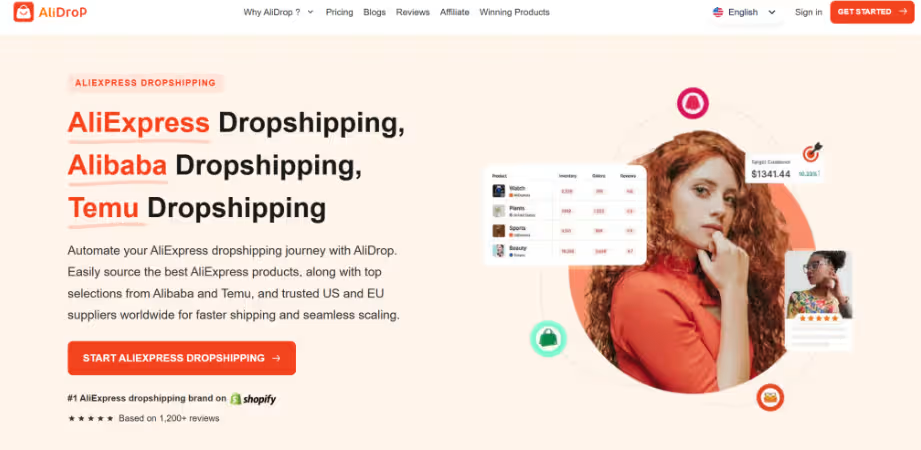
Instead of acting as a marketplace, it acts as a system.
Focused on automation and scalability
AliDrop simplifies key processes such as:
- Product importing
- Order fulfillment
- Inventory syncing
- Tracking updates
This allows you to spend less time managing operations and more time growing your store.
Built for long-term ecommerce growth
AliDrop is ideal for:
- Shopify dropshippers
- Aliexpress Dropshipping
- Entrepreneurs building branded stores
- Sellers looking to scale
It shifts the focus from just sourcing products to building a sustainable business.
Key Differences Between DHgate and AliDrop
Before diving into features, it’s important to understand how DHgate and AliDrop differ at a foundational level. These differences shape how you source products, manage operations, and scale your business over time.
DHgate operates as a large cross-border marketplace connecting buyers to suppliers, while AliDrop focuses on automation and direct integration with supplier ecosystems like AliExpress. This distinction affects everything from pricing control to workflow efficiency, making it essential to understand before choosing a platform.
1. Product Sourcing and Supplier Access
This is where DHgate and AliDrop differ the most.
DHgate’s marketplace sourcing model
DHgate gives you access to a massive supplier network. Advantages include:
- Millions of products
- Wide category coverage
- Easy browsing
However, there are downsides:
- Limited supplier transparency
- Difficult quality control
- No direct supplier relationships
You rely heavily on reviews and ratings.
AliDrop’s direct sourcing advantage
AliDrop connects you directly to supplier ecosystems like AliExpress. This allows you to:
- Compare multiple suppliers easily
- Choose high-rated vendors
- Access trending products faster
You get more control over sourcing decisions.
Sourcing comparison
- DHgate: Easier but less controlled
- AliDrop: More control and flexibility
If you care about product quality and supplier reliability, AliDrop offers a stronger setup.
2. Product Pricing and Profit Margins
Profit margins are what ultimately determine success in dropshipping.
DHgate pricing structure
DHgate products are generally affordable, but:
- Prices can be higher for single-unit orders
- Suppliers may include hidden costs
- Margins can be inconsistent
While competitive, pricing often varies between sellers.
AliDrop pricing advantage
AliDrop gives you access to broader supplier ecosystems, allowing:
- Better price comparison
- Lower sourcing costs
- Higher profit margins
Even small differences in cost per product can significantly impact your overall earnings.
Margin comparison
- DHgate: Decent margins but inconsistent
- AliDrop: Better margin control
For scaling a business, margin control is critical—and AliDrop performs better here.
3. Automation and Workflow Efficiency
Automation is what separates a side hustle from a scalable business.
DHgate’s manual workflow
With DHgate, most processes are manual:
- You place orders yourself
- You track shipments manually
- You manage supplier communication
This can become time-consuming as your store grows.
AliDrop’s automation capabilities
AliDrop automates key processes:
- One-click product imports
- Automated order fulfillment
- Real-time inventory syncing
- Tracking updates
This significantly reduces manual work.
Efficiency comparison
- DHgate: Manual and time-intensive
- AliDrop: Automated and scalable
If your goal is to grow beyond a few orders per day, automation becomes essential.
4. Product Quality and Reliability
Customer satisfaction depends heavily on product quality.
DHgate quality challenges
DHgate is known for:
- Wide variation in product quality
- Presence of replica or low-quality products
- Need for careful supplier vetting
This increases the risk of refunds and disputes.
AliDrop quality control advantage
With AliDrop, you can:
- Select top-rated suppliers
- Filter products based on reviews
- Test products more efficiently
This leads to more consistent product quality.
5. Shipping Times and Customer Experience
Shipping is one of the biggest pain points in dropshipping.
DHgate shipping limitations
Since most products ship from China:
- Delivery times can range widely
- Tracking can be inconsistent
- Customer complaints may increase
AliDrop shipping flexibility
AliDrop allows you to:
- Choose suppliers with faster shipping options
- Optimize delivery times
- Improve customer satisfaction
6. Customization and Branding Potential
Building a brand is essential for long-term success.
DHgate limitations
DHgate focuses on product sourcing, not branding.
This means:
- Limited customization
- Generic product listings
- Less control over branding
AliDrop flexibility
AliDrop allows:
- Custom product descriptions
- Pricing control
- Branding strategies
This is essential for building a real ecommerce brand.
7. Scalability and Long-Term Growth
A platform should support your business as it grows.
DHgate scalability challenges
As your business grows:
- Manual processes become inefficient
- Supplier inconsistencies increase
- Profit margins remain limited
AliDrop scalability advantage
AliDrop is designed for growth:
- Automation reduces workload
- Better margins improve profitability
- Flexible sourcing supports expansion
Pros and Cons of DHgate for Dropshipping
Before choosing DHgate as your primary sourcing platform, it’s important to look at both its strengths and limitations in a real business context. While it offers a massive product catalog and low entry barriers, it also comes with challenges around consistency, automation, and long-term scalability. Understanding these trade-offs will help you decide whether DHgate fits your business model or if you need a more structured and growth-focused solution.
Pros
- Large product selection
- Low minimum order requirements
- Easy to start
- Global supplier access
Cons
- Inconsistent product quality
- Long shipping times
- Manual processes
- Limited scalability
Pros and Cons of AliDrop for Dropshipping
Before choosing AliDrop as your dropshipping platform, it’s important to understand how its strengths and limitations play out in real-world scenarios. AliDrop is built as an automation-focused system that connects your store directly with supplier marketplaces, helping streamline operations like product importing, order fulfillment, and inventory syncing.
Pros
- Direct supplier access
- Strong automation features
- Better profit margins
- Scalable workflow
- More control over operations
Cons
- Requires basic sourcing knowledge
- Slight learning curve for beginners
Which Platform Should You Choose?
The decision between DHgate and AliDrop is determined by your specific dropshipping goals and operational needs. DHgate is best suited for beginners and those focused on product testing with low upfront investment, offering a simple marketplace model. AliDrop, conversely, is built for entrepreneurs seeking automation, better profit margins, and the necessary infrastructure for long-term, scalable business growth.
Choose DHgate if
- You want a simple marketplace
- You’re testing dropshipping casually
- You prefer manual control
Choose AliDrop if
- You want to build a scalable business
- You need automation
- You want better margins
- You want full control over your store
Final Verdict: DHgate vs AliDrop
DHgate is a solid option for beginners who want a simple way to source products without worrying too much about setup. It works well for small-scale operations and product testing.
However, as your business grows, its limitations become clear—manual processes, inconsistent quality, and limited scalability.
AliDrop, on the other hand, is built for serious dropshippers. It offers automation, better supplier access, and stronger profit potential. While it requires a bit more understanding upfront, it provides a much better foundation for long-term success.
If your goal is to test dropshipping, DHgate can work. If your goal is to build and scale a profitable ecommerce business, AliDrop is the better choice.
FAQs about DHgate vs AliDrop
Is DHgate good for dropshipping?
DHgate can be a suitable starting point for dropshipping, especially for beginners due to its low minimum order requirements and vast product selection. However, it necessitates a hands-on, manual workflow for ordering and fulfillment, and sellers must be extremely careful to vet suppliers to manage quality and shipping inconsistencies. It is ideal for small-scale testing before committing to a larger operation.
Is AliDrop better than DHgate?
AliDrop is generally considered superior for building a sustainable, long-term ecommerce business. It offers powerful automation features for order fulfillment, inventory syncing, and tracking updates, which are essential for scaling efficiently. Furthermore, it provides better access to supplier ecosystems, allowing for higher profit margin control compared to DHgate's marketplace model.
Why is DHgate cheaper?
While DHgate offers low-cost products due to its direct connection to manufacturers and suppliers in China, its pricing can be inconsistent. The final price is often dependent on the individual seller, the order size (single units can be more expensive), and whether hidden costs are included. AliDrop, by comparison, often enables lower sourcing costs by facilitating broader price comparison across supplier ecosystems.
Can beginners use AliDrop?
Yes, beginners can certainly use AliDrop, as it is designed to streamline the entire dropshipping workflow. However, new users may experience a slight learning curve as they familiarize themselves with product sourcing techniques, filtering suppliers, and utilizing the platform's advanced automation tools. Its focus on scalability makes the initial investment in learning worthwhile for long-term growth.
Which platform is better for scaling?
AliDrop is significantly better for scaling an ecommerce business due to its inherent design as an automation platform. Its features, such as automated order fulfillment and real-time inventory syncing, eliminate the manual workload that plagues DHgate as order volume increases. This efficiency, combined with access to suppliers that enable better profit margins, provides a robust foundation for long-term growth.


%201.svg)



%20(1).avif)

