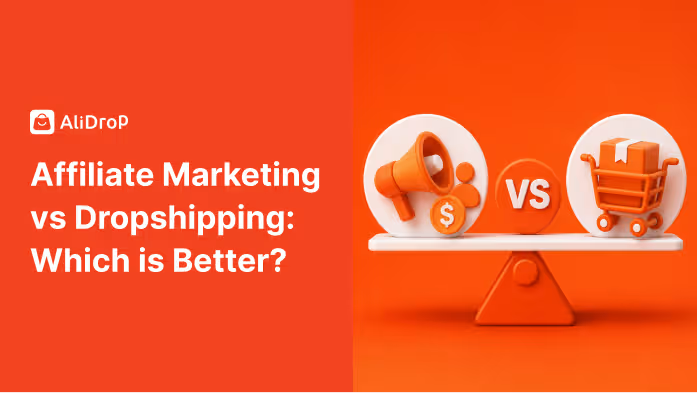


Affiliate marketing and dropshipping are two of the most popular ways to make money online without manufacturing products, storing inventory, or managing a warehouse. Both are beginner-friendly business models, but they work in very different ways.
Affiliate marketing is built around promoting another brand’s products and earning a commission when someone buys through your affiliate link. Dropshipping, on the other hand, lets you sell products through your own online store and earn the difference between the supplier cost and your retail price.
This guide compares affiliate marketing vs. dropshipping across startup cost, profit potential, control, workload, risk, scalability, and beginner-friendliness. If your goal is to build a real ecommerce brand without holding inventory, dropshipping through trusted suppliers can be a stronger long-term path.
Quick Answer: Affiliate Marketing vs. Dropshipping
Affiliate marketing is better if you want a low-risk, content-first business where you promote other companies’ products and earn commissions. Dropshipping is better if you want to build your own ecommerce brand, control pricing, own customer relationships, and scale an online store without holding inventory.
Here is the simple breakdown:
- Choose affiliate marketing if you enjoy blogging, SEO, social media, reviews, email newsletters, and audience building.
- Choose dropshipping if you want to sell products directly, test winning products, set your own prices, and build a recognizable brand.
- Choose both if you want to use affiliate content to drive traffic while also growing a dropshipping store.
For long-term brand ownership, customer data, and higher control, dropshipping is usually the better option. However, affiliate marketing may be easier for beginners with no budget but an existing audience.
What is Affiliate Marketing?
Affiliate marketing is a performance-based online business model where you promote another company’s product or service using a unique affiliate link. When someone clicks your link and completes an action, usually a purchase, you earn a commission.
.avif)
For example:
- A blogger may review ecommerce tools and add affiliate links inside the article.
- A YouTuber may link to recommended products in the video description.
- An influencer may share a discount code with followers.
- A newsletter creator may recommend software, apps, or physical products to subscribers.
The biggest advantage of the affiliate marketing business model is simplicity. You do not need to create products, manage inventory, handle shipping, process returns, or provide customer support. The merchant manages the product and customer experience, while your role is to create content, build trust, drive traffic, and encourage clicks.
Affiliate marketing can become a source of online income or passive income when your content keeps ranking, getting views, or attracting traffic over time. However, your earning potential depends on commission rates, cookie duration, traffic quality, and the brand’s affiliate program rules.
It is a good option for creators, bloggers, influencers, comparison websites, and anyone who prefers content marketing over running an ecommerce store.
What Is Dropshipping?
Dropshipping is an ecommerce business model where you sell products online without buying inventory upfront. Instead of storing products yourself, you list items in your online store, accept customer orders, and forward those orders to a supplier. The supplier then ships the product directly to your customer.
Your profit comes from the difference between the supplier price and your selling price. For example, if a product costs $25 from a supplier and you sell it for $50, your gross profit is $25 before marketing, platform, and transaction costs.
Dropshipping can work across many niches, such as:
- A Shopify store selling pet accessories
- A fashion store selling trending apparel
- A home decor store sourcing products from vetted suppliers
- A beauty store testing skincare tools or wellness products
- A gift store selling seasonal products without stocking inventory
Compared with affiliate marketing, dropshipping gives you more ownership. You manage your store, product pages, pricing, branding, marketing, customer emails, and customer experience. That means more responsibility, but also more control over how your business grows.
The best part is that you do not need to store products, pack orders, or ship items yourself. This makes dropshipping attractive for beginners who want to start an online store without a large upfront investment.
Platforms like AliDrop make this process easier by connecting sellers with reliable dropshipping suppliers, including AliExpress and US and EU suppliers. This helps store owners list quality products, process orders faster, and create a stronger ecommerce experience from the beginning.
Affiliate Marketing vs. Dropshipping Comparison Table
Affiliate marketing and dropshipping both help beginners start an online business without creating their own products. However, the way you earn, scale, and build long-term value is different.
Affiliate marketing is simpler operationally because you do not manage products, orders, shipping, or support. Your main job is to create content and send traffic to another company’s website. This makes it easier to start, especially if you already have an audience.
Dropshipping requires more active management, but it gives you more business control. You decide what to sell, how to price products, how your store looks, how customers experience your brand, and how you market your offers.
For beginners who want quick simplicity, affiliate marketing is easier. For entrepreneurs who want to build a real ecommerce brand, dropshipping offers stronger long-term potential, especially when supported by trusted supplier platforms like AliDrop.
Key Differences Between Affiliate Marketing and Dropshipping
Affiliate marketing and dropshipping may look similar because both allow you to make money online without creating products from scratch. But the biggest difference is ownership. Affiliate marketers promote another brand. Dropshippers build and manage their own store.
How You Make Money
Affiliate marketers earn a commission when someone buys through their affiliate link. The commission is usually fixed by the brand or affiliate program.
Dropshippers earn the margin between the supplier price and the retail price.
For example:
- Affiliate product sells for $100 with a 10% commission = $10 earning
- Dropshipping product costs $30 and sells for $60 = $30 gross margin before expenses
This makes dropshipping more flexible. You can adjust pricing, create bundles, offer discounts, add upsells, and improve average order value.
Startup Costs
Affiliate marketing is usually cheaper to start. You can begin with a blog, YouTube channel, social media page, newsletter, or product review site.
Dropshipping usually requires:
- An ecommerce platform
- A domain name
- Store design
- Product sourcing tools
- Marketing budget
- Payment setup
Affiliate marketing has a lower barrier to entry, but dropshipping can become a more controllable business asset because you are building your own store, brand, and customer base.
Control Over Brand and Customer Experience
Affiliate marketers send traffic to another brand’s website. Once the visitor clicks the affiliate link, the merchant controls the product page, checkout, pricing, delivery, support, and customer experience.
Dropshippers control the full buying journey. You decide:
- How your store looks
- Which products you sell
- How products are priced
- What offers customers see
- How you collect emails
- How you communicate after purchase
This is where supplier quality becomes important. Slow shipping, poor packaging, or inconsistent products can affect reviews, repeat purchases, and customer trust. Using a platform like AliDrop helps reduce this risk by giving sellers access to reliable suppliers and quality products.
Customer Data and Retention
Affiliate marketers usually do not own customer data. They may generate clicks and commissions, but the buyer belongs to the merchant.
Dropshipping store owners can collect emails, run retargeting campaigns, send product recommendations, offer loyalty discounts, and encourage repeat purchases. This makes customer data one of the biggest long-term advantages of dropshipping.
When you own the customer relationship, you can increase lifetime value instead of relying only on one-time commissions.
Workload and Responsibilities
Affiliate marketing requires content creation, SEO, audience building, link tracking, reviews, comparison pages, and trust-building.
Dropshipping requires product research, supplier selection, store management, customer service, marketing, order tracking, and conversion optimization.
Dropshipping is not “set and forget.” However, tools like AliDrop reduce manual work by helping sellers discover products, connect with suppliers, and streamline product sourcing.
Profit Potential
Affiliate marketing earnings depend on traffic volume, conversion rate, cookie duration, commission rate, and affiliate program rules.
Dropshipping earnings depend on product margin, supplier cost, pricing, shipping costs, ad spend, conversion rate, and repeat purchases.
Affiliate marketing can become more passive once content ranks. Dropshipping usually requires more involvement, but it offers higher profit control because you manage pricing, offers, and customer retention.
Risk
Affiliate marketing risks include commission cuts, cookie tracking issues, product changes, affiliate program shutdowns, and dependence on search or social traffic.
Dropshipping risks include poor supplier quality, delayed shipping, returns, chargebacks, refund requests, and ad spend losses.
The biggest way to reduce dropshipping risk is to work with vetted suppliers, test products carefully, and build a customer-first store experience. This is why supplier platforms like AliDrop can be valuable for beginners and growing ecommerce brands.
Pros and Cons of Affiliate Marketing
Affiliate marketing is one of the easiest online business models to start because you do not need to create, buy, store, or ship products. Your main role is to recommend products and earn a commission when someone buys through your affiliate link.
Pros of Affiliate Marketing
- Low startup cost: You can start with a blog, YouTube channel, social media page, newsletter, or review site.
- No inventory or shipping: The merchant handles product storage, packaging, delivery, and fulfillment.
- No customer support: You do not manage refunds, complaints, returns, or order issues.
- Flexible product choice: You can promote software, physical products, courses, subscriptions, tools, or services.
- Can become passive with SEO content: A ranking blog post or YouTube video can continue bringing clicks and commissions over time.
- Good for creators with existing audiences: Influencers, bloggers, and newsletter owners can monetize trust without launching a store.
Cons of Affiliate Marketing
- Limited control over pricing: You cannot change the product price, offer discounts, or create bundles.
- Lower commission margins: You earn a percentage of the sale, not the full product margin.
- No customer ownership: The customer belongs to the brand, not you.
- Dependency on affiliate programs: Brands can change commission rates, rules, or approval terms.
- Cookie duration and tracking issues: You may lose commissions if tracking expires or attribution fails.
- High competition in profitable niches: Finance, software, beauty, and ecommerce niches are crowded.
- Income can drop suddenly: If a brand changes its terms, your earnings may fall overnight.
Affiliate marketing is great for monetizing attention, traffic, and trust. However, it is harder to build a standalone brand when the product, customer experience, pricing, and buyer relationship belong to someone else.
Pros and Cons of Dropshipping
Dropshipping is a stronger fit for people who want to build an ecommerce business without holding inventory. You sell products under your own store, while suppliers handle storage and shipping.
Pros of Dropshipping
- No need to hold inventory: You can sell products without buying stock upfront.
- More control over pricing: You decide your retail price, discounts, bundles, and offers.
- Ability to build your own brand: Your store, product pages, emails, and customer experience belong to you.
- Customer data ownership: You can collect emails, run retargeting campaigns, and build repeat buyers.
- Higher margin potential: You earn from the difference between supplier cost and selling price.
- Easy product testing: You can test trending products without committing to bulk inventory.
- Can scale into a real ecommerce business: Successful products can be expanded with ads, SEO, email, and upsells.
- Works well with niche stores: Pet products, fashion, beauty, home decor, and gifts can perform well when positioned clearly.
Cons of Dropshipping
- Requires customer support: You are responsible for handling questions, refunds, and delivery concerns.
- Supplier quality matters: Poor products can lead to bad reviews and refund requests.
- Shipping speed can affect reviews: Slow delivery can hurt customer satisfaction.
- Competitive products may have lower margins: Popular items often attract more sellers.
- Requires store setup and marketing: You need product pages, branding, traffic, and conversion strategy.
- Paid ads can be risky without testing: Launching ads too early can reduce profits.
Many dropshipping problems come from poor supplier selection. Using a platform like AliDrop helps sellers discover quality products from reliable suppliers, including AliExpress and US and EU options, so they can build a better customer experience from the start.
Which Is More Profitable: Affiliate Marketing or Dropshipping?
Dropshipping usually has higher profit potential because sellers control product pricing, bundles, promotions, upsells, and customer retention. Instead of earning a fixed commission, you earn the margin between the supplier cost and your retail price.
For example, if you promote a $100 affiliate product with a 10% commission, you earn $10. If you sell a dropshipping product that costs $30 and price it at $60, your gross margin is $30 before expenses. That flexibility gives dropshipping more room for profit optimization.
Affiliate marketing can still be highly profitable, especially for people with:
- Strong SEO traffic
- A trusted personal brand
- A niche audience
- High-ticket affiliate programs
- Email lists or YouTube subscribers
- Content that ranks and converts consistently
Dropshipping may be more profitable for people who can:
- Identify winning products
- Source reliable suppliers
- Create strong product offers
- Build a branded store
- Manage marketing and customer support
- Encourage repeat purchases
A simple framework:
- Low audience + ecommerce mindset: Choose dropshipping.
- Strong audience + content skills: Choose affiliate marketing.
- SEO blog + product store: Combine both.
Overall, dropshipping gives you more control over profit because you control the offer, price, customer experience, and retention strategy. With platforms like AliDrop, sellers can also reduce sourcing friction and focus more on building a profitable ecommerce brand.
Which Is Better for Beginners?
Affiliate marketing is easier for complete beginners with no budget because there is no store setup, no order fulfillment, no inventory, and no customer support. You can start by creating product reviews, comparison articles, social media content, or YouTube videos around products you already understand.
It is a good beginner option if you:
- Enjoy writing, reviewing, or creating content
- Already have an audience
- Want to avoid customer service
- Prefer promoting products over selling directly
- Have little or no startup budget
Dropshipping is better for beginners who want to learn ecommerce and build a real online store. It requires more setup, but it also teaches product research, branding, pricing, marketing, conversion, and customer retention.
It is a better fit if you:
- Want to sell products directly
- Prefer building a brand
- Want more control over pricing
- Like testing product ideas
- Want to own customer relationships
If the goal is to earn commissions with minimal responsibility, affiliate marketing is simpler. If the goal is to build a long-term ecommerce business, dropshipping is the stronger beginner path, especially when using tools that simplify supplier discovery, product imports, and order fulfillment.
For that reason, AliExpress can be a practical starting point for beginners who want reliable products, trusted suppliers, and a smoother path to launching a dropshipping store.
Can You Do Affiliate Marketing and Dropshipping Together?
Yes, you can combine affiliate marketing and dropshipping in the same online business. In fact, both models can support each other when used strategically.
A dropshipping store can publish product guides, tutorials, and comparison articles to attract organic traffic. Some of those posts can include affiliate links for related tools, software, or products that the store does not sell directly.
For example:
- A dropshipping pet store can recommend pet insurance or training courses through affiliate links.
- A fashion blogger can test affiliate products, identify what converts, and later launch a dropshipping store around similar items.
- A niche website can use affiliate marketing for software or tools and dropshipping for physical products.
- A creator can promote affiliate products while selling branded dropshipping products through their own store.
This hybrid model works well because affiliate marketing can monetize content, while dropshipping helps you build a brand, own customer data, and sell directly.
Why Dropshipping With AliDrop Gives You More Control?
Dropshipping works best when you can trust your products, suppliers, and fulfillment process. Random supplier sourcing can lead to slow shipping, inconsistent product quality, poor packaging, delayed tracking updates, and unhappy customers.
That is why supplier quality matters. With AliDrop, sellers can build a dropshipping store with more confidence instead of guessing which suppliers are reliable.
AliDrop helps you gain more control through:
- Access to vetted AliExpress dropshipping suppliers
- Faster shipping options compared with many overseas-only marketplaces
- Easy product discovery for niche stores
- Simple product imports to ecommerce stores
- Branded invoicing on select plans and suppliers where available
- Better product quality control
- Products that fit real customer demand
This gives you more control over what you sell, how customers experience your brand, and how confidently you scale. Instead of sending buyers to another company through affiliate links, you can build your own store, own the customer relationship, and create repeat purchase opportunities.
Conclusion
Affiliate marketing and dropshipping are both practical ways to make money online, but they serve different goals. Affiliate marketing is best if you want a content-first business with low responsibility, no inventory, and commission-based income. It works well for bloggers, creators, influencers, and anyone with an engaged audience.
Dropshipping is best if you want more control, stronger branding, customer ownership, and higher long-term ecommerce potential. It requires more involvement, but it also gives you more room to build a real business asset.
If your goal is to build an online store instead of sending buyers to someone else’s brand, dropshipping with AliDrop gives you a practical way to source products, test ideas, and start selling without inventory.
Affiliate Marketing vs Dropshipping FAQs
Is affiliate marketing better than dropshipping?
Affiliate marketing is better if you want a low-cost, content-driven business and do not want to manage customers, products, or shipping. Dropshipping is better if you want to build your own ecommerce brand, control pricing, and own customer relationships.
Which is more profitable, affiliate marketing or dropshipping?
Dropshipping often has higher profit potential because you control your retail price and margins. Affiliate marketing can still be profitable, especially with high-ticket programs or strong SEO traffic, but your earnings depend on commission rates set by the merchant.
Is dropshipping harder than affiliate marketing?
Dropshipping usually involves more work because you manage your store, products, pricing, marketing, and customer support. Affiliate marketing is simpler operationally, but it can take longer to build enough traffic and trust to earn consistent commissions.
Can beginners start with dropshipping?
Yes. Beginners can start dropshipping because they do not need to buy inventory upfront. The key is choosing reliable suppliers, testing products carefully, and building a simple store around a clear niche.
Can I do affiliate marketing and dropshipping together?
Yes. You can combine both models by building a niche website or ecommerce store that sells dropshipping products while also recommending relevant affiliate products. This can create multiple income streams from the same audience.
Do you need a website for affiliate marketing or dropshipping?
For affiliate marketing, you can start with social media, YouTube, or a newsletter, but a website helps with SEO and long-term traffic. For dropshipping, you usually need an online store where customers can browse products and place orders.
Which business model is better for passive income?
Affiliate marketing can be more passive once your content ranks and keeps generating clicks. Dropshipping is less passive because you manage customer experience, but it can become more systemized with the right tools, suppliers, and automation.
Why is dropshipping good for building a brand?
Dropshipping lets you control your store design, product selection, pricing, messaging, customer emails, and post-purchase experience. This makes it easier to build brand recognition and repeat customers compared with affiliate marketing.


%201.svg)