

AliExpress dropshipping still works in 2026, but it does not work the way most old YouTube tutorials describe it. The US has removed the de minimis exemption that once let low-value shipments enter duty free, and AI-powered tools have quietly replaced the manual, copy-paste style of running a store. In plain terms, AliExpress dropshipping is a business model where you list products sourced from AliExpress sellers on your own store and only pay for the item once a customer has already paid you, with the supplier shipping straight to that customer.
This guide walks through exactly how the model works today, whether it is still worth starting, how to source products that actually sell, and where a tool like AliDrop fits into a modern setup. If you would rather see it in action while you read, start your $1, 7-day AliDrop trial and follow along on your own store.
What is AliExpress Dropshipping and How Does It Work?
Before getting into strategy, it helps to be precise about what this model actually involves, since a lot of confusion around AliExpress dropshipping comes from people mixing it up with regular wholesale reselling.
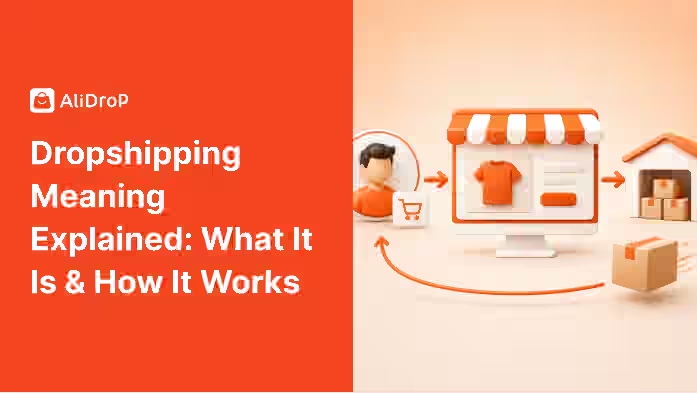
AliExpress dropshipping means you never hold inventory. You list a product from an AliExpress seller on your own storefront, a customer buys it from you at your price, and only then do you (or your automation tool) purchase that same item from the AliExpress supplier, who ships it directly to your customer. You are never the one boxing or shipping anything.
The AliExpress Dropshipping Model, Step by Step
Stripped down, the transaction flow looks the same across almost every store running this model:
- A customer places an order and pays you on your Shopify store.
- That order gets forwarded to the AliExpress supplier, either manually or through an automation app.
- The supplier packs and ships the item directly to your customer's address.
- You keep the difference between what the customer paid you and what you paid the supplier.
The model itself is simple. Where stores actually differ is in how much of that middle step is automated versus done by hand, which is the difference between a business you can scale and one that eats every hour of your day.
AliExpress vs. Traditional Wholesale Dropshipping
Traditional wholesale dropshipping usually means signing an agreement with one distributor, often with minimum order quantities or a formal approval process before you can even list their products. AliExpress removes almost all of that friction. There are no minimum orders and no approval process, and you get access to a catalog of millions of individual sellers instead of one distributor's limited range.
The tradeoff is consistency. A wholesale distributor gives you predictable quality and shipping because you are working with one vetted partner. AliExpress gives you scale and flexibility, but that means the vetting work (covered later in this guide) becomes your job, not something handled for you upfront.
Is AliExpress Good for Dropshipping in 2026?
This is the question most people actually want answered before they commit any time to this model, so here is the direct version. Yes, AliExpress is still a solid place to source products for dropshipping in 2026, but it works best as part of a wider sourcing strategy rather than your only supplier.
Pros of Sourcing from AliExpress
The reasons AliExpress remains the default starting point for new dropshippers have not changed much, even as the surrounding tools have.
- No upfront inventory risk. You only pay for a product after a customer has already paid you for it.
- A massive catalog to test against. Millions of listings across nearly every category, which makes it easy to validate demand for an idea before committing to a single supplier relationship.
- Low cost to start. No minimum order quantities mean you can test a product idea with a single sale instead of buying a case of inventory upfront.
- Growing access to regional suppliers. Alongside sellers in China, AliExpress and marketplaces built on top of it increasingly surface vetted US and EU-based suppliers, which matters more now than it used to for shipping speed.
Honest Limitations Worth Knowing Before You Start
No sourcing model is without tradeoffs, and being upfront about these now will save you a lot of frustration later.
- Shipping time variance. Standard AliExpress shipping can still run one to three weeks depending on the supplier and destination, which is slower than customers expect from most US-based retailers.
- No automatic price sync on most basic tools. Supplier prices on AliExpress can change without warning, and unless your fulfillment tool actively monitors this, you can end up selling at a loss without realizing it.
- Quality and trust concerns are common enough to research before you commit. Photos do not always match what arrives, and scam-adjacent sellers do exist on the platform alongside legitimate ones. We break down exactly how to tell the difference in our is AliExpress legit guide, which is worth reading in full before you place your first supplier order.
How to Start AliExpress Dropshipping (Step-by-Step)
Knowing the model in theory and actually setting one up are two different things, so here is the practical sequence most successful stores follow.
Step 1: Choose Your Sales Channel
Shopify is the default choice for most new AliExpress dropshippers, mainly because of its app ecosystem and how many fulfillment tools are built specifically to integrate with it. The rest of this guide assumes a Shopify-first setup, since that is where most AliExpress automation tools, AliDrop included, are designed to plug in directly.
Step 2: Connect AliExpress to Your Store with an Automation Tool
This step is where most of the manual grind either disappears or stays, depending on what you choose. An automation layer between your store and AliExpress should handle pulling product data (images, variants, descriptions) into your catalog, forwarding paid orders to the right supplier without you doing it by hand, and syncing tracking numbers back to the customer automatically.
Step 3: Set Your Pricing and Margins
Getting pricing right up front avoids a painful correction later once you realize your "profit" barely covers ad spend. A common starting point is a 3 to 4x markup on landed cost (product price plus shipping), adjusted for your niche and competition. Build in enough margin to also cover payment processing fees, typically around 2.5 to 3 percent, and a realistic return rate for your product category, not just the raw supplier cost.
Step 4: Launch and Test
Start with a small, focused set of products rather than importing hundreds at once. It is far easier to genuinely validate demand, write original product descriptions, and monitor how reliably a handful of suppliers ship than to babysit a five-hundred-product catalog from day one.
Skip the manual setup entirely if you would rather get moving today. Start your $1, 7-day AliDrop trial and have your first products imported within minutes, not days.
How to Find Winning AliExpress Products for Dropshipping
Picking the right products is where most new stores either gain real momentum or quietly stall out, so it is worth slowing down here.
Signals of a Winning Product
A genuinely promising AliExpress product usually shows more than one of these signs at once, not just a high order count on its own.
- Order volume that has held steady over months, not a short-lived spike
- Review photos that actually match what is shown in the listing images
- Enough margin left over after shipping and ad spend to still hit your target markup
- Low return risk, meaning it is not fragile, not size-dependent, and not something easily mistaken for a counterfeit
Using AI Product Research Tools vs. Manual Search
Scrolling through AliExpress's Best Seller pages by hand works, but it is slow and it is easy to miss a trend before it saturates. AI-assisted product research tools cross-reference order growth, review sentiment, and what competitor stores are already selling, which surfaces rising products earlier than manual browsing typically catches them. AliDrop's marketplace does exactly this, surfacing trending products already sourced from vetted AliExpress, Alibaba, Temu, and US and EU suppliers, so you are choosing from products with demand signals already attached instead of guessing cold.
How to Vet AliExpress Suppliers for Dropshipping
Finding a good product means nothing if the supplier behind it cannot deliver consistently, which is why this step gets its own section rather than a passing mention.
Supplier Red Flags to Avoid
Watch for these signals before committing to any supplier, not just after something has already gone wrong.
- Vague or missing answers to pre-sale questions about shipping times
- Product photos that appear nowhere else online except on that one listing, which a quick reverse image search will reveal
- A recent cluster of one-star reviews specifically mentioning non-delivery
- No stated processing time, or one that seems implausibly short for the price point
Why Order or Review Volume Isn't Enough
A high order count tells you a product sells. It does not tell you whether that supplier is shipping reliably today, since suppliers change hands, run out of stock, or quietly cut corners as they scale up. Recheck supplier performance periodically rather than treating your first check as permanent, especially for products that have been in your catalog for several months.
AliExpress Dropshipping on Shopify: What Changes With Automation
This is where the practical, day-to-day difference between a manual AliExpress dropshipper and an automated one becomes obvious, and it is also where AliDrop was built to make the biggest difference.
Manual AliExpress Sourcing vs. Automated Fulfillment
Doing this manually means logging into AliExpress for every single sale, finding the product, re-entering the customer's shipping address, paying for the order yourself, then copying the tracking number back into your store and emailing the customer. Do that fifty times in a busy week and it stops being a business you are growing and becomes a full-time data entry job. It also raises real error risk. A mistyped address or a missed order during a sale spike turns into a refund or a bad review, and that cost does not show up on a spreadsheet until well after the damage is done.
Why AliDrop is One Stop Solution for AliExpress Dropshipping?
AliDrop is built specifically to remove that manual layer from AliExpress dropshipping on Shopify, and this is genuinely the strongest reason to choose it over running things by hand or with a bare-bones importer.
.avif)
Compared to a general-purpose importer, Spocket is a reasonable option to know about if you specifically want to prioritize US and EU-only suppliers over AliExpress's broader catalog, but for stores that want AliExpress breadth plus automated fulfillment in one place, that combination is the core of what AliDrop is built around.
See the difference on your own store instead of taking our word for it. Try AliDrop for $1 over 7 days and import your first product in the time it takes to read the next section.
Shipping, Customs, and the 2026 US De Minimis Change
This is genuinely the biggest structural shift affecting AliExpress dropshipping right now, and it is worth understanding in specific terms rather than vague warnings about "new tariffs."
What Changed and Why It Matters for Dropshippers
The US suspended the de minimis exemption that previously let shipments valued under $800 enter the country duty free with minimal paperwork. The change took effect for China and Hong Kong first, on May 2, 2025, then expanded to shipments from every other country on August 29, 2025, and was moved from executive order into permanent federal regulation on June 24, 2026, according to the Federal Register's official notice. In practical terms, this means most AliExpress dropshipping orders shipped to US customers are now subject to formal customs duties regardless of the order's value, something that simply was not true before 2025.
How to Set Accurate Shipping Expectations for Customers
Two things need to change in how you run your store because of this. First, rebuild your margin math to account for duties as a real line-item cost, not an assumption that shipping stays duty-free. Second, set clearer delivery-time expectations directly on your product pages, since customs processing can add to timelines that were already running one to three weeks. This is also exactly why more dropshippers are blending AliExpress sourcing with US and EU-based suppliers for at least part of their catalog. Domestically-warehoused inventory sidesteps both the duty exposure and the longer international shipping window, which AliDrop's marketplace makes easy to add alongside your existing AliExpress products.
Can You Make Money With AliExpress Dropshipping?
This is the question underneath most of the others, so it deserves a straight answer rather than a hype-driven one.
Realistic Margin Ranges
Most sustainable AliExpress dropshipping stores run on 15 to 40 percent net margins once ad spend, payment processing, and returns are factored in, not the 60 to 70 percent gross markups often quoted before those costs get subtracted. A $10,000 per month revenue store is genuinely achievable, but it typically reflects consistent testing across dozens of products over several months, not one lucky find in week one.
Why Most Dropshippers Fail (and How to Avoid It)
The common failure points are rarely about the AliExpress model itself. They come down to picking products with no real underlying demand, ignoring supplier shipping times until customer complaints pile up, underpricing to compete purely on cost instead of positioning, and giving up before testing enough products to actually find a winner. Automating the repetitive parts of fulfillment is what frees up the time to actually fix those issues instead of drowning in order processing.
AliExpress Dropshipping Alternatives (When to Diversify Suppliers)
AliExpress alone is rarely the complete answer for a store built to last, which is worth saying plainly rather than pretending one source covers every need forever.
The most durable stores blend AliExpress for catalog breadth with a smaller set of vetted US and EU suppliers for the specific products where shipping speed genuinely matters, like electronics, gifts, and anything time-sensitive. A platform like AliDrop that sources from AliExpress, Alibaba, Temu, and vetted regional suppliers in one dashboard lets you build that blend without juggling separate logins and tools for every source, which is the practical answer to "what's the alternative" most dropshippers are actually looking for.
Conclusion
AliExpress dropshipping in 2026 is not the same game it was a few years ago, but it remains a genuinely viable way to start an online store with almost no upfront cost. What separates a store that survives from one that stalls out is supplier vetting, accurate pricing around the new customs duties, and how much of your fulfillment actually runs on automation instead of manual copy-pasting. Get those three things right and AliExpress stays one of the fastest, lowest-risk paths into ecommerce. Start your AliExpress dropshipping store with AliDrop's $1, 7-day trial and put this guide into practice today.
AliExpress Dropshipping FAQs
Is AliExpress good for dropshipping?
Yes, particularly for testing product demand with minimal upfront cost. It becomes less ideal as your only source once you need consistent, fast shipping at real scale, which is when adding vetted US and EU suppliers alongside AliExpress typically makes sense.
Are you allowed to dropship from AliExpress?
Yes. AliExpress explicitly supports dropshipping and even has resources built for it. There is no legal restriction on the model itself, though you remain responsible for accurate product claims and customs compliance in whichever market you are selling into.
How much does it cost to start AliExpress dropshipping?
AliExpress itself charges no signup or listing fees, since you only pay per order placed. Your real costs are your store platform subscription, any automation app you choose, and marketing spend. Always confirm current app pricing directly on the provider's pricing page before budgeting, since rates change.
Can I make $10,000 a month dropshipping from AliExpress?
It is possible but not typical for a first store. It generally requires testing multiple products, reinvesting profit into ads, and refining supplier choices over several months rather than a few weeks.
Why do so many dropshippers fail?
Most failures trace back to weak product-market fit, ignoring shipping-time expectations until customers start complaining, or quitting before testing enough products, not the AliExpress model itself.
How long does AliExpress shipping take for dropshipping orders?
It varies by supplier, typically one to three weeks for standard shipping from China-based sellers, and this can stretch further during peak seasons or customs delays following the 2025 de minimis changes. US and EU-based suppliers sourced through platforms like AliDrop typically ship faster.
Do I need an LLC to dropship from AliExpress?
Not to start testing the model, but forming a business entity is worth doing once you are processing regular sales, both for liability protection and to open a proper business bank account and payment processor account. This is not legal advice, so check with a local business advisor for guidance specific to your situation.
What's the difference between AliExpress and Alibaba for dropshipping?
AliExpress sells individual units at retail-adjacent prices with no minimum order requirements, which makes it dropshipping-friendly right out of the box. Alibaba is built for bulk wholesale orders and is better suited once you are ready to buy inventory upfront at a lower per-unit cost. We cover this comparison in more depth in our Alibaba vs. AliExpress guide.


%201.svg)