

Building an online store used to require hiring developers and spending thousands upfront. These days, a best ecommerce website builder gives you drag-and-drop editors, templates, payment processing, and hosting all rolled into one. You pick a platform that matches your skill level and sales volume, set up your products in minutes, and start accepting orders immediately. Most platforms support multiple sales channels too—meaning you can sell on your website, social media, and marketplaces all from a single dashboard. The competitive pressure is fierce, which means builders keep adding features and dropping prices. If you're reading this in 2026, you're getting way more for your money than sellers had even a year ago.
What Is a Good E-commerce Website Builder?
A good best ecommerce website builder gives you three core things: ease of use, feature depth, and room to grow. It shouldn't require you to learn code or hire a designer just to get started. You should be able to list products, accept payments, and ship orders without jumping between five different apps. And it needs to scale. Whether you start with 10 products or launch 1,000, the platform should handle it without breaking.
Ease of Setup and Customization
If you're time-strapped, you can't spend weeks fiddling with code. A good builder lets you choose a template, drop in your products, set up payment methods, and go live in a day or two. Some even use AI to auto-generate descriptions and designs. Customization matters too—you might like your site to look a certain way. Whether that means tweaking colors, reorganizing sections, or injecting custom code, your platform should give you that freedom without nickel-and-diming you. Look for builders that let you change your site structure, update menus, and reorganize product pages without hitting a paywall at every step.
Payment and Shipping Flexibility
You're not getting paid unless customers can pay you easily. A best ecommerce website builder should support the payment methods your customers actually use—credit cards, PayPal, Apple Pay, Google Pay, and regional options if you're selling internationally. Shipping can be a nightmare to manage, so your platform needs real-time rate calculations, carrier integrations, and automated label printing. If you're dropshipping, you need tools that sync inventory automatically and pull orders directly to your supplier. If you're handling fulfillment yourself, you need an easy way to print labels and track shipments. A platform that makes payment and shipping simple keeps customers happy and saves you hours.
Analytics and Marketing Tools
You can't improve what you don't measure. A solid best ecommerce website builder includes basic analytics so you know which products sell, where traffic comes from, and what your conversion rate looks like. Marketing tools matter too. Email campaigns, discount codes, abandoned cart recovery, and SEO tools help you get more customers and keep them coming back. Some platforms bundle these in; others charge extra. The difference between a platform that keeps customers and one that loses them often comes down to whether you can track performance and adjust tactics quickly.
How to Choose the Best E-commerce Website Builders
Picking the best ecommerce website builder depends on your situation, budget, and where you want to take your business. Here's how to narrow it down.
Consider your budget and growth plans. Platforms like Hostinger and Dukaan start cheap (around 3–5 per month), while Shopify begins at $29. If you're testing an idea, cheap is good. If you're serious about scaling and profitability, you might pay more for robust features. Ask yourself: Can I afford to upgrade later if I outgrow the free plan? Most platforms let you switch tiers without losing data, but migrations to a different platform entirely are painful.
Check your product and sales volume limits. Some builders cap you at 1,000 products (Hostinger); others are unlimited on every plan (Shopify, Wix). If you're selling 50 items, limits don't matter. If you plan to stock thousands, hitting a ceiling means switching platforms. Most products sell from modest catalogs, but if you're in fashion, electronics, or multi-category retail, unlimited matters.
Look at payment gateway options. Shopify and Ecwid support 50+ payment methods globally. If you're selling mainly in the US, PayPal and Stripe cover most customers. If you're international or selling in emerging markets, you need a platform that supports WeChat Pay, Alipay, local bank transfers, and regional gateways. Limiting payment options kills sales.
Assess SEO and marketing features. An ecommerce site with zero search traffic is invisible. Platforms like Shopify, Webflow, and Hostinger bundle SEO tools directly in. Others require you to install third-party apps. If organic search matters to you (and it should), check whether the builder handles meta tags, sitemaps, schema markup, and page speed optimization natively.
Test the editor and user experience. Some builders use drag-and-drop (Wix, Webflow); others use section-based editing (Shopify); others use forms (Dukaan). What feels intuitive to you? The best builder for someone else might feel clunky to you. Most platforms offer free trials or free tiers—use them. Spend 30 minutes adding products and customizing a page.
Check the app marketplace and integrations. If you use QuickBooks, Klaviyo, Google Ads, or other tools, your ecommerce builder needs to integrate with them. Shopify has 8,000+ apps; Wix has 800; others have fewer. Fewer apps isn't always bad (some builders let you integrate any tool via Zapier or webhooks), but a larger marketplace means more pre-built solutions. For deeper strategy beyond setup and pricing, eCommerce sellers can browse curated archives of tutorials, platform comparisons, and marketplace insights to inform builder selection and long-term growth plans.
Easiest Ecommerce Website Builders in 2026
Here is a list of the easiest and best ecommerce website builders in 2026. Try them out:
1. Shopify
Shopify remains the industry standard for good reason. It's built for selling—not as a side feature of a website builder, but as the core mission. Setup takes under an hour, and you get everything out of the box: hosting, SSL, payment processing, inventory management, order tracking, and shipping integration. Themes are optimized for conversion, and the app store is massive. Customer support is 24/7. The main tradeoff is cost: plans start at $29/month, and transaction fees add up if you use external payment gateways. But for businesses serious about ecommerce, Shopify's features and scalability usually justify the price.
Key Features
- Built-in abandoned cart recovery and customer data tools to re-engage buyers and reduce lost sales.
- Shopify Magic AI features generate product descriptions, images, and store names, cutting design and copywriting time in half.
- Native multi-channel selling—sync inventory and sell on your site, Instagram, Facebook, Amazon, and TikTok from one dashboard.
- Advanced order management with real-time shipping rates, automated label printing, and integration with major carriers.
- Mobile-optimized checkout that works flawlessly on phones and tablets, with one-click payments reducing friction at purchase time.
- Powerful analytics and reporting on sales, customer behavior, traffic sources, and revenue trends.
- Extensive template library (100+ themes) optimized for mobile and conversion-focused design.
2. Wix
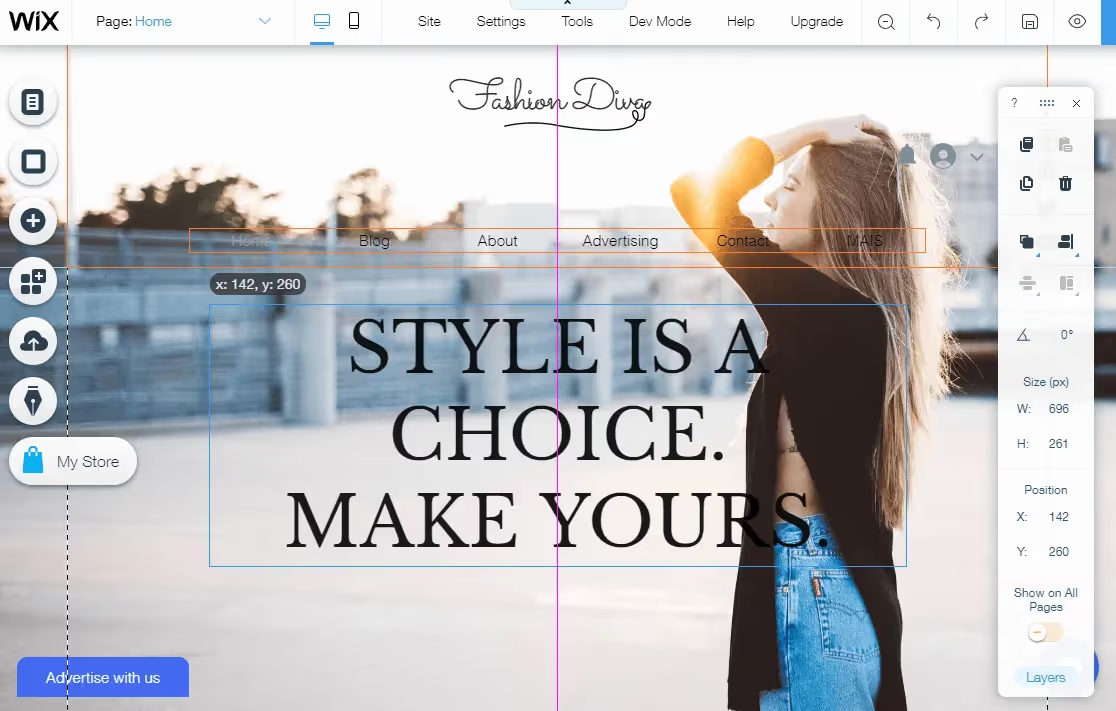
Wix strikes a balance between ease of use and design freedom. The drag-and-drop editor is intuitive, and templates look polished out of the box. You can build a beautiful store without touching code, and the app integration ecosystem is solid. Wix also offers AI-powered site building (Wix ADI) that can construct an entire storefront in minutes. Hosting, SSL, and domain are included. The downside: ecommerce features are less advanced than Shopify's (especially at lower price tiers), and you may hit limitations if you have a massive inventory or complex business logic. But for design-first brands and small businesses, Wix delivers style and functionality in an affordable package.
Key Features
- AI design assistant (ADI) automatically builds initial store layout, color scheme, and basic product structure based on your niche.
- Extensive app store integration (800+ apps) connects inventory management, email marketing, SEO tools, and analytics.
- Mobile-responsive design that automatically adapts to all screen sizes, with one-click mobile optimization included.
- Advanced marketing tools including email campaigns, social media scheduling, and basic SEO optimization built into the platform.
- Flexible payment options supporting PayPal, Stripe, Square, and other processors with competitive transaction rates.
- Template switching within your store's editing process (though it's limited compared to full redesigns).
- Built-in blogging and content features to improve SEO and drive organic traffic through articles and guides.
3. Adobe Commerce
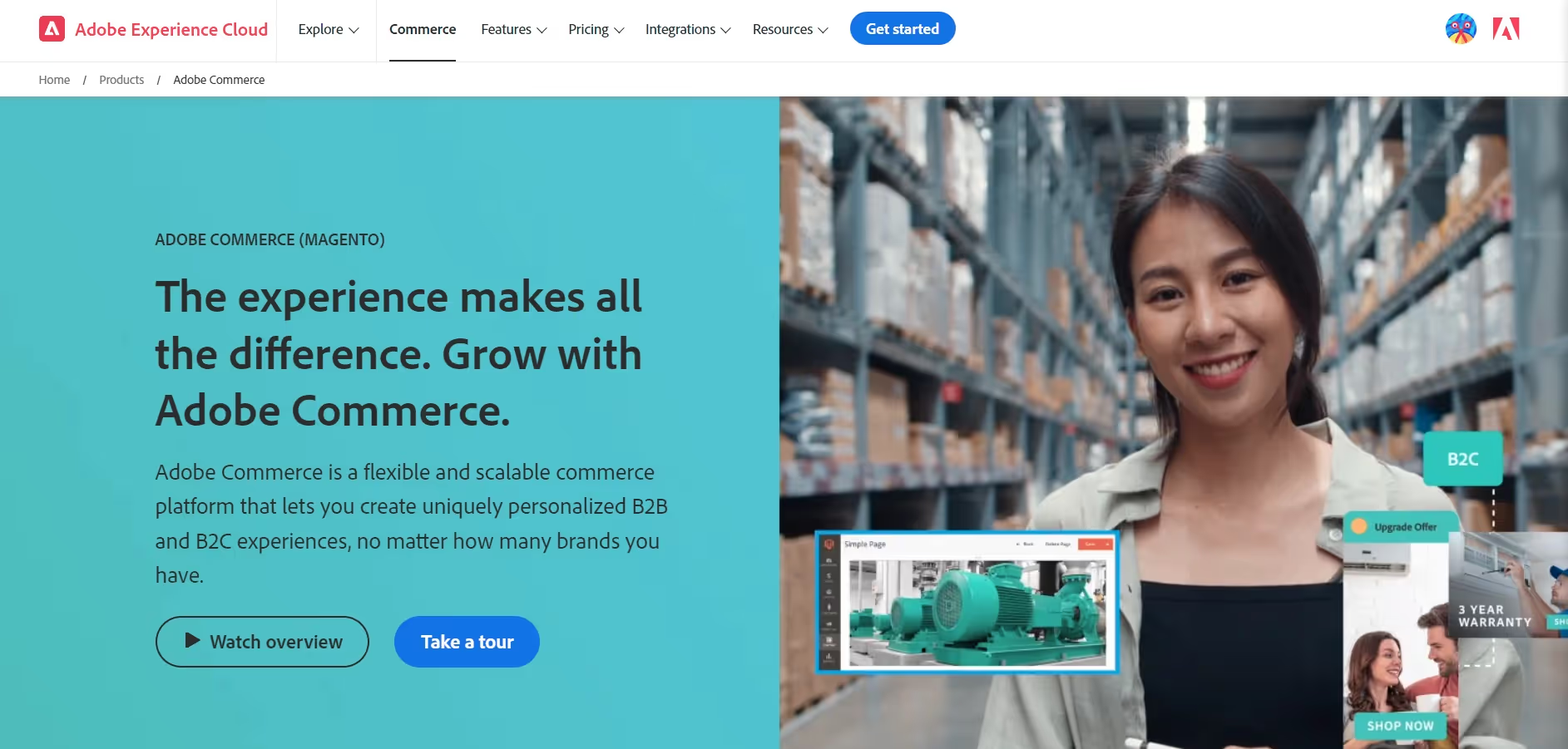
Adobe Commerce (formerly Magento) is enterprise-grade software designed for developers and large businesses that demand complete customization. You get full control over your storefront, integrations, and customer experience. B2B features, complex product catalogs, and advanced automation are all possible. Hosting and support are robust. The learning curve is steep, and you likely need a developer to get the most out of it. This isn't for beginners or solo entrepreneurs testing an idea—it's for established companies with technical resources and thousands of products.
Key Features
- Enterprise-level B2B capabilities including company accounts, bulk ordering, custom pricing by customer groups, and requisition workflows.
- Complete open-source customization allowing developers to modify any function, template, or feature without vendor restrictions.
- Multi-brand and multi-site management through a single admin dashboard, perfect for conglomerates or holding companies.
- Advanced inventory and order management with real-time synchronization across multiple warehouses and sales channels.
- Headless commerce architecture enabling custom frontend experiences while leveraging Adobe's backend for payments, inventory, and fulfillment.
- Built-in Page Builder for drag-and-drop design without coding, accessible to non-technical users.
- AI-powered product recommendations and dynamic pricing based on customer behavior and market trends.
4. DropGenius

DropGenius automates the grunt work of dropshipping. It pulls trending products from AliExpress and other suppliers, generates product descriptions using AI, and syncs inventory automatically. Setup is fast—install the app, choose winning products, and your catalog updates itself. You handle the marketing and customer service; DropGenius handles sourcing and fulfillment logistics. It's built for dropshippers who want to skip product research and focus on sales.
Key Features
- AI-powered product discovery automatically identifies trending items across AliExpress, Alibaba, and other supplier networks based on real-time demand signals.
- Automated inventory syncing updates stock levels in real-time as orders come in, preventing oversells and keeping your catalog accurate.
- One-click product import pulls supplier listings, images, pricing, and descriptions directly into Shopify with minimal manual editing.
- Bulk order processing connects directly to supplier fulfillment, automating the handoff between your store and third-party shippers.
- AI-generated product descriptions and titles optimize listings for both conversions and search engine visibility.
5. Alidrop AI Shopify Store
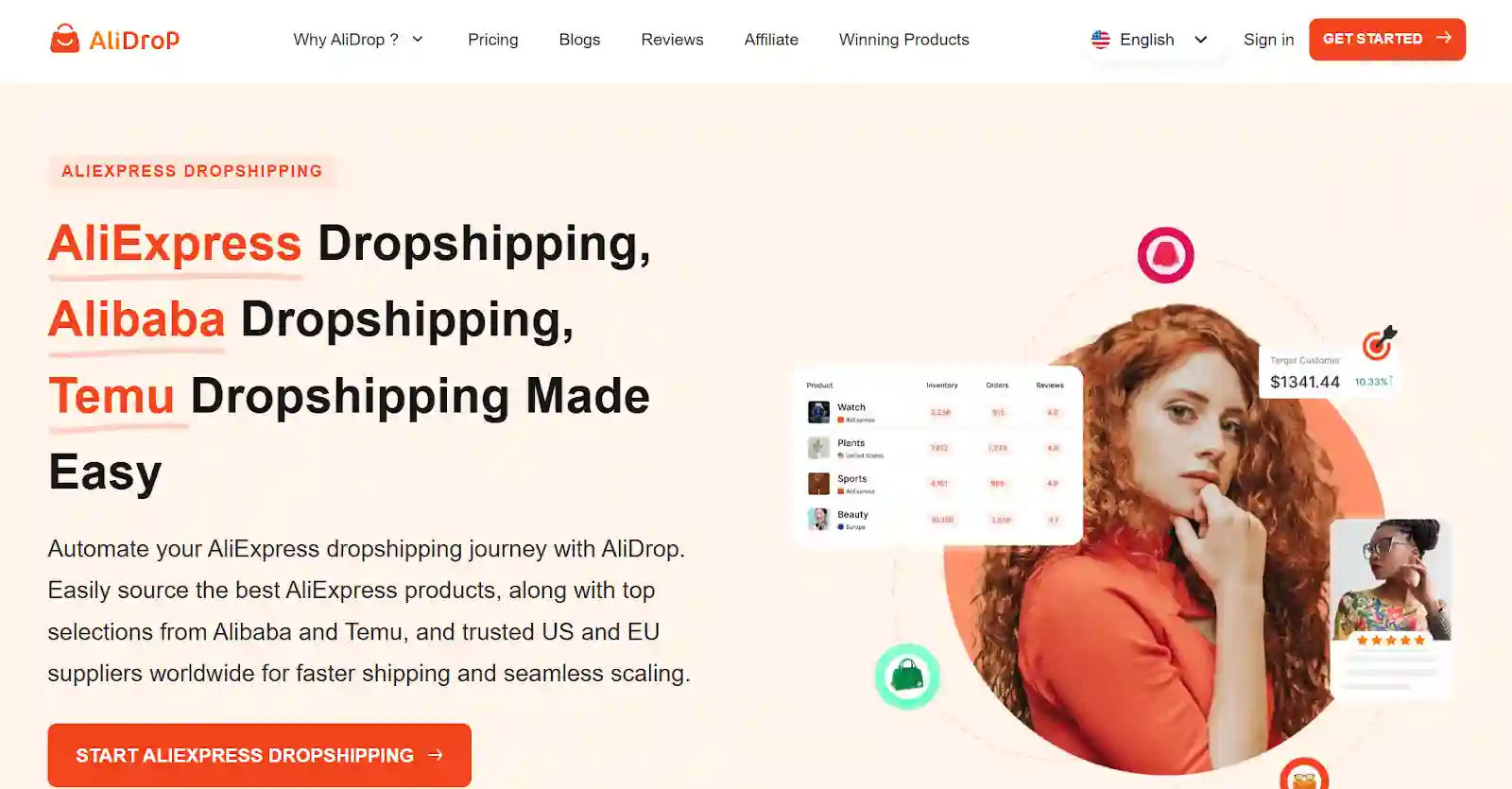
Alidrop is a Shopify-specific dropshipping tool that combines AI product research with supplier management. It analyzes what's trending on AliExpress and sources from vetted US and EU suppliers for faster shipping. The AI recommends pricing, identifies customer preferences, and helps you target high-margin products. It's more strategic than DropGenius—less about automation, more about intelligent product selection and optimization.
Key Features
- AI trend analysis across AliExpress, Amazon, Temu, and Alibaba identifies best-selling products and emerging niches before competition saturates them.
- Supplier vetting connects you to quality US and EU merchants offering 2–5 day shipping instead of 2–3 week standard AliExpress timelines.
- Dynamic pricing optimization uses AI to recommend competitive prices based on market demand, competitor pricing, and your target margin.
- Customer behavior prediction analyzes browsing and purchase patterns to recommend products that appeal to your store's audience.
- Seamless Shopify integration syncs orders, inventory, and customer data automatically without manual data entry.
6. Hostinger
Hostinger's ecommerce builder is designed for budget-conscious sellers who still want modern features. Plans start at $3.99/month for the Business tier (which includes ecommerce functionality). You get a drag-and-drop editor, AI tools (logo maker, SEO assistant, product description generator), email marketing, and hosting all in one. The builder is user-friendly and fast. The main limit is 1,000 products—if you exceed that, you'll need to migrate elsewhere. For side hustles, small service businesses, and bootstrapped startups, Hostinger's combo of affordability and functionality is hard to beat.
Key Features
- AI-powered store builder generates initial site layout, color palette, and product structure in minutes based on your niche.
- Affordable bundled hosting (web hosting, email, domain) included in ecommerce plans with fast server performance.
- Built-in AI SEO assistant suggests focus keywords, generates meta descriptions, and optimizes on-page elements for search visibility.
- Email marketing automation sends abandoned cart reminders, order confirmations, and promotional campaigns directly to customers.
- 1,000-product limit with drag-and-drop editor for product management, pricing, inventory, and variant creation.
- Mobile-optimized checkout with one-click payments and guest checkout options to reduce cart abandonment.
- Multiple payment gateways (100+) support credit cards, PayPal, Apple Pay, and local payment methods.
7. Webflow
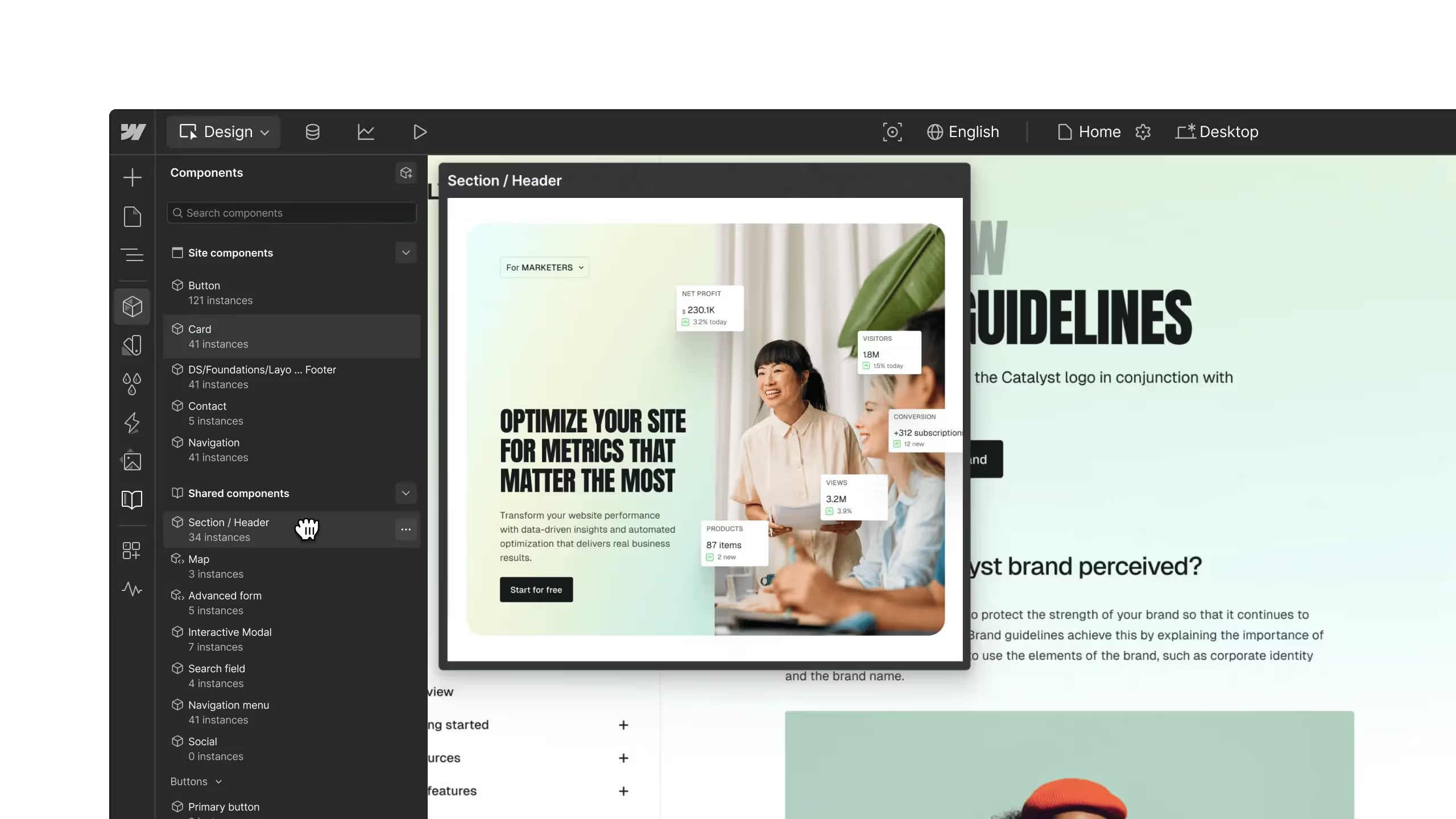
Webflow is for designers who want ecommerce without compromise. It's a visual web design tool that generates clean code, with full ecommerce capabilities built in. You get unlimited design freedom, advanced interactions, and CMS features. Hosting, SSL, and design are all premium. Pricing is higher ($42/month starting), and the learning curve is steeper than Wix or Shopify, but output quality and customization depth are unmatched. Choose Webflow if design and brand control matter more than speed-to-launch.
Key Features
- Fully customizable visual editor builds pixel-perfect designs without coding, with clean HTML/CSS/JavaScript output that ranks well in search engines.
- CMS integration connects product listings to blog posts, creating lifestyle content that drives organic traffic and builds brand authority.
- Advanced SEO tools include full control over meta tags, schema markup, redirects, and site structure optimization.
- Responsive design controls adjust layouts for mobile, tablet, and desktop with custom breakpoint management.
- Stripe and PayPal integration for payment processing, with customizable checkout flows matching your brand design.
- Zapier integration enables automation of workflows between your store and external tools (accounting, email, analytics, fulfillment).
- Client-friendly order management dashboard lets customers track orders and view purchase history without backend complexity.
8. Square
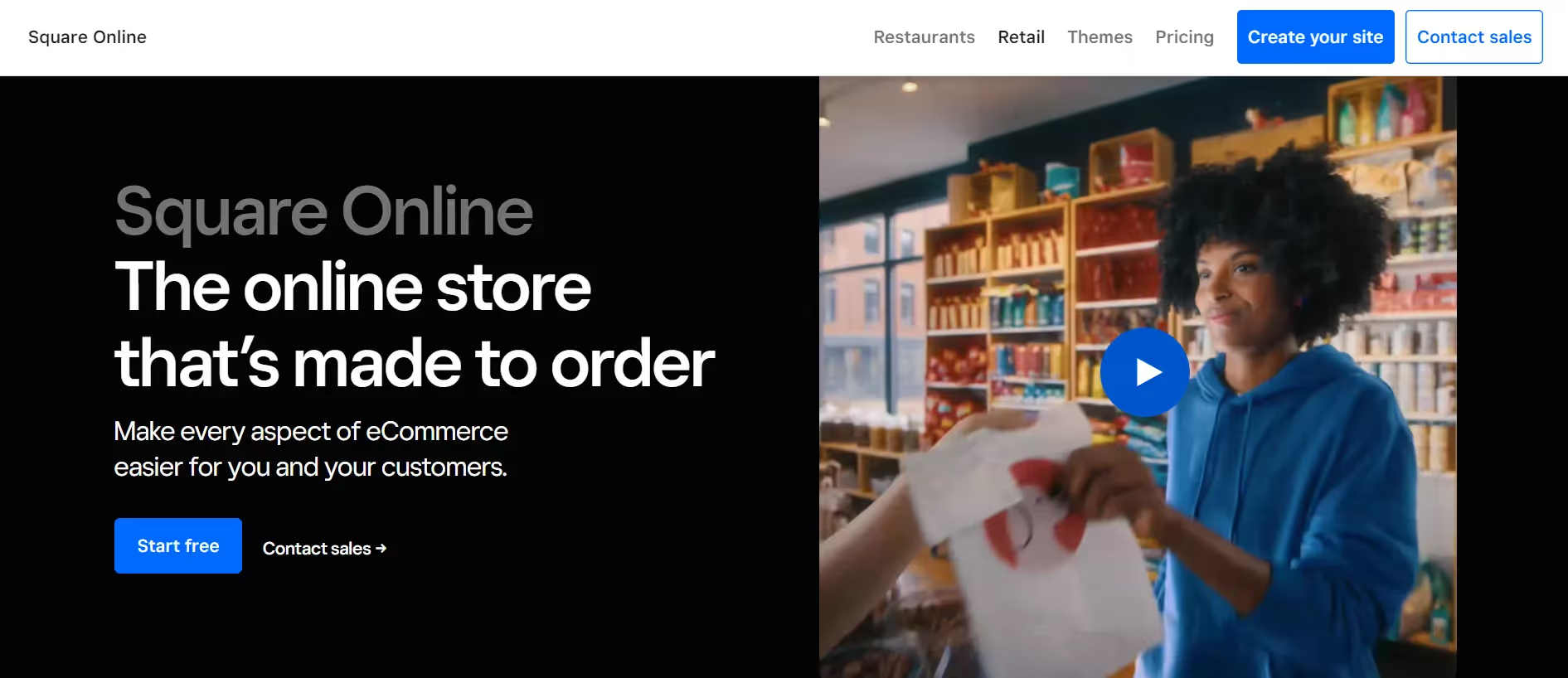
Square Online is ideal if you already own a physical business or use Square POS. Your in-store and online inventory sync automatically, orders merge into one dashboard, and customers see the same products both channels. Setup is dead simple, and you can start free with no monthly fees (just payment processing fees). Design customization is limited, and advanced ecommerce features require paid upgrades, but for brick-and-mortar shops expanding online, Square's unified experience is tough to beat.
Key Features
- Seamless POS integration syncs inventory, customer data, and sales across in-store and online channels automatically.
- Free plan with no monthly fees allows you to start selling online immediately, paying only transaction fees on completed sales.
- Mobile-responsive design adapts to all devices with fast load times and intuitive navigation for a smooth shopping experience.
- Built-in payment processing (Square Payments) handles credit cards, PayPal, Apple Pay, Google Pay, and Cash App directly.
- Pickup and local delivery options let customers retrieve orders at your store or arrange drop-off instead of shipping.
- Promotional tools schedule sales, flash deals, and discounts with pop-up banners and email alerts to drive urgency.
- Multi-location management allows one account to manage inventory and sales across multiple physical store locations.
9. GoDaddy
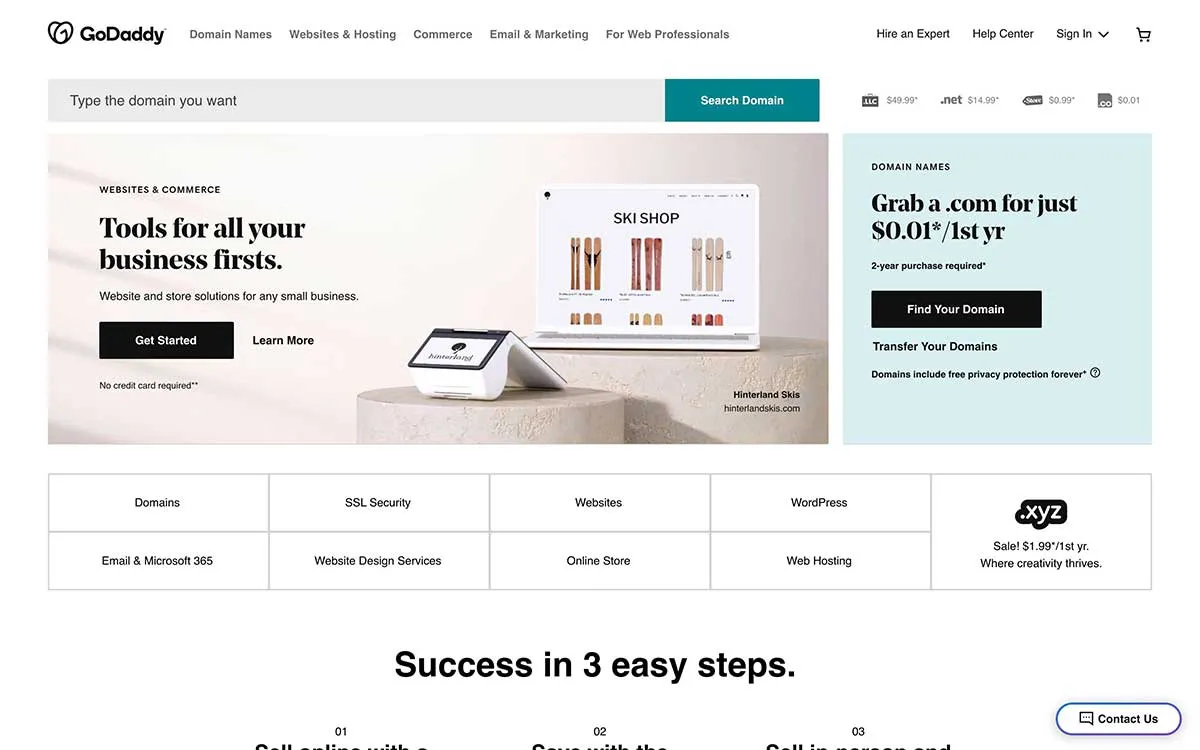
GoDaddy's ecommerce website builder is quick and affordable. Plans start under $20/month, and the AI website builder can generate a functional store in minutes. Templates are modern, and the editor is user-friendly. You get domain, email, and hosting bundled. Integration with GoDaddy's marketing tools and logo maker adds value. The tradeoff: advanced ecommerce features lag behind Shopify, customization is more limited, and the app marketplace is smaller. But for entrepreneurs who want speed-to-market and don't need enterprise-level tools, GoDaddy delivers.
Key Features
- AI-powered website builder generates initial store layout, product pages, and basic customization in under five minutes.
- Affordable bundled pricing includes domain registration, email hosting, and web hosting in one monthly fee.
- Marketing integration with GoDaddy's tools enables email campaigns, social media scheduling, and basic SEO optimization.
- Simple template library (22+ ecommerce templates) with drag-and-drop customization for non-technical users.
- Unlimited product uploads allow you to grow your catalog without hitting artificial caps or needing to upgrade.
- Built-in payment processing accepts credit cards, PayPal, and other major gateways with competitive transaction rates.
- Logo maker tool (free) helps you create a professional brand mark in minutes without design skills.
10. Instamojo

Instamojo is built for Indian sellers and D2C businesses. You get a free store, landing pages, integrated payment gateway (supporting 100+ payment methods including Indian options like UPI and NEFT), and shipping partnerships with major Indian couriers. The platform handles payments and shipping natively—no plugins to install. Support is responsive, and the no-code setup is beginner-friendly. If you're selling in India, Instamojo's local focus and simplicity are massive advantages. For international selling, you'll hit limitations.
Key Features
- Free online store builder with no transaction fees on free plans, letting you test selling without upfront investment.
- 100+ integrated payment methods including UPI, NEFT, PhonePe, Google Pay, and international cards for maximum customer flexibility.
- Shipping integration with Indian couriers (Shiprocket, Delhivery, Dunzo) handles logistics and tracking automatically.
- WhatsApp order notifications and messaging allow direct customer communication without leaving the platform.
- Landing page builder (separate from store) targets specific products or campaigns with optimized designs for conversions.
- Abandoned cart recovery sends automated reminders to customers who didn't complete checkout.
- Email and SMS marketing campaigns built into the dashboard for customer retention and promotions.
11. Dukaan

Dukaan is a no-code ecommerce platform optimized for speed and simplicity. Get a store live in 30 seconds with zero technical friction. It's mobile-first, lightweight, and incredibly affordable (free plan available). Payment processing, inventory, and order management are all built in. WhatsApp integration lets you handle orders through chat. Shipping connects to Indian logistics. Customization is minimal compared to Shopify or Wix, but if you want to test an idea or run a local business online, Dukaan removes all friction.
Key Features
- Mobile-first design approach ensures your store works flawlessly on smartphones, where most of your customers will shop.
- 30-second setup gets your store live immediately with pre-built templates and auto-generated product descriptions.
- WhatsApp-based ordering lets customers place orders directly through chat, perfect for relationship-driven local selling.
- Zero technical skills required; forms-based product input and simple dashboard make store management accessible to anyone.
- Free plan available with basic features, letting you validate a business idea before paying anything.
- Shipping integration with Indian couriers (Shiprocket, Delhivery) and automatic order-to-fulfillment workflows.
- Abandoned cart recovery with email reminders and one-click product links to re-engage hesitant buyers.
12. Ecwid
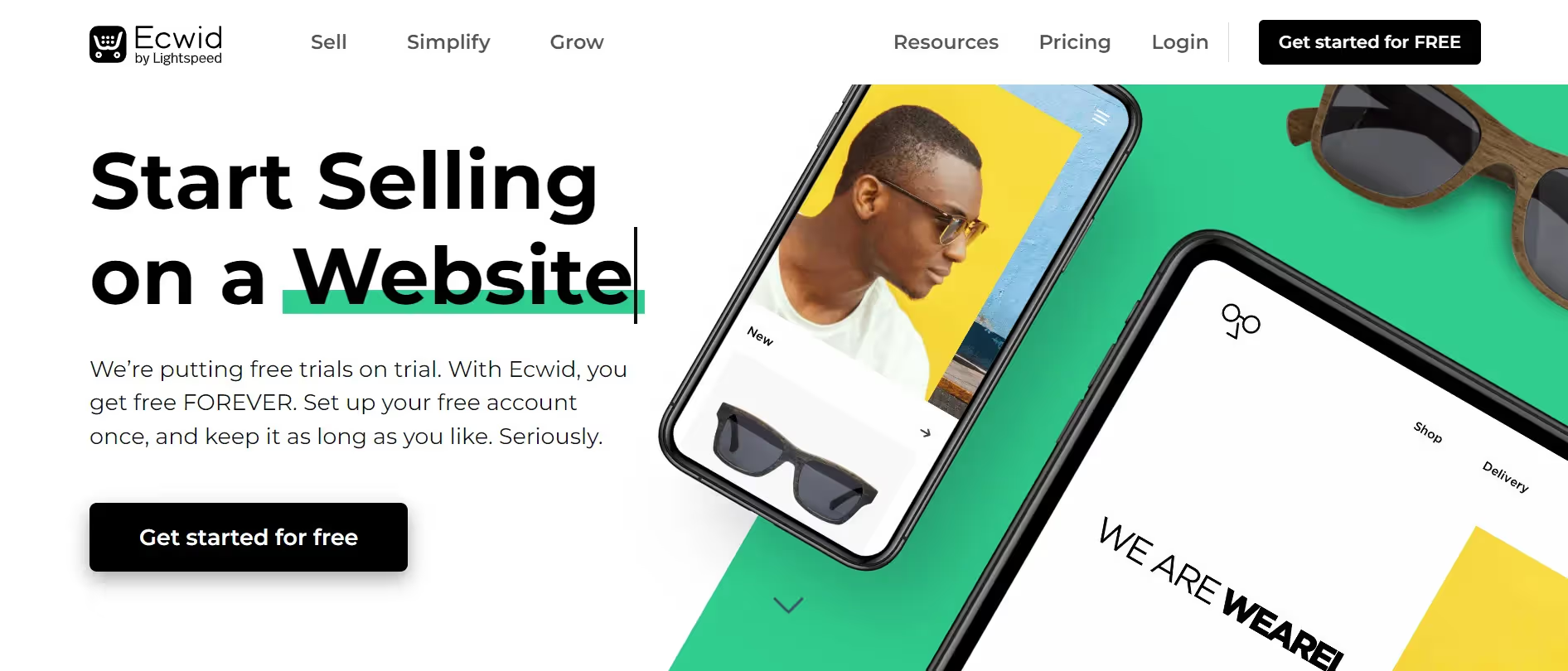
Ecwid lets you add a store to any website—your existing blog, Wix site, WordPress, or social media. It's not a standalone builder; it's a plugin that turns anywhere into a sales channel. Inventory syncs across all channels automatically. Payment options are extensive (80+ gateways). Pricing is reasonable, starting free and scaling affordably. If you already have a web presence and want ecommerce bolted on, Ecwid makes that simple. If you're starting from scratch, the Instant Site builder option gets you going fast.
Key Features
- Omnichannel selling embeds your store on your website, social media, Amazon, eBay, Instagram, and Facebook simultaneously.
- Instant Site builder creates a standalone store quickly if you don't already have a website to embed Ecwid into.
- 80+ payment gateway integrations provide unmatched payment method flexibility globally.
- Inventory sync across all sales channels prevents overselling and keeps stock levels consistent everywhere.
- Abandoned cart recovery with automated reminders brings customers back to complete purchases.
- Multi-language and multi-currency support serves international customers with automatic language detection.
- POS functionality allows offline selling with synced inventory, converting Ecwid into an omnichannel system.
13. OpenCart
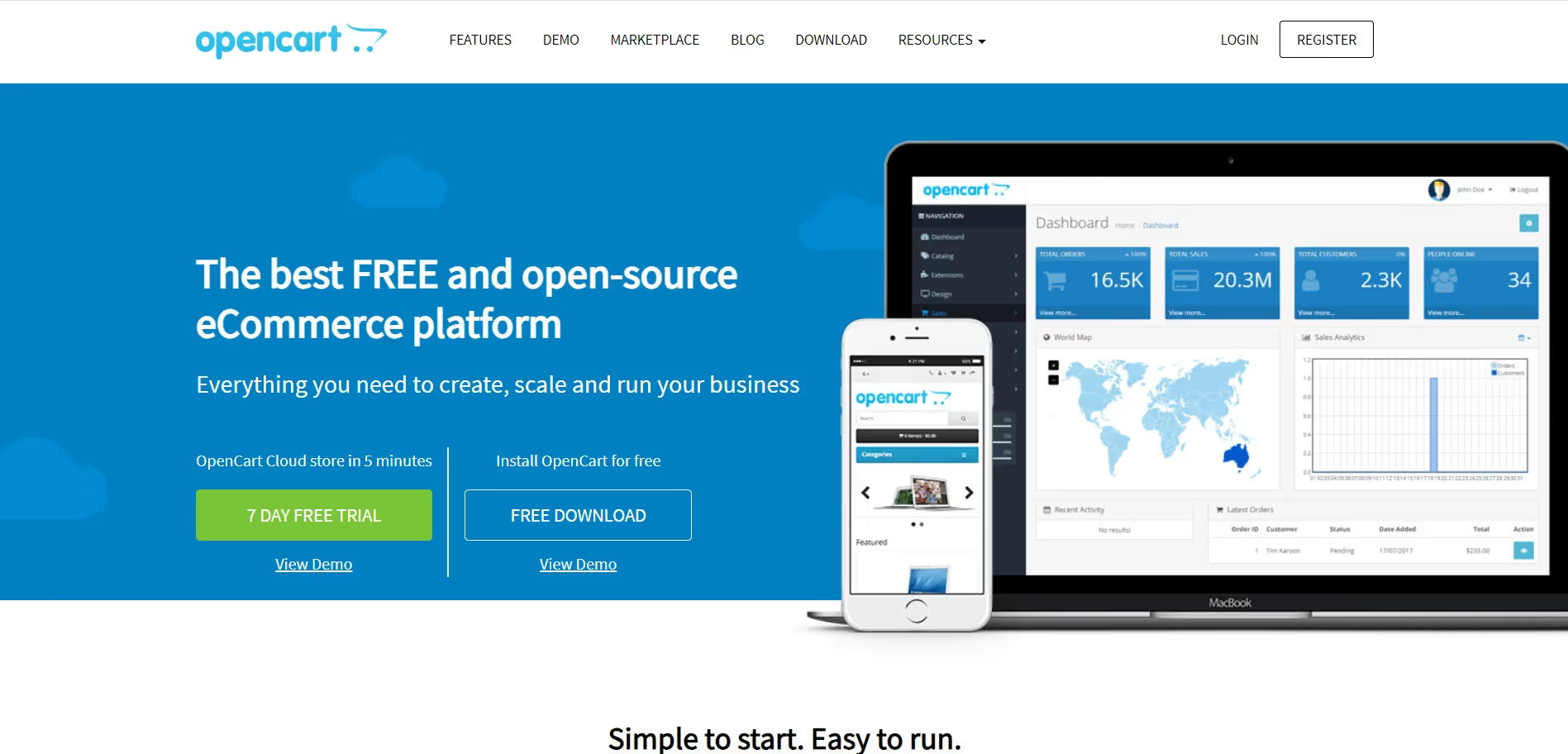
OpenCart is open-source ecommerce software you can self-host. It's free to download, but you pay for hosting (typically $5–$15/month). No vendor lock-in, and you control everything. Customization via community extensions is extensive. The tradeoff: setup requires basic technical skills, and community support varies in quality. For tech-comfortable entrepreneurs who want maximum control and low recurring fees, OpenCart is solid. For beginners, it's overkill.
Key Features
- Open-source code allows complete customization and modification of any feature or function without vendor restrictions.
- Extensive extensions marketplace (1000+ add-ons) lets you add features like advanced shipping, payment gateways, and marketing tools.
- Lightweight and fast hosting on cheap shared servers, keeping infrastructure costs under $10/month.
- Multi-store management operates multiple independent stores from a single admin dashboard.
- SEO-friendly structure with customizable URLs, metadata, and sitemap generation for search engine visibility.
- Customer reviews and ratings build trust and improve product discoverability through user-generated content.
- Detailed order and inventory management with supplier management and multi-warehouse support.
14. Zoho Commerce
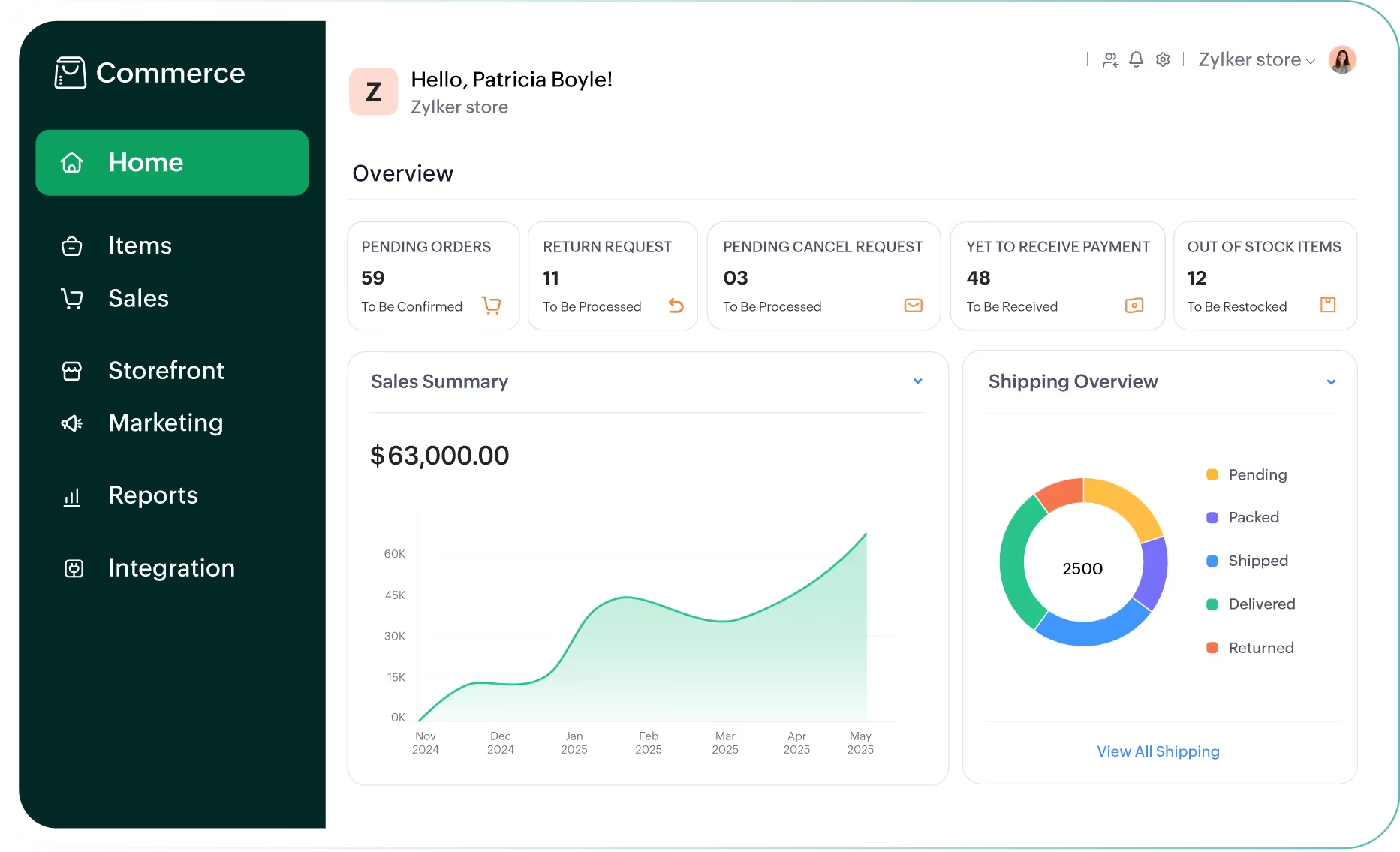
Zoho Commerce integrates with the broader Zoho ecosystem (CRM, Books, Inventory, Email), making it ideal if you already use Zoho tools. The builder is intuitive, B2B features are solid, and pricing is competitive. Payment gateways and shipping options are robust. The main advantage is ecosystem integration—if you manage customers in Zoho CRM and accounting in Zoho Books, Zoho Commerce connects seamlessly. Standalone, it competes but doesn't outshine specialists like Shopify.
Key Features
- Zoho ecosystem integration connects ecommerce with CRM, accounting (Zoho Books), inventory management, and email marketing.
- B2B capabilities enable customer segmentation, custom pricing by group, and wholesale ordering workflows.
- Drag-and-drop store builder with multiple templates and customization options without coding required.
- AI-powered product recommendations analyze customer behavior and suggest items to boost average order value.
- Mobile-optimized responsive design ensures smooth shopping on phones, tablets, and desktops.
- Multiple payment gateways and shipping integrations support global selling with localized payment methods.
- Abandoned cart recovery and email marketing automation built directly into the platform.
15. PrestaShop
PrestaShop is open-source ecommerce software similar to OpenCart. It's free, self-hosted, and highly customizable via modules. The admin interface is more intuitive than OpenCart's, and the community is larger. Hosting costs are low, but you need basic technical skills to set up and maintain. For small to mid-sized businesses with technical resources, PrestaShop is a mature, proven option that avoids monthly platform fees.
Key Features
- Open-source software eliminates recurring platform fees, with only hosting and optional module costs.
- Module marketplace (600+ extensions) adds functionality like advanced shipping, tax calculation, and payment gateways.
- Responsive default templates work across all devices, with further customization available through custom CSS/HTML.
- Multi-language and multi-currency support serve international customers with automatic currency conversion.
- SEO features include customizable URLs, meta tags, and XML sitemaps to improve search visibility.
- Built-in customer reviews and ratings increase trust and provide user-generated content for SEO.
- Advanced inventory and supplier management with purchase orders and inventory forecasting.
16. Weebly

Weebly is a website builder with basic ecommerce capabilities. It's user-friendly, affordable, and quick to set up. Templates are responsive and look professional. However, ecommerce features are stripped down compared to Shopify—you're getting a website builder that sells, not a dedicated ecommerce platform. If you're building a small online presence and selling a few items on the side, Weebly works fine. If ecommerce is your focus, look elsewhere.
Key Features
- Drag-and-drop website builder makes creating pages simple, with ecommerce features accessible through the Stores app.
- Affordable bundled pricing includes domain, email, and hosting in monthly plans starting under $10.
- Mobile-responsive templates automatically adapt to all screen sizes for optimal user experience.
- Integrated payment processing through Weebly Payments accepts credit cards, PayPal, and Apple Pay.
- Built-in email marketing tools allow you to send campaigns and abandoned cart reminders to customers.
- Great shipping options with flat-rate and real-time carrier integrations for order fulfillment.
17. Google Sites
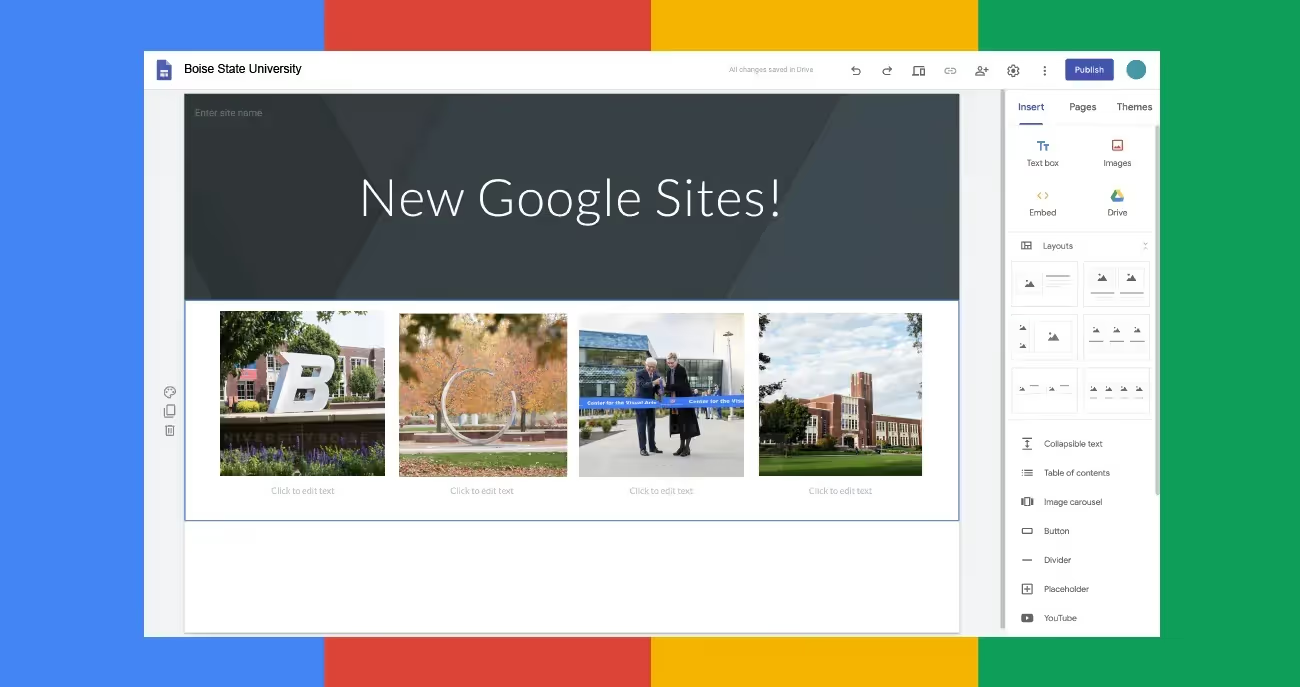
Google Sites is completely free and best for hobbyists, non-profits, or businesses testing ideas with zero budget. It integrates with Google Workspace (Gmail, Drive, Docs) seamlessly. You can embed a shopping cart via third-party tools (like Stripe or PayPal), but ecommerce is not natively supported. Design options are limited, and customization requires some code knowledge. For basic online presence with minimal selling, it's unbeatable. For serious ecommerce, it's insufficient.
Key Features
- Completely free with no monthly fees, letting you publish online without any upfront investment.
- Google Workspace integration embeds product listings from Google Sheets or Docs and connects to Gmail for order notifications.
- Simple templates and drag-and-drop editor make site creation accessible to complete beginners.
- Custom domain support (paid separately) adds professional branding to your free site.
- Third-party payment integration via embedded Stripe, PayPal, or custom code enables order processing.
- Mobile-responsive design automatically adjusts to phones, tablets, and desktops.
- No SSL or hosting concerns; Google handles security and performance automatically.
Conclusion
Choosing the best ecommerce website builder depends on what you're selling, how you're selling, and what you're willing to pay. Shopify leads for serious businesses that prioritize ecommerce tools and scalability. Wix and Hostinger work for design-conscious creators and budget shoppers. Webflow suits brands that demand complete design control. Dukaan and Instamojo are unbeatable for Indian sellers.
OpenCart and PrestaShop appeal to developers who want zero recurring fees. For local shops with physical locations, Square Online integrates beautifully with your existing POS. No single builder wins on every metric—but all of these platforms can help you launch a store that sells.
Try Alidrop if you want to set up a store and start dropshipping today!
Best Ecommerce Website Builder FAQs
What is the best ecommerce website builder for beginners?
Dukaan and Hostinger are the most beginner-friendly, offering free or ultra-affordable plans with minimal setup required. Wix is another beginner-friendly choice if you want design flexibility. All three eliminate technical barriers and let you go live in hours.
What's the best ecommerce website builder for scaling a large business?
Shopify and Adobe Commerce handle high-volume selling, unlimited products, advanced integrations, and complex operations. Shopify scales up from startups to enterprises; Adobe Commerce is purpose-built for enterprise-level complexity and customization.
Can I migrate my store from one best ecommerce website builder to another?
Yes, but it's painful. Exporting products, customer data, and order history is possible on most platforms, but formatting and re-integration take effort. Choose carefully the first time, or use migration services if switching platforms.
Which best ecommerce website builder has the lowest monthly cost? D
Dukaan (free plan), Google Sites (free), and Instamojo (free) have zero-cost options. Hostinger ($3.99/month) and GoDaddy ($20/month) are the cheapest paid plans. Shopify and Webflow are more expensive but offer more features.
What's the best ecommerce website builder if I'm dropshipping?
Shopify with DropGenius or Alidrop apps gives you automated sourcing and order handling. Hostinger and Dukaan work too if you're using external dropshipping suppliers. Ecwid integrates with multiple dropshipping platforms.
Which best ecommerce website builder is best for SEO and organic traffic?
Shopify, Webflow, and Hostinger offer the deepest SEO control. Shopify has SEO apps; Webflow gives you full HTML control; Hostinger includes an AI SEO assistant. PrestaShop and OpenCart (self-hosted) also excel at SEO customization.


%201.svg)


.avif)