

Growing an ecommerce store isn’t always about getting more traffic. Often, the real growth comes from making each sale more valuable. That’s where Upselling and Cross-Selling come in. These two strategies help you increase your average order value (AOV) by encouraging customers to upgrade their purchase or add complementary items to their cart.
For example, upselling might suggest a premium version of the product a shopper is already viewing, while cross-selling recommends related add-ons like accessories or bundles. When done the right way, these offers don’t feel salesy—they feel helpful. And that’s the secret. Upselling and Cross-Selling can improve customer satisfaction, boost revenue, and even increase customer lifetime value without changing your marketing budget.
What Is Upselling and Cross-Selling
Upselling and Cross-Selling are proven ecommerce strategies used to increase order value while improving the customer experience. Instead of pushing random products, both techniques focus on offering more value at the right moment in the buying journey.
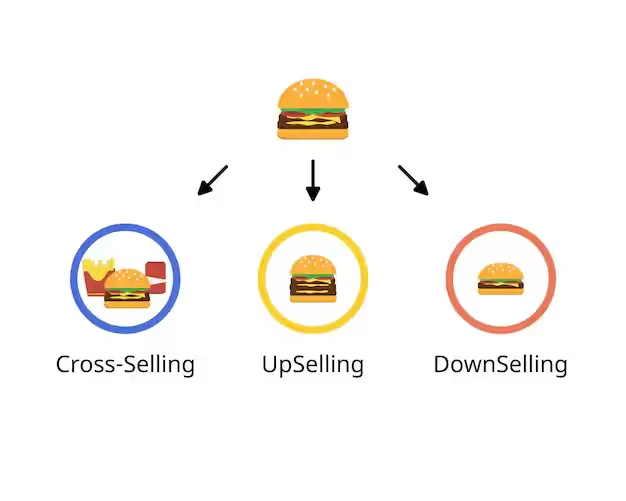
Upselling Definition
Upselling means encouraging a customer to choose a higher-value version of the product they are already interested in. This could be a premium model, a larger size, or a bundled upgrade that delivers better features or savings.
For example, offering a premium version of a product, an upgraded bundle, or a higher quantity at a discounted rate helps customers get more value while increasing your average order value. When done ethically, upselling feels like a smart recommendation—not a hard sell.
Cross-Selling Definition
Cross-selling involves recommending related or complementary products that enhance the original purchase. These suggestions help customers complete their order more effectively.
Common cross-selling examples include accessories, add-ons, refills, or products frequently bought together. By showing relevant recommendations, ecommerce and dropshipping stores can improve customer satisfaction, boost customer lifetime value, and create a smoother shopping experience.
When applied strategically, Upselling and Cross-Selling drive sustainable ecommerce growth by aligning business goals with real customer needs.
Upselling vs Cross-Selling Key Differences
While Upselling and Cross-Selling are often mentioned together, they serve different purposes in the ecommerce sales funnel. Understanding the difference helps you use each strategy at the right time and avoid overwhelming shoppers with irrelevant offers.
Upselling focuses on increasing the value of a single product by encouraging customers to choose a better or more advanced option. Cross-selling, on the other hand, increases cart value by suggesting complementary products that naturally go with the main purchase.
Upselling vs Cross-Selling Comparison
Used correctly, both strategies improve average order value, enhance the shopping experience, and support long-term ecommerce growth without increasing ad spend.
Why Upselling and Cross-Selling Work So Well in Ecommerce
Upselling and Cross-Selling are powerful because they increase revenue without forcing you to spend more on ads or traffic. Instead of focusing only on getting new customers, these strategies help you earn more from the customers you already have — while still improving their shopping experience. When implemented correctly, they feel like helpful recommendations, not sales tactics.
Increases Average Order Value (AOV)
One of the biggest reasons ecommerce brands rely on Upselling and Cross-Selling is because it raises your Average Order Value (AOV). That means every customer spends more per order — without you needing to increase website visitors.
For example:
- A customer buying a basic product may upgrade to a premium version
- A shopper may choose a value bundle instead of a single item
Even a small lift in AOV can make a major difference in profit margins, especially when your ad costs are rising. This is why top ecommerce and dropshipping platforms consistently highlight AOV as the main growth advantage of upselling and cross-selling.
Improves Customer Satisfaction
Many store owners assume upselling and cross-selling annoy buyers — but the opposite is true when the offers are relevant. Customers actually appreciate suggestions that match their needs.
Here’s why it works:
- It helps shoppers discover products they might miss
- It makes the purchase more complete
- It reduces decision fatigue when recommendations are curated
For example, recommending a matching case when someone buys a phone feels helpful. It saves time and makes shopping easier. This is why ecommerce optimization tools often highlight experience improvements alongside revenue.
Boosts Customer Lifetime Value (CLV)
Upselling and cross-selling don’t just improve one sale — they increase how much a customer spends over time, which directly boosts Customer Lifetime Value (CLV).
When customers feel they’re getting more value, they are more likely to:
- Return to your store
- Trust your product recommendations
- Buy larger bundles in future orders
Ethical, value-driven upselling builds loyalty because customers feel you’re helping them make better choices—not just selling more. Over time, this leads to higher repeat purchases, stronger retention, and predictable long-term growth.
Best Upselling and Cross-Selling Techniques That Drive Growth
The best Upselling and Cross-Selling strategies don’t rely on aggressive popups or random suggestions. They work because they offer the right product at the right time — in a way that feels helpful. When done properly, these techniques increase average order value (AOV), improve customer satisfaction, and drive long-term ecommerce growth without needing more traffic.
Product Page Upsell Offers
The product page is one of the strongest places to upsell because customers are still deciding. Here, you can recommend a higher-value option that feels like an upgrade, not a push. This could be a premium version, a bundle with more items, or a larger size that offers better value.
Best ways to upsell on product pages include:
- Offering an upgrade (Standard → Premium) with clear benefits
- Showing a value bundle as a “better deal”
- Encouraging higher quantity purchases using discounts like “Buy 2, Save More”
When the upgrade clearly solves a problem or adds value, customers are more likely to accept it.
Cart Cross-Sell Recommendations
The cart is ideal for cross-selling because the customer has already decided to buy. Now your goal is to increase the cart value by suggesting products that naturally complement their main purchase. These recommendations feel most effective when they are highly relevant and easy to add with one click.
High-converting cart cross-sell methods include:
- “Frequently Bought Together” product pairs
- Complementary add-ons (like accessories, refills, or support items)
- Small-value items that improve the main product experience
Cross-selling in the cart works best when it helps customers complete their purchase instead of distracting them.
Checkout Add-On Upsells
Checkout is the final step, so upsells here should be simple, quick, and valuable. Customers want a fast checkout experience, so avoid showing too many offers. Instead, focus on small upgrades that feel like smart add-ons rather than extra purchases.
Effective checkout upsell examples include:
- Express shipping or delivery upgrades
- Gift wrapping options
- Warranty and protection plans
- Priority handling or customer support upgrades
Because checkout is a high-intent stage, even one relevant add-on can significantly increase AOV without hurting conversions.
Post-Purchase Upsell Funnel
Post-purchase upselling is one of the most powerful strategies because the customer has already completed their payment. At this point, you can present a one-click offer that feels like a bonus rather than a hard sell. This method works especially well when the offer complements what they just bought.
Best post-purchase upsell tactics include:
- One-click add-on offers immediately after checkout
- Discounted upgrades like “Add this now for 15% off”
- Personalized email follow-ups based on what they purchased
- “Next purchase recommendations” that encourage repeat buying
Post-purchase funnels boost revenue while keeping the customer experience smooth — and they’re excellent for increasing customer lifetime value (CLV) too.
Examples of Upselling and Cross-Selling in Real Ecommerce
To truly understand Upselling and Cross-Selling, it helps to see how they work in real ecommerce scenarios. The best examples feel natural because they improve the customer’s purchase — not just the store’s revenue. Below are practical, high-converting examples that ecommerce brands use every day. These are also highly scannable, which helps Google and AI tools surface your content in answer panels.
Upselling Examples (Higher Value Upgrade)
1. Basic to Premium Upgrade
A customer views a basic product, and you recommend a premium version with better features. Example: Standard blender → High-power blender with extra modes.
2. Bigger Bundle Offer
Instead of one item, you offer a bundle that includes more value at a slightly higher price. Example: 1 skincare product → 3-step skincare bundle (cleanser + serum + moisturizer).
3. Premium Packaging or Gift Version
You offer an upgraded packaging option that improves the product experience.
Example: Regular candle → Gift box candle with premium wrapping.
4. Higher Quantity Deal
You encourage customers to buy more units by offering savings.
Example: Buy 1 vitamin bottle → Buy 3 and save 20%.
Cross-Selling Examples (Complementary Add-Ons)
1. Phone Case + Screen Protector
A customer buys a smartphone, and you recommend protective essentials that complete the purchase.
Example: Smartphone → Phone case + screen protector.
2. Shampoo + Conditioner Combo
A shopper adds shampoo to the cart, and you suggest the matching conditioner or treatment for better results.
Example: Shampoo → Conditioner + hair mask.
3. Coffee Machine + Pods Add-On
When someone purchases a coffee machine, cross-selling pods ensures they can use it immediately.
Example: Coffee machine → Coffee pods + milk frother.
4. Dress + Styling Accessories
A customer buys a dress, and you recommend accessories that help them create a complete look.
Example: Dress → Matching belt + jewelry.
How to Do Upselling and Cross-Selling Without Being Pushy
Upselling and Cross-Selling work best when they feel like helpful guidance—not pressure. If shoppers sense they’re being “sold to,” they’ll ignore your offers or abandon the cart altogether. The goal is to increase average order value (AOV) while still respecting customer intent. When your recommendations are relevant and easy to accept, they build trust, improve the shopping experience, and even increase customer lifetime value (CLV) over time.
Keep Recommendations Highly Relevant
Relevance is the foundation of ethical Upselling and Cross-Selling. A good offer feels like it was made for the customer’s situation, not for your inventory. Start by recommending upgrades that improve the exact product they’re viewing, or add-ons that naturally fit what they’re buying.
What “relevant” looks like in ecommerce:
- Upgrades tied to quality, performance, or convenience (Standard → Premium)
- Add-ons that complete the purchase (phone case for a smartphone)
- Refills or replenishment items that customers will need later
The more your suggestions match real buying intent, the more they feel like smart recommendations instead of interruptions.
Avoid Too Many Popups and Interruptions
Popups can work, but too many create friction. If your store shows multiple offers across the product page, cart, and checkout, shoppers may feel overwhelmed and lose trust. Keep your offers limited and place them where they make sense.
A cleaner approach is to:
- Use one strong upsell on the product page
- Use one or two cross-sells in the cart
- Keep checkout add-ons minimal
This keeps the journey smooth while still giving you room to increase AOV without hurting conversions.
Show the Benefit Clearly Not Just the Product
Customers don’t buy upgrades or add-ons because you want them to—they buy because the offer improves their outcome. That’s why your messaging must focus on the “why,” not just the “what.” Instead of simply listing an upsell, explain the value in one simple line.
Examples of benefit-driven positioning:
- “Upgrade to Premium for longer durability and faster performance”
- “Add a screen protector to avoid scratches and cracks”
- “Bundle and save 15% compared to buying separately”
When you clearly communicate the benefit, the offer feels helpful and customers make the decision faster.
Make It Easy to Add With One Click
Even the best recommendation fails if it takes too much effort to accept. High-converting Upselling and Cross-Selling offers are frictionless. Customers should be able to add the upsell or cross-sell with one click—without leaving the page or restarting checkout.
To improve acceptance rates:
- Use “Add to cart” buttons directly inside the recommendation
- Avoid redirecting customers to new product pages
- Keep options simple (don’t show 10 variations)
Ease of use matters because shoppers are often ready to buy—your job is to make the add-on feel effortless.
Offer Discounts When It Makes Sense
Discounts aren’t always necessary, but they can increase conversions when used strategically. The key is to use discounts to reward customers for adding value—not to train them to wait for offers. Discounts work best for bundles, bulk quantity offers, or cart-based add-ons.
.avif)
Smart discount pricing formats include:
- “Buy 2, Save More” quantity deals
- Bundle pricing (“Complete the set and save 10%”)
- Limited-time post-purchase add-on discounts
When discounts support the value of the recommendation, customers feel they’re getting a better deal—not being manipulated into spending more.
Tools That Help Automate Upselling and Cross-Selling
Scaling Upselling and Cross-Selling manually can be difficult, especially when your store has dozens or hundreds of products. That’s why most high-performing ecommerce brands rely on automation tools. The right tools help you show better pricing strategies, smarter offers, personalize recommendations, and increase average order value (AOV) without adding more work to your team. More importantly, automation ensures your upsells and cross-sells appear at the right moment and feel relevant to the customer.
Below are the most effective tool categories that help automate upselling and cross-selling in ecommerce and dropshipping, along with how they work and why they matter.
Product Recommendation Widgets
Product recommendation widgets are one of the most widely used tools for Upselling and Cross-Selling because they increase cart value through relevance. These widgets use customer behavior, purchase history, or browsing data to recommend items that are most likely to be added to the cart.
They are commonly placed on:
- Product pages (“You may also like” or “Upgrade option”)
- Cart pages (“Frequently Bought Together”)
- Homepages (“Top picks for you”)
The biggest advantage is personalization. Instead of showing random products, these widgets recommend items based on what the shopper is already interested in. That improves conversion rates and makes cross-selling feel like a curated shopping experience.
Bundle Builders and Product Kits
Bundle builders allow you to create product combinations that make upselling easier. Instead of offering a single item, you present a bundle that feels like a better deal. Bundles also reduce decision-making because customers can buy a complete set in one click.
Common bundle types include:
- Starter kits (3 related products grouped together)
- “Buy more, save more” bundles
- Mix-and-match bundles for product variations
- Product sets (example: shampoo + conditioner + serum)
Bundles are effective because they increase perceived value while improving AOV. A customer may not want three items individually, but a bundle makes it feel like a smart and convenient purchase.
One-Click Post-Purchase Upsell Tools
Post-purchase upsell tools are designed to increase revenue after checkout without disrupting conversions. These tools show a relevant offer immediately after a customer pays, allowing them to accept with one click. Since the customer has already purchased, this is often the easiest point to earn extra revenue.
Post-purchase offers work best for:
- Accessories that complement what was purchased
- Discounted add-ons with urgency
- Higher-tier upgrades for the same product category
- Frequently paired products that enhance usage
The one-click experience is important. Customers should not have to re-enter payment details. The smoother it is, the higher your acceptance rate and the stronger the long-term revenue impact.
Email Automation for Smart Cross-Selling
Email automation is one of the most powerful ways to extend Upselling and Cross-Selling beyond the website. It helps you generate repeat purchases and strengthen customer lifetime value (CLV) by sending personalized offers after a customer buys.
High-performing ecommerce email flows include:
- Post-purchase follow-up emails with recommended add-ons
- Refill reminders for consumable products
- Upgrade offers after 7–14 days
- Bundled deals for returning customers
- Win-back campaigns that include relevant cross-sells
Unlike website offers, email gives you time to personalize and explain the benefit. When done well, it feels like helpful guidance rather than marketing noise.
How AliDrop Helps Improve Upselling and Cross-Selling Results
Strong upselling and cross-selling often starts with your product selection. If your catalog includes items that naturally pair together or offer upgrade paths, it becomes easier to increase AOV. This is where AliDrop can support ecommerce growth, especially for sellers sourcing from AliExpress suppliers.
With AliDrop, you can focus on:
- Selecting products that have clear add-on potential (accessories, refills, bundles)
- Finding items that offer premium upgrades (basic vs premium versions)
- Building a store catalog that supports bundles and product kits
- Selling complementary products that naturally increase cart value
When your product strategy supports bundling and upgrades from the start, your upsells and cross-sells feel more natural and convert more consistently.
Quick Checklist for High-Converting Upsell and Cross-Sell Offers
The best Upselling and Cross-Selling campaigns are intentional, tested, and customer-focused. Use this checklist to ensure your offers drive growth without reducing trust or harming conversions.
- Use product data and buyer behavior to guide recommendations
- Offer upgrades that are meaningful and clearly better, not just more expensive
- Cross-sell only complementary items that improve the customer’s purchase experience
- Test placement across the funnel (product page, cart, checkout, post-purchase)
- Track AOV, conversion rate, and add-on acceptance to measure impact
- Keep offers simple and frictionless with clear “Add to cart” options
- Avoid overwhelming shoppers with too many suggestions at once
- Focus on value first, revenue second to build long-term loyalty
When your offers are relevant, timed well, and easy to accept, Upselling and Cross-Selling become one of the most reliable growth strategies in ecommerce.
Conclusion
Upselling and Cross-Selling are simple but powerful strategies that help ecommerce brands grow faster by increasing average order value (AOV), improving customer lifetime value (CLV), and creating a smoother shopping experience. The best part is you don’t need more traffic to see results—you just need smarter offers. Start small by testing one strategy first, such as a product page upgrade or a cart add-on, then optimize based on performance. Want to implement this faster? AliDrop helps you source products with strong upsell and bundle potential, making it easier to build a store that naturally increases revenue.
Upselling and Cross-Selling FAQs
What is upselling and cross-selling?
Upselling and cross-selling are ecommerce sales strategies that increase order value. Upselling encourages customers to upgrade to a higher-value product, while cross-selling recommends related items that complement the original purchase, improving both revenue and customer experience.
What is upselling with an example?
Upselling is when you encourage a customer to buy a better version of what they’re viewing. For example, someone choosing a basic phone can be offered a premium model with more storage, better camera quality, and added features.
What is an example of cross-selling?
Cross-selling recommends products that go well with what the customer is buying. For example, if someone buys a laptop, suggesting a mouse, laptop bag, or extended warranty is cross-selling because it complements the original purchase.
What is the 2 2 2 rule in sales?
The 2 2 2 rule in sales is a follow-up method: contact the lead within 2 minutes, follow up again within 2 hours, and reconnect within 2 days. It improves response rates, builds trust, and increases conversion potential.
Which is better for ecommerce growth?
Both work well, but they serve different goals. Upselling increases product value through upgrades, while cross-selling grows cart size with add-ons. For ecommerce growth, using both strategically often drives higher AOV and stronger customer lifetime value.
Can upselling reduce conversions?
Yes, upselling can reduce conversions if it feels pushy, irrelevant, or overwhelming. Too many offers can distract customers or slow checkout. The best upsells are simple, useful, and placed naturally, so they improve value without causing hesitation.
What tools help with upselling and cross-selling?
Upselling and cross-selling tools include product recommendation widgets, bundle builders, one-click post-purchase upsell apps, and email automation platforms. These tools personalize offers, reduce manual effort, and help increase AOV while maintaining a smooth shopping experience.


%201.svg)


.avif)