

Every dropshipping store looks the same now. The product research tools, store builders, and copywriting prompts that once gave sellers an edge are sitting in everyone's toolkit, so thousands of stores end up launching the same products with the same copy in the same week. You are not just competing with other sellers anymore. You are competing with an army of stores that look and sound exactly like yours.
What changed, and what to do about it, breaks down into a few specific shifts. You will see why the easy tools stopped being an advantage, why shoppers got harder to convince, and what separates the stores still growing from the ones stuck bidding against everyone else for the same traffic.
How Is AI Changing AliExpress Dropshipping in 2026?
.webp)
AI changed dropshipping by making the basics too easy to count as a real edge. AI product research tools for dropshipping can surface trending products in seconds. Store builders can put together a clean, professional-looking storefront in minutes. ChatGPT can write product descriptions and ad angles that read fine on their own.
The problem is that everyone has access to the same tools. When thousands of sellers run the same research methods, they spot the same trending products at the same time. Launching a finished store used to take weeks. Now it takes minutes, which means a single winning product can end up in thousands of nearly identical stores within days.
That is the real story behind how AI is changing AliExpress dropshipping in 2026. The tools that used to separate a serious seller from a hobbyist are now table stakes. If product research, a decent store, and AI-written copy are the only things you bring, you look like your competition, and price is the only thing left to compete on.
Is AliExpress Dropshipping Dead in 2026?
AliExpress dropshipping is still alive in 2026. What's fading is the old playbook: source a generic product, build a basic store, run some ads, and wait for it to convert on its own.
A product used to take months to go from a fresh find to a saturated market. Now a single product can go from new to fully saturated within weeks, because thousands of sellers can spot and launch it at the same time. When that many stores chase the same audience with the same product, ad costs climb fast. Sellers end up bidding against each other for the same customers, which pushes the cost per purchase higher and squeezes margins that were already thin.
This is why basic AliExpress resale on its own is struggling. Sellers who are still profitable have changed how they source, package, and market their products, the same shifts covered next.
How AI-Generated Content Is Eroding Customer Trust?
AI did not just make stores look alike. It also made shoppers more skeptical of every store they land on, including legitimate ones. Fake product reviews, fake testimonials, and AI-generated endorsements from influencers who do not actually exist are now common across the internet. AI video generation tools can produce a convincing clip of someone "using" a product, when neither the person nor the demonstration is real.
This is only getting harder to spot. The line between real and AI-generated content keeps getting thinner, and a watermark or disclosure label is often the only way to tell the difference. Shoppers have picked up on this, so they scan every new store for signs that it is generic or fake before they buy anything.
That means small details matter more than they used to. Product descriptions that read like they came straight out of ChatGPT, with the same recycled phrasing and stray dashes, are an instant red flag. Product photos that look like an overly polished stock shoot, rather than something a real seller put together, raise the same concern. Either signal can send a shopper away even when your store and your product are completely legitimate.
The Middleman Strategy: How to Build a Dropshipping Business AI Cannot Copy?
Once you understand what changed, you can use it to your advantage. Most sellers act like a retailer: find a product, mark it up, and sell it. A stronger position is to act like a middleman instead, the business that connects supply and demand without owning either side of it.
Think about how this plays out elsewhere. Amazon, Uber, and Airbnb built massive businesses without owning the products, cars, or properties they connect people to, because the real value sat in controlling that connection.
Applied to dropshipping, this means controlling two things: where your products come from and how customers come to trust you. The first comes down to your supplier relationships and how you source and package products. The second comes down to the content and proof you put in front of shoppers. Build both, and you end up with a business that is harder to copy just by using the same tools as everyone else.
Diversify Your Suppliers Beyond Basic AliExpress Resale
If you source everything through a single resale layer, you are working with the same products, pricing, and shipping times as every other seller doing the same thing. There is no room to compete on selection or price, which leaves ad spend as the only lever, and thin margins make it hard to outbid anyone there either.
Branching into other supplier relationships changes that math. Sourcing through Alibaba suppliers and Temu suppliers opens up pricing and product selection that sellers stuck on one source will not have. Pulling in the best US and EU suppliers also shortens delivery windows, which matters because customers who wait weeks for a product in unbranded packaging rarely place a second order.
AliExpress can still be part of the mix. The shift is treating it as one source among several, so you have room to negotiate better margins, carry products your competitors do not have, and ship fast enough to keep customers coming back.
Use Custom Packaging and Branding to Prove You Are a Real Business
Once you are doing consistent volume, generally somewhere north of 200 orders a month, custom packaging starts to make financial sense. Adding your logo to the box and including a branded insert or thank-you card signals that an actual company is behind the order, not a random reseller.
This pays off beyond the unboxing itself. Customers who get a package that feels premium are more likely to film it, post about it, and tell their own story around it. That kind of content, real people showing your real product with your real branding, is something a competitor cannot fake or copy by using the same supplier or the same store template.
How to Automate Shopify Dropshipping Fulfillment with AI?
Once your store is live, the next bottleneck is fulfillment. Manually placing orders on AliExpress, copying tracking numbers, and updating customers eats up hours every week as order volume grows, which is exactly the kind of work AI tools are built to remove.
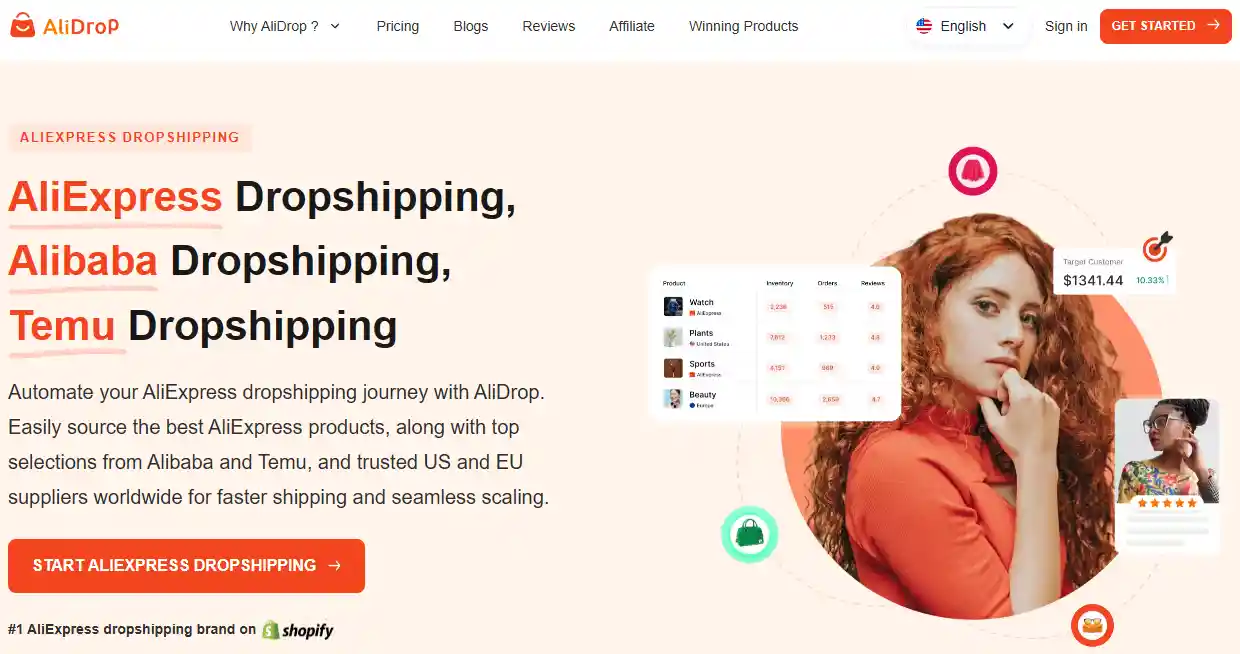
Alidrop is one way to auto fulfill AliExpress orders with AI: it syncs orders and tracking data without manual input and integrates with major platforms including Shopify, Amazon, and more. It comes with a 7-day free trial, after which plans start at $39 a month for the Starter tier with up to 50 unique products. Higher tiers add more unique and premium products, a product analyzer, and 24/7 VIP chat support, and annual billing brings costs down further, with savings of up to 40% depending on the plan. Sellers who want a ready-made store can also opt for Alidrop's custom store service, a one-time setup that includes store design and product importing.
Alidrop's AI Shopify store builder sets up a store stocked with products in minutes instead of days, and its AI product description writer generates SEO-optimized listings instead of generic, templated copy. Both tools get you past setup fast, so you can spend more time on the supplier relationships and content that actually matter.
For sourcing, the Alidrop marketplace shows what is currently trending, which gives you a faster read on demand than manually checking order volumes product by product. Higher-tier plans also include a product analyzer to help you evaluate a product before you commit ad spend to it.
How to Find UGC Creators Who Make Your Brand Look Real?
Trust comes back through real people: the kind of creator who feels like a regular customer rather than a polished spokesperson reading a script. That is what makes a shopper believe a product actually works.
You have two easy ways to find these creators. On X, search your niche plus "UGC creator," for example "yoga UGC creator," and you will find people already making content for brands in that space. They already know how to hook attention and pace a video, so you are not teaching someone the basics. On Fiverr, search "UGC creator" directly, where you can browse portfolios and see pricing upfront, which makes it easier if you are just starting out.
When vetting creators, check whether they already post about your niche organically and whether their existing content feels natural rather than overly polished. When you reach out, mention something specific you liked about their content instead of sending a generic message, since specificity gets a better response rate. A simple tracker of who you contacted and their response status keeps your outreach organized as the list grows.
Once you are working with someone, give them the outcome you want rather than a rigid script. Asking for an honest first reaction and an unboxing gets more natural results than a five-page brief with exact lines to read. Costs typically run $150 to $500 per video on X and $100 to $200 per video on Fiverr, depending on the creator's experience, and you own the content to reuse across ads and product pages.
This is exactly the model behind TikTok Shop's growth, where regular people give honest, on-camera opinions about products they actually use. Cirkul, a flavored water bottle brand, has built much of its visibility this way, with hundreds of different creators making content about the same product in their own voice.
Top Mistakes to Avoid When Dropshipping With AI in 2026
Here are top mistakes to avoid when dropshipping with AI this year:
- Relying on AliExpress as your only supplier: Sourcing everything from one place means identical products, pricing, and shipping times as every other seller, leaving price as the only lever left to compete on.
- Publishing AI-written copy unedited: Product descriptions that read like generic AI output, with repetitive phrasing and stray dashes, signal that your store is running the same playbook as thousands of others.
- Using overly polished, stock-style product photos: Images that look like a professional studio shoot rather than something a real seller put together can raise the same red flags as fake reviews.
- Sending creators a rigid, scripted brief: A five-page document with exact lines to read produces stiff, overproduced content that feels fake. Give creators the outcome you want and let them use their own voice.
- Skipping custom packaging once you hit consistent volume: Generic packaging makes it obvious you are running a basic resale store, while branded packaging gives customers something authentic to film and share.
- Ignoring shipping times: Long delivery windows frustrate customers and raise the odds of a refund request rather than a repeat order.
Conclusion
AI did not kill dropshipping. It killed the version where finding a product and copying a template was enough to win. The sellers who keep growing treat supplier relationships, packaging, and real customer trust as part of the actual product, not just the storefront wrapped around it.
You do not need to overhaul everything at once. Start by diversifying where you source from and finding even one or two creators who can show your product honestly. From there, you can build a store that keeps customers coming back. Try Alidrop for free to put these pieces in place faster.
How AI is Changing AliExpress Dropshipping FAQs
Is AliExpress dropshipping dead in 2026?
No, but the version that worked a few years ago, sourcing a generic product and running ads with no differentiation, does not hold up the way it used to. Stores that diversify their suppliers, add real packaging, and use honest creator content are still growing. The basic resale-only approach is what struggles, not the AliExpress platform itself.
What are the best AI dropshipping tools for beginners?
Tools that automate store building and product descriptions, like AI Shopify store builders and AI product description writers, save the most time when you are just starting out. They handle setup and listing work automatically, so you can spend more of your time on supplier relationships and creator content, which matter more for long-term growth than the tools themselves.
How do I automate AliExpress order fulfillment?
Platforms built for AliExpress dropshipping can sync orders and tracking data automatically once a customer checks out, removing the need to manually place and track every order yourself. Look for a platform with reliable supplier connections and direct integrations with your storefront, since that combination cuts down on manual double entry and lost tracking numbers.
How do I find UGC creators for my dropshipping store?
Search your niche plus "UGC creator" on platforms like X or Fiverr to find people already making content in that space. Vet them for natural, niche-relevant content rather than an overly polished portfolio, then give them an outcome to film rather than a rigid script for more authentic, trustworthy results.
Why do customers distrust AI-generated dropshipping stores?
Fake reviews, AI-generated testimonials, and overly polished stock photos have made shoppers more skeptical of new stores in general, even completely legitimate ones. Product descriptions that read like generic AI output and product photos that look too staged are common red flags, and either one alone is often enough to send a shopper away before they buy anything.
How much does it cost to work with UGC creators?
Costs typically range from about $100 to $500 per video, depending on the platform you use and the creator's experience level, with Fiverr usually running cheaper than X. One video that converts well can pay for itself many times over once it is running as an ad or posted on product pages.


%201.svg)