

You pick a product on AliExpress. The listing says 12 to 20 days. You copy the shipping estimate to your store, cross your fingers, and wait. A customer orders. Five days later, the tracking number still shows nothing. By day eight, your buyer is emailing, then filing a dispute. You message the supplier. They reply, “Dear friend, please wait.” Meanwhile, your store’s reputation takes a hit you can’t undo.
Manual AliExpress dropshipping puts shipping entirely outside your control. You depend on supplier honesty about lead times. You rely on third-party carriers that might not scan packages for a week. When something breaks, you are the only one who can fix it, and you can’t actually fix it. AliDrop approaches the same problem from the other direction. It automates fulfillment, filters suppliers by actual delivery performance, and connects you to warehouses in your buyer’s country. The difference is not marginal. It’s the gap between a refund spiral and a repeat customer.
Challenges You Face with Manual AliExpress Dropshipping
Shipping is the single biggest reason new dropshipping stores fail. Manual processes turn small hiccups into full-blown customer service nightmares. Here are the specific problems that surface when you handle everything yourself.
1. Suppliers Promise Fast Shipping but Ship Slow
Many AliExpress suppliers list optimistic delivery estimates to attract dropshippers. Their product page says ePacket delivery in 7 to 10 days. In reality, they wait three days to pack the item, the carrier misses a scan, and the package sits in a Chinese sorting hub for another four days. Suddenly, the two-week window becomes a month.
You cannot verify a shipping claim until after customers start complaining. By then, you have already published the estimate on your product page. Shortening the listed window later looks dishonest. Lengthening it makes your offer less competitive. Manual sellers are stuck between disappointing buyers or scaring them off.
2. Tracking Numbers Go Silent for Days
With manual fulfillment, you hand-enter tracking codes from the supplier into Shopify. Sometimes those codes never register. Other times, the tracking updates once in China and then freezes for ten days while the package crosses customs. Customers assume the item is lost and contact you, or worse, their bank.
You message the supplier. The supplier blames the carrier. The carrier has no customer support you can reach in English. You end up issuing a refund for an item that eventually arrives three weeks later. Manual sellers absorb losses that better systems would prevent.
3. You Waste Hours on Supplier Communication
Every delayed shipment requires a conversation. You log into AliExpress, type a message, wait hours for a reply, often in broken English. You translate tracking updates manually. You ask for proof the item shipped. The supplier sends a blurry photo of a package. You send that to the customer. The customer is not impressed.
Multiply that by ten orders a day, and you have a full-time job just chasing packages. The time drain makes it impossible to scale. You are not building a business. You are running a complaint department for shipping carriers you did not choose and cannot control.
4. No Easy Way to Compare Shipping Performance
On AliExpress, shipping method names are inconsistent. One supplier calls it “AliExpress Standard Shipping.” Another calls it “SunYou Economic Air Mail.” You have no dashboard that shows which methods actually deliver on time. You rely on guesswork and the supplier’s word.
If you want to switch to a supplier with faster shipping, you have to search manually, open dozens of listings, and compare inconsistent data. Most manual sellers stick with the first supplier they find, even if that supplier consistently misses deadlines. Switching costs time they do not have.
5. Manual Order Processing Adds Unnecessary Delays
When a customer places an order, you must log into AliExpress, copy the shipping address, paste it into the order form, and manually pay. If you are away from your computer for a few hours, the order sits unprocessed. During peak seasons, a six-hour delay means your package goes out a day later.
You also make mistakes. A typo in the address. Selecting the wrong variant. Forgetting to include the apartment number. The package returns, or worse, gets delivered to the wrong door. Each error creates another refund request and another round of apologetic emails. The delay is not just the carrier’s fault. It starts with you.
6. Inventory Gaps Cause Backorders and Angry Messages
You list a product on your store. The supplier runs out of stock but does not update the listing. A customer orders. You place the order on AliExpress and get a message two days later: “Sorry, this item out of stock, we refund you.” Now you have to tell a buyer their order cannot be fulfilled.
You scramble to find a replacement supplier, but shipping will take even longer. The customer cancels. You eat the chargeback fee. Manual inventory syncing is reactive. You find out about stock issues only after they have already cost you a sale.
7. Setting Delivery Expectations on Product Pages Is a Guessing Game
Without reliable data, your shipping policies are vague. “Delivery in 15 to 30 business days” sounds like a warning label, not a promise. Customers skim it and buy anyway, then get upset at day 16. You have no way to tailor the estimate to a specific product or location.
If a product ships faster from a US warehouse, you might not even know that option exists. Manual research cannot surface warehouse locations quickly. So you list one generic estimate across your entire store, and every delayed order confirms to your buyers that you are unreliable.
How AliDrop Handles Shipping Times Better Than Manual AliExpress Dropshipping?
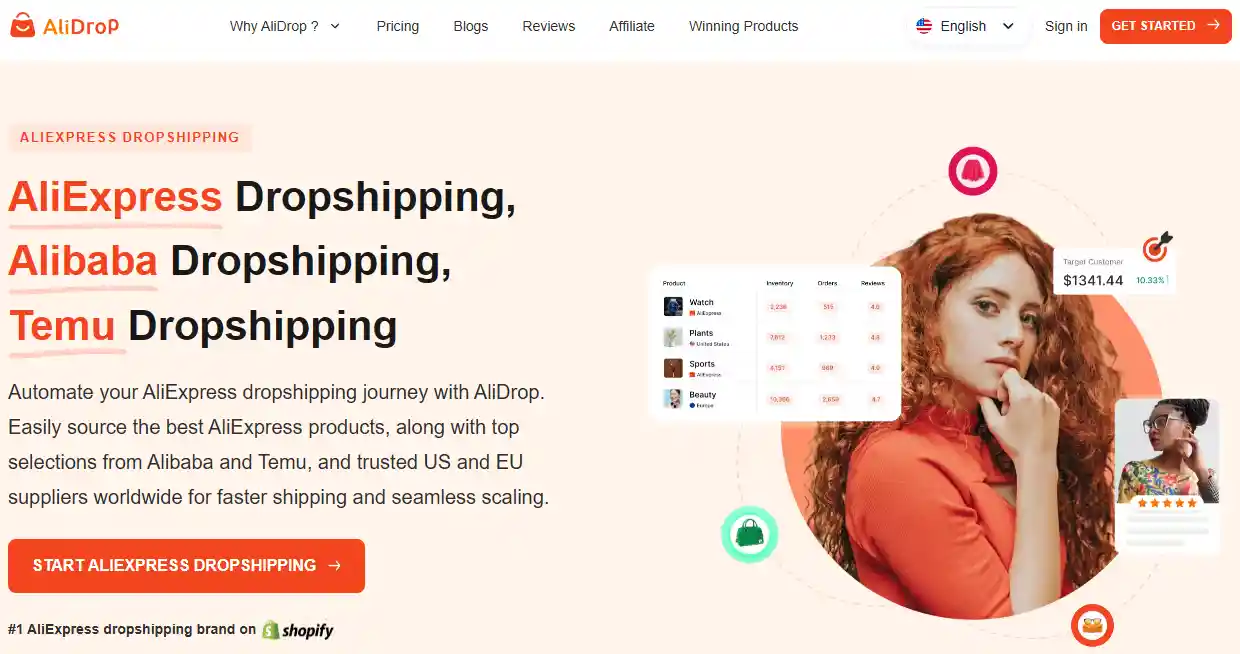
AliDrop replaces guesswork with automation and curated sourcing. Instead of hand-picking suppliers based on a product photo, you pull from a network vetted for shipping reliability. Instead of copy-pasting tracking numbers, you let the system sync them automatically. The result is faster delivery, fewer complaints, and a business that scales without breaking.
1. Curated Suppliers with Proven Shipping Performance
AliDrop does not pull from open AliExpress search results. The Alidrop marketplace surfaces products from suppliers that have already demonstrated consistent delivery times, good ratings, and reliable stock levels. You are not gambling on an unknown seller with a flashy listing. Each product card shows the supplier’s cost, the suggested retail price, and the margin, so you can also see whether the shipping cost still leaves room for profit.
The team behind Alidrop hand-picks products, so junk suppliers are filtered out before you ever see them. You spend less time vetting and more time selling. When a supplier drops in performance, the listing gets removed, and you can switch to an alternative using the same dashboard without scouring AliExpress.
2. Filter by Shipping Location and Speed
Inside Alidrop, you can choose where your products ship from. The US and EU suppliers tab shows items stocked in American and European warehouses. These products already cleared customs and sit ready for domestic delivery. Shipping times drop from three weeks to a few business days. For a customer in Chicago, a package from a US warehouse arrives as fast as an Amazon order.
You can also source globally. The AliExpress dropshipping integration gives you access to traditional AliExpress inventory, but with better filtering. The platform also connects you to Alibaba suppliers for bulk orders and Temu suppliers for trending products, each with its own shipping profile. You pick the source that matches the delivery speed you want to promise.
3. Automated Fulfillment Eliminates Processing Delays
When an order lands on your Shopify store, Alidrop forwards it to the supplier immediately. You do not log in and copy addresses. You do not risk typos. You do not lose hours because you were asleep. The order fires off as soon as the payment clears.
The supplier then ships and Alidrop pulls the tracking number back to your store, updating the customer automatically. The gap between “order placed” and “order shipped” shrinks from a manual window of several hours to near-instant. Customers receive their tracking link while the excitement of the purchase is still fresh, not days later when they are already worried.
4. Real-Time Inventory Sync Prevents “Out of Stock” Tragedies
Alidrop syncs supplier stock levels with your store in real time. If a supplier runs out, the system can set the product quantity to zero or move it to draft, depending on your settings. You will not sell what no longer exists.
The inventory rules are customizable. You decide what happens when a variant disappears or a product gets discontinued. The dashboard shows you which items are low so you can find an alternative supplier before the listing goes dark. This prevents the backorder cycle that burns manual sellers and their customers.
5. Automated Tracking Updates Keep Customers Calm
Manual sellers paste tracking numbers and pray the carrier updates the status. Alidrop pulls tracking data directly from the supplier and pushes it to Shopify’s order status page and notification emails. When the package moves, the customer knows.
This proactive communication cuts the number of “where is my order?” inquiries dramatically. Buyers who see movement, even slow movement, are far less likely to open disputes. If a package stalls, you see it in the live orders tab and can intervene with the supplier before the customer even notices.
6. AI Tools Set Accurate Delivery Expectations from the Start
Your product page can include realistic shipping estimates that match the actual supplier. The AI product description writer helps you craft product copy that includes delivery details naturally, without a wall of legal-sounding policy text. You can specify that a product ships from a US warehouse in 2 to 4 days, or that an AliExpress item typically takes 10 to 14 business days. Customers know what to expect, and those expectations are met.
Setting the right expectation before the sale is half the battle. When buyers receive their item within the window you promised, they trust your store. Trust generates repeat purchases and positive reviews, which feeds back into higher conversion rates. You build a brand instead of a complaint inbox.
7. A Single Dashboard Replaces a Dozen Manual Steps
With manual AliExpress dropshipping, you juggle browser tabs for AliExpress, Shopify, email, and possibly a translation tool. Alidrop condenses everything into one interface. You find products, import them, set pricing rules, monitor orders, and track inventory from a single screen.
The time you save is time you invest in marketing and customer relationships. You are not a shipping coordinator. You are a store owner. The dashboard gives you visibility without micromanagement. You spot issues early, not after they escalate.
Conclusion
Shipping delays are part of dropshipping. But letting delays define your customer experience is a choice. Manual processes amplify every problem. AliDrop automates the repetitive parts, filters out unreliable suppliers, and connects you to faster fulfillment options. The result is a store where shipping works silently in the background while you grow the business. If you are ready to move from firefighting to building, AliDrop has the tools, supplier network, and automation to get you there.
How AliDrop Handles Shipping Times Better Than Manual AliExpress Dropshipping FAQs
How does AliDrop improve shipping times compared to manual AliExpress ordering?
AliDrop connects you to suppliers with proven delivery performance, gives you access to US and EU warehouses for domestic shipping, and automates order processing so packages ship faster. Tracking syncs automatically, keeping customers informed without your involvement.
Can I still use AliExpress suppliers with AliDrop?
Yes. The platform integrates with AliExpress, Alibaba, and Temu. You get the same product variety with better filtering for shipping speed and supplier reliability. You can mix AliExpress suppliers with domestic warehouse products in one store.
Does AliDrop work with suppliers outside China?
Yes. The US/EU Products tab shows items stocked in American and European warehouses. You can also find suppliers in other regions depending on your market. Local fulfillment dramatically shortens delivery windows.
Will customers still see tracking updates if I use AliDrop?
Yes. AliDrop automatically pulls tracking from the supplier and pushes it to Shopify. Your customers receive real-time updates through order status pages and email notifications without you manually entering anything.
What if a supplier consistently ships late?
AliDrop monitors supplier performance and removes underperforming listings from the marketplace. If you notice a delay pattern, you can use the dashboard to find alternative suppliers for the same product and switch without rebuilding your listing.
Do I need technical skills to set up shipping automation?
No. AliDrop handles the automation once you connect your Shopify store. The setup takes a few clicks. You can adjust inventory rules and pricing formulas in the settings panel, but the default configuration works immediately.


%201.svg)