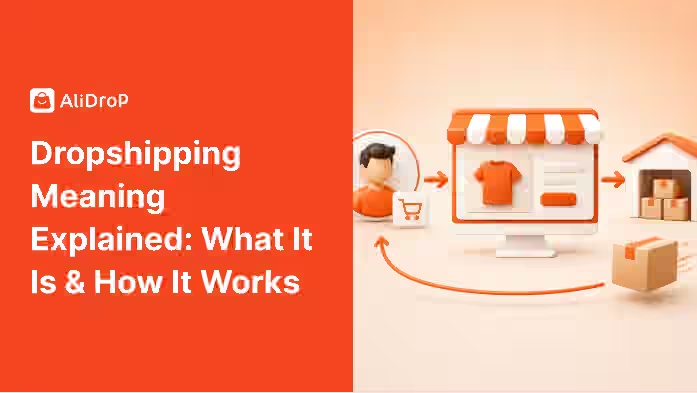


Dropshipping is often promoted as one of the easiest ways to start an online business. You don’t need inventory, you don’t handle shipping, and you can launch a store with minimal upfront investment. But what actually happens after a customer places an order?
That’s where most beginners get confused.
Behind every successful dropshipping store is a structured order fulfillment process. It involves multiple steps, systems, and stakeholders working together to ensure that the product reaches the customer smoothly. If any part of this chain breaks—whether it’s inventory syncing, supplier delays, or poor communication—it can lead to refunds, chargebacks, and unhappy customers.
Understanding how dropshipping orders actually work is essential if you want to build a reliable ecommerce business. Whether your goal is to create a side hustle, generate passive income, or truly make money online, mastering this process gives you a strong foundation.
In this guide, we’ll walk you through the complete dropshipping order journey—from checkout to delivery—so you know exactly what happens behind the scenes and how to optimize each step.
What is a Dropshipping Order Process?
The dropshipping order process is the complete journey an order takes from the moment a customer clicks “Buy Now” to the moment the product is delivered.
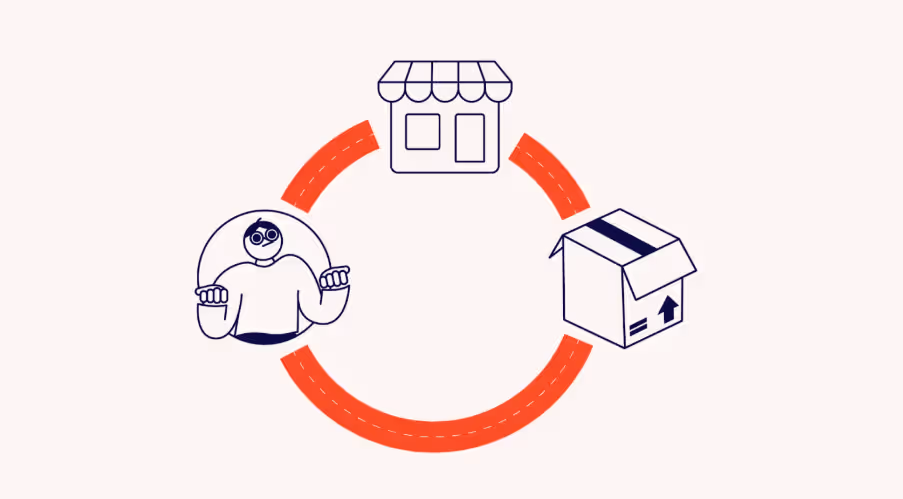
Unlike traditional ecommerce, you don’t store inventory or handle shipping. Instead, you act as the bridge between the customer and the supplier.
Key participants in the process
Every dropshipping order involves three main parties:
- Customer: Places the order and makes the payment
- Store owner (you): Manages the storefront, pricing, and customer experience
- Supplier: Stores inventory, processes the order, and ships the product
Your role is to ensure that everything flows smoothly between the customer and the supplier.
Why Understanding the Order Flow is Critical for Success
Many beginners focus heavily on ads, product selection, and website design. But the real strength of a dropshipping business lies in how well your backend operations function.
It prevents costly mistakes
If you don’t understand the workflow, you risk:
- Selling products that are out of stock
- Delaying order fulfillment
- Mismanaging customer expectations
These mistakes can quickly damage your store’s reputation.
It improves customer satisfaction
Customers don’t see your supplier—they only see your brand. A smooth order process helps you:
- Deliver on time
- Provide accurate tracking
- Handle issues professionally
This leads to better reviews and repeat purchases.
It allows you to scale efficiently
Once you understand the process, you can automate it. This enables you to:
- Handle more orders without extra effort
- Reduce manual work
- Focus on marketing and growth
Step-by-Step: How Dropshipping Orders Actually Work
Understanding the exact flow of a dropshipping order is essential to running a smooth and reliable store. From the moment a customer completes a purchase to the final delivery at their doorstep, multiple steps happen behind the scenes. Breaking down this process step by step will help you identify where automation can be applied, where issues may arise, and how to optimize each stage for a better customer experience. Let’s break down the full lifecycle of a dropshipping order in detail.
Step 1: Customer Places an Order
The journey begins when a customer visits your store and decides to buy a product. They:
- Browse your website
- Select a product
- Add it to their cart
- Enter shipping and billing details
- Complete payment
At this point, your system records:
- Customer information
- Product details
- Payment confirmation
This is the trigger that activates the fulfillment process.
Step 2: Order is Recorded in Your Store
Once the payment is successful, the order appears in your store dashboard.
Here, you can:
- View order details
- Confirm payment status
- Check product availability
If your store is automated, this step happens instantly without manual intervention.
Step 3: Order is Forwarded to the Supplier
This is where dropshipping differs from traditional ecommerce. Instead of packing and shipping the product yourself, you send the order to your supplier.
Manual workflow
You manually place the order with your supplier by entering:
- Customer name
- Shipping address
- Product details
Automated workflow
Using tools like AliDrop, the order is automatically forwarded to the supplier. Automation ensures:
- Faster processing
- Fewer errors
- Better scalability
Step 4: Supplier Processes the Order
Once the supplier receives the order, they begin fulfillment. This includes:
- Picking the product from inventory
- Packaging it securely
- Preparing it for shipment
Processing time varies depending on supplier efficiency and stock availability.
Step 5: Product is Shipped
After processing, the supplier ships the product directly to your customer. At this stage:
- A shipping label is created
- A courier is assigned
- A tracking number is generated
The customer still interacts only with your brand, not the supplier.
Step 6: Tracking Information is Shared
Tracking is essential for transparency. Once the product is shipped:
- Tracking details are sent to your store
- Customers receive updates
- You can monitor delivery progress
Automation tools sync this data automatically, improving customer experience.
Step 7: Product is Delivered to the Customer
The final step is delivery. This is the moment where:
- Customer expectations are met (or not)
- Product quality is evaluated
- Brand trust is built
A smooth delivery increases the chances of repeat purchases.
Manual vs Automated Dropshipping Order Processing
Not all dropshipping stores operate the same way—some rely on manual processes, while others use automation to handle orders seamlessly. Understanding the difference between manual and automated order processing is crucial, especially if you plan to scale.
The right approach can save time, reduce errors, and significantly improve how efficiently your business runs. One of the biggest differences between struggling stores and successful ones is automation.
Manual order processing
- Time-consuming
- Error-prone
- Difficult to scale
You have to process each order individually, which limits growth.
Automated order processing
- Orders are processed instantly
- Inventory updates automatically
- Tracking is synced
Automation allows you to scale your store and build sustainable passive income streams.
Four Key Components That Make Dropshipping Orders Work
A smooth dropshipping order process depends on several key components working together seamlessly. From sourcing reliable products to managing inventory and ensuring timely fulfillment, each element plays a critical role in delivering a consistent customer experience. Understanding these components helps you build a system that is not only efficient but also scalable as your store grows.
For a smooth order process, multiple systems must work together.
1. Product sourcing
Your supplier determines:
- Product quality
- Shipping speed
- Customer satisfaction
Choosing the right supplier is critical.
2. Inventory management
Real-time inventory ensures:
- You don’t oversell
- Orders are fulfilled smoothly
3. Order fulfillment system
This includes:
- Order forwarding
- Supplier coordination
- Shipping execution
4. Communication and tracking
Customers expect updates. Providing tracking builds trust and reduces support requests.
Common Problems in Dropshipping Orders
Even with a well-structured system, dropshipping orders can run into issues that affect both operations and customer satisfaction. From shipping delays to inventory mismatches, these problems often arise due to gaps in communication or lack of automation. Identifying the most common challenges helps you prepare better and put systems in place to minimize disruptions.
Shipping delays
Shipping delays are one of the most common issues in dropshipping and often occur due to supplier backlog, slow processing times, or logistical disruptions. In international shipping, customs clearance can also add unexpected delays, especially during peak seasons or regulatory checks.
These delays can lead to customer frustration, increased support requests, and even refund demands if expectations are not set properly.
Incorrect or damaged products
Sometimes suppliers may ship the wrong item or a product that is damaged due to poor packaging or handling. Since you don’t physically inspect the product before it reaches the customer, these issues can directly impact your brand reputation.
This often results in refund requests, replacements, and negative reviews, which can harm long-term customer trust.
Inventory mismatches
Inventory mismatches happen when a product shows as available on your store but is actually out of stock with the supplier. This usually occurs when inventory is not synced in real time or updates are delayed.
As a result, you may end up accepting orders you cannot fulfill, leading to cancellations, refunds, and disappointed customers.
Poor communication
Lack of timely communication can create uncertainty and frustration for customers. If they don’t receive updates about order status, shipping, or delays, they may lose trust in your store.
Clear communication, especially around tracking and delivery timelines, is essential to maintain a positive customer experience and reduce support issues.
How to Avoid Dropshipping Order Issues
Avoiding order-related problems in dropshipping starts with building the right systems before issues happen. A reliable setup, clear communication, and consistent monitoring can prevent many of the most common fulfillment challenges.
When you take a proactive approach, it becomes much easier to deliver a smooth customer experience and protect your store’s reputation.
Choose reliable suppliers
Your supplier plays a major role in how smoothly your orders are fulfilled, so choosing the right one is critical. Also if you are working with Aliexpress dropshipping, you should check out Alidrop. Work with suppliers who have fast processing times, consistent product quality, and responsive communication, because these factors directly affect delivery speed and customer satisfaction.
Use automation tools
Automation tools help reduce manual work by forwarding orders, syncing inventory, and updating tracking information automatically. This not only saves time but also lowers the chances of human error, making your order process faster and more reliable.
Set clear expectations
Being transparent about shipping timelines, possible delays, and delivery windows helps customers know what to expect from the start. Clear expectations reduce confusion, build trust, and make customers more understanding if delays happen.
Monitor orders regularly
Even if your store is automated, regular order monitoring is still important to catch issues before they escalate. Checking order statuses, supplier updates, and tracking progress helps you stay in control and respond quickly when something goes wrong.
AliDrop simplifies the entire dropshipping order process by automating key tasks that would otherwise take time and manual effort. It helps forward orders instantly, keeps product data synced in real time, and improves fulfillment speed through reliable supplier connections. With everything managed from a centralized dashboard, store owners get better control, fewer errors, and a much smoother workflow from checkout to delivery.
How Automation Transforms Dropshipping
Automation is the backbone of modern dropshipping, turning time-consuming manual tasks into seamless workflows. By automating processes like order forwarding, inventory updates, and tracking, store owners can reduce errors, save time, and scale efficiently. This shift allows you to focus more on growth strategies rather than day-to-day operations.
- Saves time: No need to process orders manually.
- Reduces errors: Minimizes mistakes in order handling.
- Improves efficiency: Streamlines operations across your store.
- Enables scaling: Handle hundreds of orders without increasing workload.
What Happens After Delivery
The dropshipping journey doesn’t end once the product reaches the customer. Post-delivery stages like feedback, returns, and customer retention play a crucial role in long-term success. Managing this phase effectively helps build trust, improve brand loyalty, and increase repeat purchases.
- Customer feedback: Satisfied customers leave reviews and return.
- Returns and refunds: You must handle: Returns, Exchanges, Refunds.
- Retention strategies: Email marketing and offers help retain customers.
Future of Dropshipping Order Fulfillment
Dropshipping is evolving rapidly with advancements in technology and customer expectations. Faster shipping, smarter automation, and better supplier integrations are shaping the future of order fulfillment. Staying ahead of these trends will help you build a more efficient, scalable, and competitive ecommerce business.
- Faster shipping expectations: Customers expect quicker delivery times.
- AI-powered automation: AI will help optimize pricing, demand forecasting, and logistics.
- Smarter supplier ecosystems: Better integrations will reduce errors and delays.
Conclusion
Dropshipping orders involve more than just selling a product—they require a well-coordinated system that ensures everything runs smoothly from checkout to delivery.
By understanding this process, you can:
- Avoid common mistakes
- Improve customer experience
- Build a scalable business
When you combine strong operational knowledge with automation tools like AliDrop, you create a system that works efficiently and grows with you. If your goal is to make money online, build a reliable side hustle, or generate long-term passive income, mastering the dropshipping order process is the first step toward success.
FAQs About Dropshipping Orders
How long does a dropshipping order take to deliver?
Dropshipping delivery times depend on the supplier, shipping method, and the customer’s location. Some orders arrive within a few days, while others can take several weeks, especially if they are shipped internationally. Processing time, courier performance, and customs clearance can all affect how quickly the order reaches the customer.
Do I need to manually place every order in dropshipping?
No, you do not always need to place every order manually. Many dropshipping tools automate this step by sending customer order details directly to the supplier once a purchase is made. This saves time, reduces repetitive work, and helps minimize the risk of manual errors as your store grows.
Who handles shipping in dropshipping?
In dropshipping, the supplier is usually responsible for packing and shipping the product directly to the customer. As the store owner, your role is to manage the storefront, process the sale, and communicate with the customer throughout the order journey. Even though you do not ship the product yourself, the customer still associates the entire experience with your brand.
Can I track dropshipping orders?
Yes, most dropshipping suppliers provide a tracking number once the order has been shipped. This allows both you and your customer to follow the order’s progress from dispatch to delivery. Sharing tracking updates helps improve transparency, build trust, and reduce customer support queries about order status.
What happens if a customer requests a refund?
If a customer requests a refund, you are responsible for handling the communication and resolving the issue from the customer-facing side. The final outcome depends on your store’s refund policy as well as the supplier’s return or dispute terms. Having clear policies in place and working with reliable suppliers makes refund situations much easier to manage.


%201.svg)