 English
 Portuguese
 French
 German
 Italian
 Spanish
How to Use ChatGPT for Dropshipping: Store Setup Prompts and Workflow
How to use ChatGPT for dropshipping: an 8-step store setup workflow with AliDrop, copy-and-paste prompts and the checks to run before launch.
Winning products, one-click import to Shopify and orders placed with suppliers.
Try AliDrop for $17-day free trial · 4.8 ★ on Shopify · Cancel anytimeUsing ChatGPT for dropshipping works best for the writing and planning jobs that slow down a new store: niche ideas, store names, homepage copy, product descriptions, FAQs, policies and ad angles. Pair it with a sourcing app for the parts ChatGPT can't do, such as finding suppliers, importing products and sending orders. This guide gives you a step-by-step workflow, copy-and-paste prompts for each step, and the checks to run before you launch.
What does using ChatGPT for dropshipping actually mean?
Using ChatGPT or another AI assistant for dropshipping means letting it draft the parts that usually take the most time, such as niche research, store copy, product descriptions, FAQs and launch planning. It does not mean AI will bring sales on its own or pick guaranteed winners. It gives you a faster first draft so you can spend more time on products, pricing, branding and marketing.
AI Can Help You Create the Store Foundation Faster
ChatGPT can help you move from idea to store setup much faster by creating first drafts of important store elements.
You can use AI to generate:
- Niche ideas based on demand, product type, and audience needs
- Store names, taglines, and brand positioning
- Homepage copy, product page content, and collection descriptions
- SEO-friendly product titles and descriptions
- FAQs, policy page drafts, and launch checklists
- Ad copy, email ideas, and social media captions for promotion
For example, instead of writing every product description from scratch, you can use AI to create a clean first draft and then edit it for accuracy, tone, and brand voice. AliDrop also offers an AI Product Description Generator that creates niche-specific, SEO-friendly descriptions for products across categories like fashion, electronics, beauty, and home essentials.
AI Does Not Replace Strategy
AI can make store setup faster, but it cannot replace smart decision-making. A profitable dropshipping store still depends on:
- Choosing products people actually want
- Working with reliable suppliers
- Setting prices with healthy margins
- Building a brand that feels trustworthy
- Creating a smooth customer experience
- Testing marketing channels consistently
This is where many beginners go wrong. They use AI to build the store quickly, but skip product validation, supplier checks, and pricing research. AI helps you launch faster, but your strategy decides whether the store can grow.
Where AliDrop Fits In
AliDrop turns your ChatGPT plan into a working dropshipping workflow. Once AI has helped you decide your niche, write copy and plan your product pages, AliDrop handles the operational side of the store.
With AliDrop, you can source trending products, import AliExpress products to Shopify in one click, and automate order fulfillment so paid orders go to the supplier. If you'd rather let AliDrop set up the starting catalog for you, its AI Shopify store builder loads trending products and AI-drafted listings into your store.
In simple words, AI helps you plan and create content faster. AliDrop helps you bring products into your store and manage the backend work more efficiently.
Where AliDrop fits next to ChatGPT
ChatGPT can write your store copy and product pages, but you still need a system to source products, import listings and process orders. That is where AliDrop is useful for beginners and growing sellers.
Built for AliExpress Dropshipping
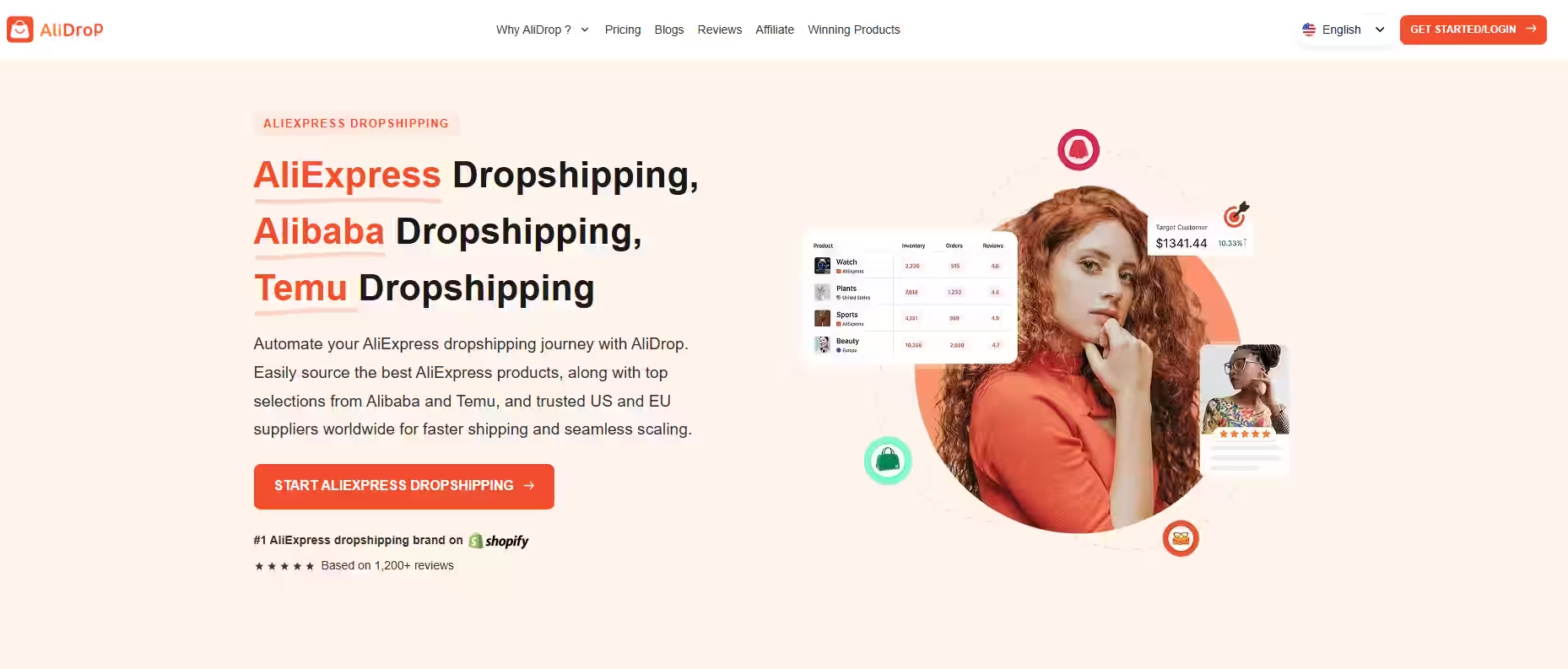
AliDrop is built for sellers who want to start or scale an AliExpress dropshipping business, with product sourcing from AliExpress, Alibaba, Temu and vetted US/EU suppliers, so you have more choice when picking products and suppliers.
This is useful because beginners often struggle with where to find products, how to compare suppliers, and how to move products into their store without wasting hours on manual work.
One-Click Product Import Saves Time
Manually adding products can slow down your launch. You may need to download images, copy titles, rewrite descriptions, add variants, and upload everything into your store.
AliDrop simplifies this with one-click product import, bringing AliExpress products into your Shopify store with images and variants ready to edit.
This helps you:
- Add products faster
- Reduce manual copy-paste work
- Keep product details more organized
- Spend more time improving product pages and pricing
- Launch a focused product collection quickly
Shopify Integration Makes Store Setup Easier
Shopify is one of the most popular ecommerce platforms for new online stores, and AliDrop’s Shopify integration helps connect product sourcing with store management. The AliDrop Shopify app listing states that it integrates stores with products from Temu, AliExpress, and Alibaba and supports automated order handling.
For a beginner, this makes setup easier because product importing and order handling happen inside one connected workflow instead of being managed by hand across different tools.
Automation Helps After Launch
Building the store is only the first step. Once orders start coming in, you need to manage fulfillment, supplier communication, inventory updates, and product changes.
AliDrop's automation reduces repetitive backend work by sending paid orders to suppliers automatically and bringing tracking back to your store.
That means you can focus more on the parts that actually grow the business:
- Testing products
- Improving product pages
- Creating ads and organic content
- Handling customer questions
- Optimizing pricing and offers
- Building a stronger brand
So, while ChatGPT helps you write and plan faster, AliDrop handles the sourcing and order side. Together they cut the manual work of a first store from weeks to a few focused sessions, plus the time you need for samples and checks.
Step-by-step: set up a dropshipping store with ChatGPT and AliDrop
Using AI to build a dropshipping store does not mean skipping the important work. It means moving faster through the setup tasks that usually slow beginners down, such as niche research, store copy, product descriptions, product imports, and launch checks. With AliDrop, you can connect that AI-generated plan to real products, suppliers, Shopify integration, and order automation.
Here is a practical workflow for the foundation of your store. Most people can do the first pass in a focused afternoon; samples, test orders and edits take a few more days, and you shouldn't skip them.
Step 1: Choose a profitable niche with ChatGPT
Start by asking AI to suggest dropshipping niches based on demand, product variety, customer pain points, and impulse-buy potential. A good niche should be easy to understand, have enough product options, and solve a clear problem for a specific audience.
Use this prompt:
“Suggest 10 profitable dropshipping niches for a beginner. Prioritize products that are lightweight, have strong visual appeal, solve a clear problem, and can be sourced from AliExpress or US/EU suppliers.”
Strong niche examples include:
- Pet accessories
- Beauty tools
- Home organization products
- Fitness accessories
- Travel accessories
- Phone accessories
- Baby products
- Kitchen gadgets
The goal is not to pick a random trending product. Choose a niche where you can build a small, focused store with products that fit together naturally.
Step 2: Generate a store name and brand angle
Your store should not feel like a copy-paste dropshipping website. AI can help you create a brand identity around your niche, audience, and product promise.
Use this prompt:
“Create 10 brand name ideas for a dropshipping store in the [niche] niche. The names should be short, memorable, easy to spell, and suitable for a Shopify store.”
Once you have a few good options, check:
- Domain availability
- Instagram, TikTok, and Facebook handle availability
- Whether the name is easy to pronounce
- Whether it matches your niche and audience
- Whether it sounds trustworthy, not gimmicky
For example, a pet accessories store could focus on comfort, play, travel, or grooming. A beauty tools store could focus on confidence, convenience, or affordable self-care.
Step 3: Create homepage copy with ChatGPT
Next, use AI to create your homepage structure. This gives your store a clearer message before you start adding products.
Use this prompt:
“Write homepage copy for a Shopify dropshipping store selling [product category]. Include a clear headline, subheadline, three benefits, a short brand story, and a call-to-action.”
AI can help draft:
- Hero headline
- Subheadline
- Value proposition
- Featured collection text
- Short brand story
- Trust-building microcopy
- Call-to-action buttons
Keep the homepage simple. A beginner dropshipping store does not need long, complicated copy. It needs to quickly answer: what do you sell, who is it for, and why should someone trust you?
Step 4: Find products inside AliDrop
Now move from planning to product sourcing. Inside AliDrop, look for products that match your niche and brand angle. AliDrop supports product sourcing and dropshipping workflows for AliExpress, Alibaba, and Temu products through Shopify, according to its Shopify app listing.
Before choosing a product, check:
- Product demand
- Supplier reliability
- Product cost
- Shipping options
- Product images
- Available variants
- Customer reviews
- Estimated profit margin
AliDrop also highlights trending product discovery and product import workflows, making it easier to move from research to store setup without manually copying every product detail.
Step 5: Import products with one click
Once you shortlist products, import them into your store. This is where AliDrop saves a lot of manual work. Instead of downloading images, copying titles, adding variants, and entering product details one by one, AliDrop supports one-click product imports from AliExpress into your dashboard or Shopify store.
Before importing, quickly review:
- Product images: Are they clean and store-ready?
- Supplier rating: Does the supplier look reliable?
- Shipping time: Is delivery reasonable for your target market?
- Variants: Are size, color, or model options clear?
- Product cost: Can you price it profitably?
- Suggested selling price: Does it leave room for ads and fees?
- Product description: Does it need rewriting?
- Review signals: Are customers satisfied with the product?
Start with a small collection of 5–10 products. A focused store is easier to brand, optimize, and launch than a store filled with random items.
Step 6: Rewrite product titles and descriptions with AI
Supplier product descriptions are often too generic, too technical, or poorly written. Use AI to rewrite them for clarity, SEO, and conversions.
Use this prompt:
“Rewrite this dropshipping product description for a Shopify store. Make it benefit-focused, simple, SEO-friendly, and persuasive without making exaggerated claims. Include bullet points, specifications, and a short FAQ.”
A strong product description should include:
- A clear product benefit
- Simple explanation of how it works
- Key features in bullet points
- Size, material, compatibility, or usage details
- Shipping or care notes where needed
- Short FAQs to reduce buyer hesitation
AliDrop also has a built-in AI product title and description generator that drafts SEO-friendly copy for products you import from AliExpress, Alibaba and Temu, ready for you to edit.
Step 7: Set up trust pages and basic policies
No dropshipping store should launch without basic trust pages. These pages help customers understand your business, shipping process, return terms, and support options.
Add these pages before launch:
- About Us
- Contact Us
- Shipping Policy
- Return Policy
- Privacy Policy
- FAQ
- Track Order page
Use this prompt:
“Create a beginner-friendly FAQ section for a dropshipping store selling [products]. Include questions about shipping, returns, order tracking, product quality, and support.”
Keep your policies clear and realistic. Do not promise same-day delivery, easy refunds, or product guarantees unless your suppliers and fulfillment process can actually support them.
Step 8: Review, connect and prepare for launch
Finish by reviewing your store setup. This step matters because AI moves fast, but it can still create errors or generic copy.
Final launch checklist:
- Check mobile layout
- Test product pages
- Confirm checkout works
- Review shipping times
- Add payment methods
- Upload store logo
- Add product collections
- Confirm products imported correctly
- Check order automation settings
- Review product titles and descriptions
- Make sure policies match your actual process
AliDrop connects to Shopify, imports products and sends paid orders to suppliers, so check those settings once before your first order.
At this point your store foundation is in place. Still, don't rush straight into paid ads. Order samples, place a test order and review branding, product quality, pricing, shipping and your marketing angle before sending real traffic to the store.
What AI Can Create for Your Dropshipping Store?
AI can help with more than just writing product descriptions. When used properly, it becomes a planning, copywriting, and optimization assistant for your dropshipping store.
Store Name Ideas
AI can generate store names based on your niche, target audience, emotion, and brand positioning. For example, a pet store can sound playful and warm, while a home organization store may need a cleaner, more practical name.
You should still check domain availability, trademarks, and social handles before choosing a final name.
Product Descriptions
AI can turn plain supplier copy into benefit-driven product descriptions. This helps customers quickly understand what the product does, why it matters, and whether it fits their needs.
A good AI-assisted description should still be edited manually to avoid exaggerated claims or inaccurate details.
SEO Titles and Meta Descriptions
AI can create search-friendly SEO titles and meta descriptions for product pages, collection pages and blog posts. Give it the main search term for each page (for example the product type plus a key benefit) and edit the result so it reads naturally.
Keep metadata clear, keyword-focused, and written for clicks, not just search engines.
Homepage Copy
AI can create the first draft of your homepage sections, including your hero headline, benefits, brand story, featured collections, and calls to action.
This is useful when you want to launch quickly but still need your store to look polished and trustworthy.
FAQs and Customer Support Responses
AI can help write helpful answers for common customer questions about:
- Shipping times
- Returns and refunds
- Order tracking
- Product sizing
- Product usage
- Payment and checkout
- Customer support
These answers can reduce buyer hesitation and help your store feel more reliable from day one.
Ad Copy and Social Captions
After launch, AI can help create marketing content for TikTok, Facebook, Instagram, email, and product ads.
You can use it to generate:
- TikTok hooks
- Facebook ad angles
- Instagram captions
- Email subject lines
- Abandoned cart messages
- Product benefit statements
- Influencer outreach messages
This gives you more ideas to test, but the best-performing content still comes from understanding your audience, product benefits, and customer pain points.
ChatGPT prompts for dropshipping store setup
Prompts help you move faster without starting from a blank page. Copy these ChatGPT prompts for dropshipping, swap in your own niche and products, and edit every answer before it goes on your store.
Prompt for Niche Research
Prompt: “Act as a dropshipping strategist. Suggest profitable niches for a beginner using AliDrop. Focus on products that are lightweight, solve a problem, have repeat purchase potential, and can be sourced from AliExpress or US/EU suppliers.”
Use this to shortlist niches that are practical for dropshipping, not just trendy.
Prompt for Product Selection
Prompt: “Analyze this product for dropshipping potential: [paste product details]. Rate it based on demand, shipping suitability, pricing flexibility, competition, emotional appeal, and upsell potential.”
This helps you compare products before importing them into your store.
Prompt for Product Description
Prompt: “Write a Shopify product description for [product]. Use a benefit-first tone, short paragraphs, bullet points, SEO keywords, specifications, and a short FAQ. Avoid unrealistic claims.”
Use this after importing supplier products through AliDrop so your product pages feel more polished and conversion-focused.
Prompt for Homepage Copy
Prompt: “Create homepage copy for a dropshipping store called [store name]. The store sells [product type] for [target audience]. Include a hero headline, subheadline, benefits, trust section, and CTA.”
This gives your store a clear message instead of a generic homepage.
Prompt for SEO Metadata
Prompt: “Create an SEO title under 60 characters and meta description under 155 characters for this product page: [product details]. Include the main keyword naturally.”
Use this for product pages, collection pages, and blog posts.
Prompt for Product Page FAQ
Prompt: “Create five FAQs for a product page selling [product]. Answer shipping, usage, returns, quality, and compatibility questions in a helpful tone.”
FAQs can reduce buyer hesitation and help your product pages answer long-tail search queries.
What to Check Before Launching Your AI-Built Dropshipping Store?
AI can help you build faster, but you should still review your store carefully before sending traffic to it.
Product Quality
Check product reviews, images, supplier history, and order consistency. Do not import a product only because it looks trendy.
Shipping Times
Choose suppliers with realistic delivery timelines. If you are targeting customers in the US or Europe, consider US/EU supplier options when available to improve the delivery experience.
Pricing and Profit Margins
Before publishing a product, calculate:
- Product cost
- Shipping cost
- Transaction fees
- Ad budget
- Target profit margin
A product that looks cheap is not always profitable once marketing and fees are included.
Product Page Accuracy
AI-written copy should be edited before publishing. Remove exaggerated claims, fake urgency, and promises your supplier cannot support.
Mobile Experience
Your store must look good on mobile. Most shoppers will find you through social ads on their phones, so product pages, images, buttons and checkout should be easy to use on a small screen. Open every page on your own phone before launch.
Order Automation
Before accepting orders, confirm that imported products, prices and order fulfillment settings are correct, and place one test order to your own address to see the real delivery time.
Common Mistakes to Avoid When Using AI for Dropshipping
AI makes store creation faster, but beginners can still make simple mistakes that hurt trust and conversions.
Publishing AI Copy Without Editing
AI content should always be reviewed for accuracy, tone, and originality. Make sure product benefits match the actual item.
Choosing Too Many Products at Once
Start with 5–15 focused products instead of importing hundreds. A smaller collection is easier to brand, test, and optimize.
Ignoring Supplier Quality
AI can suggest products, but it cannot guarantee supplier reliability. Always check ratings, reviews, shipping options, and product consistency.
Using Generic Branding
A fast-built store can still look professional. Customize your logo, brand colors, product collections, homepage copy, and images.
Expecting Sales Without Marketing
Creating a store is not the same as getting traffic. You still need SEO, paid ads, short-form video, influencer content, email marketing, or organic social media to attract buyers.
How AliDrop Helps After the Store Is Built?
AliDrop supports the backend work that comes after your AI-built store goes live.
Product Sourcing
AliDrop helps sellers find AliExpress products and other supplier options for their dropshipping store.
Product Importing
Its one-click import feature helps you add products faster without copying product details manually.
Supplier and stock checks
Checking supplier stock and recent reviews before you advertise reduces the risk of selling products that are out of stock or no longer available.
Automated Fulfillment
Automated order fulfillment reduces manual work as your store grows, especially when you start handling multiple orders.
Scaling with More Suppliers
AliDrop also references access to fast-shipping US and EU suppliers, which can help sellers improve customer experience and delivery times.
How long does it take to set up a store with ChatGPT and AliDrop?
The drafting is quick. With ChatGPT and AliDrop, niche ideas, store copy, product descriptions, FAQs and product imports can come together in an afternoon. The parts that take longer are the ones that protect you: ordering samples, checking delivery times, editing AI copy for accuracy and testing checkout. Plan for a few days before you spend on ads.
But a store that is “built” is not always ready to scale. Before running paid ads, review your branding, pricing, product quality, shipping times, payment setup, and marketing plan.
AI helps you build faster. AliDrop helps you operate smarter. But your results depend on the products you choose, how well you position them, and how consistently you test your marketing.
Conclusion
ChatGPT makes dropshipping store creation faster by drafting niche ideas, branding, homepage copy, product descriptions, FAQs, SEO metadata and launch plans. AliDrop makes that workflow practical by connecting your store to product sourcing, one-click imports, Shopify and automated order fulfillment.
With the right niche, clear product pages and AliDrop handling sourcing and orders ($1 for the first 7 days), you can move from idea to a working store faster and spend more time testing products, building traffic and growing your brand.
ChatGPT for Dropshipping FAQs
How can I use ChatGPT for dropshipping?
Use ChatGPT for the writing and planning work: niche ideas, store names, homepage copy, product descriptions, FAQs, policy drafts, ad angles and email ideas. Then use a dropshipping app such as AliDrop for sourcing products, importing them to Shopify and sending orders to suppliers. Always edit AI drafts for accuracy before publishing.
What are good ChatGPT prompts for dropshipping?
The most useful prompts give ChatGPT a role, your niche, your audience and clear limits. For example: "Act as a dropshipping strategist. Suggest five niches for a beginner with lightweight products that solve a problem." Use separate prompts for niche research, product descriptions, homepage copy, SEO metadata and product page FAQs.
Can ChatGPT find winning products for dropshipping?
ChatGPT can suggest product ideas and criteria, but it has no live sales data, so it can't confirm demand. Check its ideas against real signals: AliExpress order counts and reviews, Google Trends, active ads in the Meta Ad Library and your own margin math. A small ad test is the final proof.
How long does it take to set up a dropshipping store with ChatGPT?
Drafting copy and importing products can take an afternoon with ChatGPT and AliDrop. Plan a few more days for samples, delivery checks, editing AI copy and testing checkout before you spend on ads. Speed in setup matters far less than choosing the right products.
Do I need coding skills to build a dropshipping store with AI?
No. Shopify, ChatGPT and AliDrop don't require coding. You still need to review your store, choose products carefully, set prices from your full costs and prepare your marketing, but the technical setup is point-and-click.
Can I use AliDrop with Shopify?
Yes. AliDrop connects to your Shopify store, imports products from AliExpress, Alibaba, Temu and US/EU suppliers with one click, and sends paid orders to suppliers automatically. The first 7 days cost $1.
How many products should I add to a new dropshipping store?
Start with 5 to 15 carefully selected products in one focused niche. That is easier to brand, describe well and test than hundreds of unrelated items, and it keeps your ad budget focused on the products most likely to sell.
What pages do I need before launching my dropshipping store?
At minimum: a homepage, product pages, About Us, Contact, Shipping Policy, Return Policy, Privacy Policy, an FAQ page and an order tracking page. ChatGPT can draft the policies, but make sure they match what your suppliers actually do.

I’m a content writer and strategist specializing in eCommerce, dropshipping, and B2B SaaS business. I create practical, easy-to-follow content that helps entrepreneurs start, grow, and scale their online stores. From product research and marketing strategies to automation tools and side hustles, my goal is to simplify complex topics into actionable insights.