


In dropshipping, your product photos do a huge part of the selling.
Customers cannot touch the product, test it, or inspect the quality in person. That means your visuals have to do the heavy lifting. They need to build trust, show value, and help shoppers imagine what owning the product feels like.
This is why product photography matters so much for dropshippers.
A strong product image can make your store look polished and credible. A weak one can make even a good product feel cheap or risky. In a crowded market where many sellers offer similar items, better photography can become a real competitive advantage.
The good news is that you do not need a massive studio budget to improve your visuals. With the right approach, you can make your product photos look cleaner, more useful, and more conversion-focused.
In this guide, you’ll learn practical product photography tips for dropshippers, how to present products in a way that inspires confidence, and how better visuals can directly improve your store performance.
What is Product Photography?
Product photography is the art of showcasing goods in images that reveal what makes them unique. It merges technical know-how with creative flair. Product images show color, shape, texture, and function, all in a few frames.
The aim is to connect with viewers quickly. People want to see your product clearly before clicking “add to cart.” This clarity can ease doubts and highlight special features, creating a positive buying experience.
Good product photography also links your brand with quality. Each shot reflects the care you put into your business. Whether you sell footwear or electronics, well-planned images bring uniformity and trust. This can prompt customers to stay longer on your site and see what else you offer.
Examples vary by industry. A simple white background might suit jewelry, while a kitchen gadget might look better staged on a sleek countertop. Both approaches share a single goal: win over the shopper with an honest, eye-catching presentation.
Why are Brands Investing in Product Photography?
Brands know that visuals have a real impact. Many buyers skim listings and rely on photos more than product descriptions. A bright, inviting image is your chance to stand apart in a crowd of competing goods.
Sales can climb when potential buyers feel confident. Photos that reveal materials, textures, or details reduce second thoughts. That sense of assurance can trim return rates and boost loyal followings. It reassures shoppers that what they see is what they get.
Good product photography also helps with branding. If every photo is consistent, your store develops a recognizable look. When people see uniform lighting and style across multiple listings, it reinforces professionalism. That can raise the perceived value of your items.
Shops without polished photography risk losing that critical first impression. A bland or poorly lit image leaves questions unanswered, and the viewer might scroll away, never to return. Investing in quality visuals signals that your business cares about quality from start to finish.
Why Product Photography Matters So Much in Dropshipping
Product photography is not just about making your store look nice. It directly affects how people perceive your products and whether they trust your brand enough to buy.
In dropshipping, customers often discover products from ads, social content, or search results. When they land on your product page, the first thing they notice is usually the image. Before they read your description or reviews, they’ve already formed an opinion.
Good photography helps you:
- Build trust faster
- Make products feel more premium
- Reduce hesitation before checkout
- Improve click-through rates and conversions
- Lower confusion and return risk
Bad visuals do the opposite. They make shoppers question product quality, shipping reliability, and whether your store is legitimate at all.
That’s why product photography is not a cosmetic detail. It is part of your conversion strategy.
The Unique Product Photography Challenge for Dropshippers
Dropshippers face a different challenge than traditional brands. You often do not hold your own inventory. You may rely on supplier images, and in many cases, those photos are also being used by dozens of other sellers. This creates two major problems.
The first is differentiation. If your product photos look identical to everyone else’s, your store becomes forgettable. The second is trust. Generic supplier images often feel overly edited, inconsistent, or incomplete, which can make shoppers skeptical.
This means dropshippers need to be more intentional about visuals. Even small upgrades in image quality, styling, or presentation can help your store stand out.
14 Core Product Photography Tips for Dropshippers
Now let’s get into the strategies that actually make a difference.
1. Start With a Clear Product Photography Goal
Before you take or select a single image, decide what the photo needs to do.
Different images serve different purposes. Some are meant to grab attention in ads. Some are designed to show product details. Others are supposed to create lifestyle appeal or reduce objections. When you know the goal, it becomes easier to choose the right angle, composition, lighting, and styling.
For most dropshipping stores, product photos should do at least one of these things:
- Show what the product looks like clearly
- Explain size, features, or usage
- Make the product feel desirable
- Help customers picture it in real life
Without that clarity, you end up with random images that look fine but do not actually help sell.
2. Use Clean, Bright Lighting
Lighting is one of the biggest factors in product photography. A well-lit photo instantly looks more professional, more trustworthy, and easier to understand. Poor lighting, on the other hand, makes products look dull, low quality, or even misleading.
Natural light works well for many products, especially if you shoot near a large window with soft daylight. If natural light is inconsistent, simple artificial lighting can give you more control.
The goal is to make sure the product is clearly visible, colors look accurate, and important details do not get lost in shadows.
For ecommerce, bright and even lighting usually performs better than dramatic lighting because clarity matters more than mood on product pages.
3. Keep Backgrounds Simple and Distraction-Free

A cluttered background steals attention from the product. For main product images, use a clean and simple background so shoppers can focus immediately on what you are selling. White or neutral backgrounds work especially well because they make the image look polished and easy to scan.
This does not mean every photo has to look sterile. Lifestyle shots can include context and props. But even then, the setup should support the product, not compete with it. The product should always remain the hero of the frame.
4. Show Multiple Angles
One image is rarely enough.
Customers want to understand what they are buying, and that means seeing the product from different perspectives. Front, side, back, close-up, open, folded, worn, or in use—these additional views reduce uncertainty and make shoppers feel more confident.
Multiple angles are especially important for products with texture, size details, or functional parts. The more clearly you show the item, the less mental work the customer has to do. That usually leads to better conversions.
5. Include Close-Up Detail Shots
Detail shots help communicate quality.
A wider product shot may show the overall item well, but close-ups reveal important elements like fabric texture, stitching, finish, buttons, zippers, patterns, grip, material thickness, or packaging details. These images help answer silent customer questions.
For example:
- Is the material smooth or rough?
- Does the print look premium?
- Are the seams neat?
- Does the hardware look cheap?
Close-up shots create reassurance. They also make the product feel more real.
6. Add Lifestyle Images That Show the Product in Use
Lifestyle photography helps customers imagine ownership.
Instead of only showing the product on a plain background, show it in a real-world situation. A bag being carried, a lamp on a desk, a kitchen tool in use, or a notebook in a study setup helps the shopper visualize how the item fits into their life.
This kind of image does more than show appearance. It adds context, mood, and aspiration.
For dropshippers, lifestyle images can make a generic product feel more branded and emotionally appealing.
7. Use Props Carefully
Props can improve a photo, but only when they support the product story.
A few simple props can help create context and make the setup feel natural. For example, a skincare product may look better with a towel, a mirror, or a soft surface. A school-related product may work with books, pens, or a backpack.
The mistake many sellers make is overstyling. Too many props create clutter and confuse the eye.
A good rule is simple: if the prop does not help explain the product or improve the visual story, remove it.
8. Make Sure Colors Look Accurate
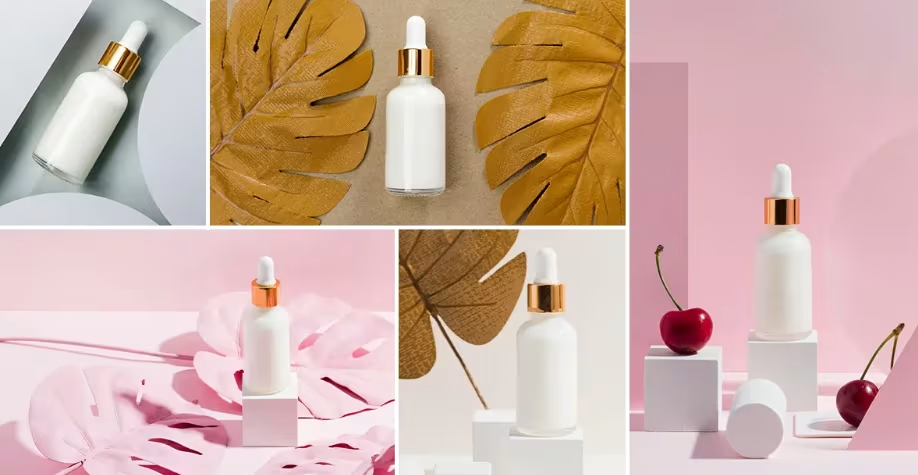
Color accuracy matters more than many dropshippers realize.
If the actual product color looks different from the photos, customers may feel disappointed or misled. That leads to complaints, bad reviews, and returns.
Try to use lighting and editing that keeps colors true to life. Avoid filters that make images look more dramatic but less realistic.
This is especially important for:
- Clothing
- Home decor
- Beauty products
- Accessories
- Seasonal products
Photos should make the product appealing, but not deceptive.
9. Show Scale and Size Clearly
One of the biggest causes of customer frustration in ecommerce is misunderstanding size.
If people cannot tell how big or small a product is, they fill in the gaps themselves—and often get it wrong. This is where photography can help a lot. Include visuals that show scale:
- Product in a hand
- Product next to common objects
- Product worn by a model
- Product placed in a familiar setting
This makes the item easier to evaluate and reduces purchase anxiety.
10. Keep Your Image Style Consistent Across the Store
Consistency makes your store feel more professional. When each product uses a completely different visual style, the site can feel messy or untrustworthy. Consistent photography helps reinforce brand quality and makes browsing smoother.
Aim for consistency in:
- Lighting
- Background style
- Editing
- Angles
- Image dimensions
- Tone and mood
You do not need every image to look identical. But they should feel like they belong to the same store.
11. Optimize Product Photos for Mobile Shoppers
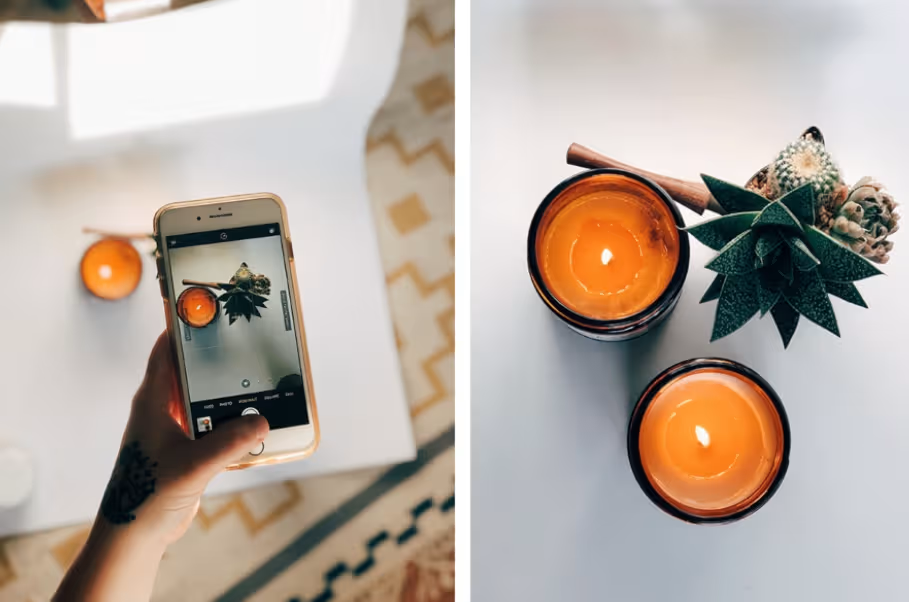
A huge share of dropshipping traffic comes from mobile.
That means your product photos need to look great on smaller screens. Images should be easy to read, cleanly cropped, and clear even when viewed quickly.
Avoid overly busy compositions or important details that are only visible when zoomed in. Test your product pages on mobile to see whether the visuals still communicate value instantly.
If the product is difficult to understand on a phone, you are losing potential sales.
12. Use High-Resolution Images Without Slowing Down Your Store
Image quality matters, but so does site speed.
Blurry or pixelated photos hurt trust. At the same time, huge image files can slow your product pages, which can hurt both user experience and conversions.
The solution is to use high-resolution images that are properly compressed for the web. This gives customers clear visuals without making your site feel heavy.
Product photography should improve performance, not slow it down.
13. Edit for Clarity, Not Over-Perfection
Editing can help your product photos look polished, but over-editing can backfire.
The goal is not to make the product look unreal. It is to make the image cleaner, brighter, and more accurate. Adjustments to brightness, contrast, sharpness, and background cleanup are useful. Excessive retouching is not.
When photos look too artificial, customers may distrust them. In dropshipping, realistic polish usually works better than excessive perfection.
14. Use Product Photography to Answer Buying Questions
The best product photos reduce objections before they arise.
Think about what a customer may want to know before buying. Then use visuals to answer those questions. For example:
- How is it worn?
- What comes in the package?
- What are the key features?
- How thick or sturdy is it?
- What does it look like in real light?
- How does it fit into daily use?
When your photos answer real buying questions, your product page becomes more persuasive.
Photography Tips for Seasonal Dropshipping Campaigns
Seasonal campaigns need visuals that match the shopping moment.
For back-to-school, holiday gifting, summer travel, or winter comfort products, your images should reflect the mood and use case of the season. This makes the product feel timely and relevant. Seasonal styling can be simple:
- Warm textures and cozy tones for winter
- Bright, airy setups for summer
- Desk, notebook, and organization props for school season
- Gift-style presentation for holidays
The key is to create context without making the image feel gimmicky.
How to Improve Supplier Photos When You Cannot Shoot Your Own
Not every dropshipper can create original photography right away. If you depend on supplier images, you can still improve how you present them. Instead of uploading everything as-is, curate and refine the visuals.
You can:
- Choose the cleanest, most consistent images
- Remove weak or redundant photos
- Reorder images to tell a better visual story
- Edit backgrounds or crops for consistency
- Add custom graphics for dimensions or features
- Combine supplier photos with user-generated or lifestyle visuals where possible
Even basic improvements can make your store look more intentional.
Common Product Photography Mistakes Dropshippers Should Avoid
Many dropshipping stores lose trust through avoidable image mistakes.
- Using Only Supplier Images: Supplier photos may save time, but relying on them بالكامل makes your store look generic. Customers have often seen those same visuals elsewhere.
- Showing Too Few Images: One or two product photos usually are not enough. Limited visuals increase uncertainty and reduce confidence.
- Using Low-Quality or Blurry Photos: Blurry images instantly lower perceived value. Customers associate poor visuals with poor quality.
- Overediting the Product: If the product looks too polished or unrealistic, shoppers may feel misled when it arrives.
- Ignoring Lifestyle Context: Without lifestyle photos, customers may struggle to imagine real-world use.
- Failing to Show Details: Missing close-up shots can leave too many unanswered questions.
- Inconsistent Store Visuals: A mix of clashing styles makes your store feel less trustworthy and less branded.
How Better Product Photography Improves Conversions
Better product photography can influence almost every important ecommerce metric. It can help improve:
- Product page engagement
- Time on page
- Add-to-cart rate
- Conversion rate
- Trust and brand perception
- Return reduction
Why? Because strong visuals reduce uncertainty.
When shoppers feel like they understand the product clearly, they are more likely to buy. When they feel uncertain, they hesitate.
That is why photography is not just about aesthetics. It is one of the clearest conversion levers a dropshipper can improve.
Conclusion
Product photography can make or break a dropshipping store. In a business model where customers rely almost entirely on visuals to judge quality, your images need to do more than fill space on the page. They need to build trust, show value, answer questions, and help people imagine using the product in real life.
The strongest dropshipping stores do not treat photography as an afterthought. They use it as a selling tool.
By improving lighting, simplifying backgrounds, showing multiple angles, adding lifestyle context, and keeping visuals consistent, you can make your products feel more credible and more desirable without overcomplicating your process.
For AliDrop sellers, better photography is not just about prettier pages. It is a practical way to stand out, improve conversions, and create a store that feels more professional from the very first click.
FAQs About Product Photography for Dropshippers
What kind of product photos work best for dropshipping?
The best product photos for dropshipping are clear, well-lit, and designed to reduce customer uncertainty. A strong mix usually includes clean main images, multiple angles, close-up detail shots, and lifestyle photos that show the product in use.
Do dropshippers need original product photography?
Original photography helps a lot, but it is not always required at the beginning. Dropshippers can still improve conversions by curating supplier images carefully, editing them for consistency, and presenting them in a more branded and useful way.
How many product photos should a dropshipping store use?
Most products should have enough images to show the item clearly from different angles and in realistic use. In many cases, that means including a main product shot, feature-focused images, scale references, and at least one lifestyle image.
Why do product photos affect conversion rates?
Product photos influence trust, clarity, and perceived quality. Since online shoppers cannot inspect the item physically, strong visuals reduce hesitation and make them feel more confident about purchasing.
What is the biggest photography mistake dropshippers make?
One of the biggest mistakes is relying entirely on generic supplier photos without improving presentation. This makes the store look less original, less trustworthy, and less memorable compared to competitors.


%201.svg)



.avif)