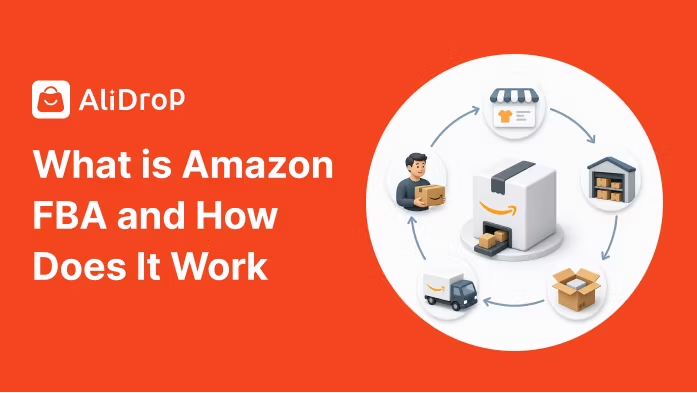


Amazon FBA is one of the most popular fulfillment models for ecommerce sellers who want to sell products online without packing and shipping every order themselves. Instead of storing inventory at home, renting warehouse space, or handling deliveries manually, sellers send their products to Amazon’s fulfillment network. When a customer places an order, Amazon stores, picks, packs, ships, and handles customer service for eligible FBA orders.
For many sellers, this makes ecommerce easier to manage. It allows them to focus more on product research, pricing, branding, listing optimization, and marketing while Amazon takes care of the operational side of fulfillment.
However, Amazon FBA is not a shortcut to automatic profit. Sellers still need to choose the right products, manage inventory carefully, understand fees, follow Amazon’s rules, and calculate margins before investing in stock. This guide explains what Amazon FBA is, how it works, how much it can cost, its benefits, its challenges, and whether it is the right option for your online business.
What Is Amazon FBA?
Amazon FBA stands for Fulfillment by Amazon. It is a service where sellers send their products to Amazon fulfillment centers, and Amazon handles storage, packing, shipping, customer service, and returns for those products. Amazon describes FBA as a fulfillment option where sellers can outsource order fulfillment to Amazon while their products become eligible for Amazon’s fulfillment and delivery network.
In simple terms, you sell the product, but Amazon handles much of the delivery process.
When a product is enrolled in FBA, Amazon stores it in its fulfillment centers. Once a customer buys the product, Amazon picks the item from inventory, packs it, ships it to the customer, and manages eligible customer service and returns.
This model is popular because it gives sellers access to Amazon’s logistics infrastructure. It can also help sellers offer faster delivery options, which may improve the customer experience.
What Amazon FBA Handles for Sellers
With FBA, Amazon can help with several fulfillment tasks, including:
- Storing inventory in fulfillment centers
- Picking products after customers order
- Packing items for shipment
- Shipping orders to customers
- Managing eligible returns
- Handling eligible customer service
- Providing delivery tracking
This is why many sellers use FBA when they want to scale beyond self-fulfillment.
What Sellers Still Need to Manage
Even though Amazon handles fulfillment, sellers are still responsible for the business side of selling.
Sellers still need to manage:
- Product research
- Supplier sourcing
- Inventory planning
- Listing creation
- Product pricing
- Profit margin calculations
- Advertising and promotions
- Customer reviews
- Compliance with Amazon policies
- Restocking decisions
FBA can simplify logistics, but it does not remove the need for smart ecommerce strategy.
How Does Amazon FBA Work?
Amazon FBA works through a clear process. You choose products, create Amazon listings, send inventory to Amazon, and Amazon fulfills orders when customers buy.
The process may look simple from the outside, but each step matters. Poor product selection, wrong pricing, weak listings, or bad inventory planning can reduce profits.
Step 1: Create an Amazon Seller Account
To use FBA, you first need an Amazon seller account. Sellers can choose between different selling plans depending on how many products they plan to sell and what tools they need.
Once your seller account is active, you can access Seller Central. This is where you manage listings, inventory, pricing, fulfillment settings, ads, reports, and account performance.
Step 2: Choose Products to Sell
Product selection is one of the most important parts of FBA. Since FBA usually requires you to buy inventory upfront, you need to validate demand before sending products to Amazon.
Good product research includes checking:
- Customer demand
- Competition level
- Selling price
- Product weight and size
- Amazon fees
- Supplier cost
- Shipping cost to Amazon
- Profit margin
- Review difficulty
- Seasonal trends
A product may look popular, but if fees and competition are too high, it may not be profitable.
Step 3: Source Inventory
After choosing a product, sellers need to source inventory. This can be done through manufacturers, wholesalers, distributors, or private label suppliers.
Common sourcing models include:
- Wholesale products
- Private label products
- Branded resale
- Handmade products
- Manufacturer-direct sourcing
This is one key difference between FBA and dropshipping. With FBA, sellers usually buy inventory before it sells. With dropshipping, the supplier ships products after a customer places an order.
For sellers who want to test ecommerce with less inventory risk, dropshipping through platforms like AliDrop can be a more flexible way to explore product demand before moving into bulk inventory models.
Step 4: Create Product Listings
Your product listing is what customers see on Amazon. A strong listing helps shoppers understand the product and decide whether to buy.
A good Amazon listing usually includes:
- Clear product title
- High-quality images
- Bullet points
- Product description
- Relevant keywords
- Accurate specifications
- Competitive pricing
- Strong value proposition
Even with FBA, poor listings can lead to low conversion rates. Fulfillment helps with delivery, but the listing still needs to sell the product.
Step 5: Prepare Products for Amazon
Before sending inventory to Amazon, products must meet Amazon’s packaging and labeling requirements. This may include barcode labels, packaging standards, carton requirements, and shipment preparation.
Depending on the product, sellers may need to handle:
- FNSKU labels
- Poly bags
- Bubble wrap
- Box packaging
- Expiration dates
- Safety requirements
- Product bundling rules
If products are not prepared correctly, Amazon may reject, delay, or charge extra for processing.
Step 6: Ship Inventory to Amazon
Once products are ready, sellers create an FBA shipment plan in Seller Central. Amazon then tells sellers where to send the inventory.
After inventory reaches Amazon’s fulfillment centers and is checked in, the products become available for sale with FBA fulfillment.
Step 7: Amazon Stores the Products
Amazon stores your inventory until customers place orders. Sellers are charged storage fees, so inventory planning is important.
If you send too much stock and it sells slowly, storage costs can reduce profits. If you send too little stock, you may run out and lose sales momentum.
Step 8: Customers Place Orders
When a customer buys your FBA product, Amazon handles the order fulfillment process. The product is picked, packed, and shipped from Amazon’s fulfillment network.
FBA can also support fulfillment beyond Amazon through services like Amazon Multi-Channel Fulfillment, which lets sellers use FBA inventory to fulfill orders from other sales channels, including their own website.
Step 9: Amazon Handles Customer Service and Returns
For eligible FBA orders, Amazon manages customer service and returns. This can save sellers time, especially as order volume grows.
However, sellers should still monitor return rates, customer feedback, and product quality issues. High returns can signal problems with product expectations, listing accuracy, sizing, packaging, or quality.
Amazon FBA Fees and Costs
Amazon FBA is convenient, but it is not free. Sellers need to understand the cost structure before choosing products.
FBA fees can vary based on product category, size, weight, storage duration, and fulfillment requirements. Amazon also provides revenue and fee calculators to help sellers estimate selling fees, fulfillment costs, and revenue before choosing a fulfillment method.
Common Amazon FBA Costs
Sellers may need to account for:
- Amazon referral fees
- FBA fulfillment fees
- Monthly storage fees
- Long-term storage costs
- Inventory placement fees
- Removal or disposal fees
- Labeling or prep fees
- Returns processing costs
- Advertising costs
- Supplier costs
- Shipping inventory to Amazon
The exact fees depend on your product and marketplace.
Why Fee Calculation Matters
A product can generate sales and still lose money if the numbers are not calculated properly. Before using FBA, sellers should estimate total costs and profit margins.
For example, you need to know:
- How much the product costs from the supplier
- How much it costs to ship inventory to Amazon
- What Amazon charges to fulfill each order
- What referral fee applies
- How much advertising may cost
- What return rate you can expect
- How much storage may cost if inventory moves slowly
Profit is not based only on the selling price. It depends on what remains after every cost is deducted.
Benefits of Amazon FBA
Amazon FBA is popular because it solves one of the hardest parts of ecommerce: fulfillment. Many sellers prefer to outsource logistics so they can focus on growth.
Easier Fulfillment
Packing and shipping orders manually can become overwhelming as sales grow. FBA allows sellers to use Amazon’s fulfillment network instead of managing every shipment themselves.
This can save time and reduce operational complexity.
Faster Delivery Options
Amazon’s logistics network is built for speed and reliability. FBA sellers can benefit from fulfillment services that help customers receive orders quickly.
Fast delivery can improve customer satisfaction and may make listings more attractive.
Customer Service Support
For eligible FBA orders, Amazon handles customer service and returns. This reduces the amount of direct support sellers need to manage.
It can be especially useful for sellers who do not have a customer support team.
Scalability
FBA can support business growth because sellers do not need to personally pack every order. As order volume increases, Amazon’s fulfillment network handles the operational workload.
This makes FBA attractive for sellers who want to scale.
Multi-Channel Fulfillment Options
Amazon also offers Multi-Channel Fulfillment, where sellers can use Amazon inventory to fulfill customer orders from other sales channels, including ecommerce websites. Amazon states that MCF can fulfill orders across multiple ecommerce channels using one pool of inventory.
This can be useful for sellers who sell on Amazon and also operate their own online store.
Challenges of Amazon FBA
Amazon FBA has advantages, but it also comes with risks. Sellers should understand the challenges before investing in inventory.
Upfront Inventory Investment
Most FBA sellers need to buy inventory before making sales. This creates financial risk. If the product does not sell, you may be left with slow-moving inventory and storage fees.
Storage Fees
Amazon charges storage fees for inventory kept in fulfillment centers. Slow-selling products can become expensive over time. This is why inventory forecasting is important.
Competition
Amazon is highly competitive. Many sellers may offer similar products, and price competition can reduce margins. To succeed, sellers need strong product research, differentiated listings, good reviews, and smart pricing.
Less Control Over Fulfillment
Amazon handles fulfillment, which is convenient, but it also means sellers have less direct control over packaging, customer delivery experience, and some parts of returns. If you want complete control over brand packaging and customer experience, FBA may feel limiting unless you plan carefully.
Policy and Compliance Requirements
Amazon has strict rules for sellers. Account health, product compliance, listing accuracy, and inventory standards all matter. Violating policies can lead to listing suppression, inventory issues, or account restrictions.
Amazon FBA vs Dropshipping
Amazon FBA and dropshipping are both ecommerce models, but they work differently.
With FBA, sellers usually buy products upfront and send inventory to Amazon. With dropshipping, sellers list products online and the supplier ships the product directly to the customer after an order is placed.
Amazon FBA Works Best When
FBA may be better if you:
- Want faster fulfillment through Amazon
- Are ready to invest in inventory
- Have validated product demand
- Want to build Amazon marketplace sales
- Can manage storage and restocking
- Understand Amazon fees and policies
FBA can work well for sellers who have enough capital and a clear product strategy.
Dropshipping Works Best When
Dropshipping may be better if you:
- Want to start with lower upfront inventory risk
- Prefer testing products before buying stock
- Want supplier-handled fulfillment
- Are building an independent ecommerce store
- Want flexibility with product testing
- Do not want to manage warehouse inventory
For AliExpress-style dropshipping, AliDrop can help sellers import products, manage listings, and streamline the process of building an online dropshipping store.
Can You Use Both Models?
Yes, some sellers use both. They may test products through dropshipping first, then move proven winners into bulk purchasing or FBA later.
This hybrid approach can help reduce risk because you validate demand before investing heavily in stock.
Is Amazon FBA Good for Beginners?
Amazon FBA can be beginner-friendly in terms of fulfillment, but it is not risk-free. Beginners often like FBA because Amazon handles storage, shipping, and customer service. However, the business still requires research, planning, and investment.
FBA May Be Good for Beginners Who
- Have some startup capital
- Are willing to learn Amazon Seller Central
- Can research products carefully
- Understand fee calculations
- Are prepared to manage inventory
- Can follow Amazon’s rules
FBA May Not Be Ideal If
- You want to avoid upfront inventory costs
- You are not ready to manage stock
- You have not validated demand
- You are unsure about product compliance
- You cannot afford slow-moving inventory
Beginners should start carefully. Instead of buying large quantities immediately, it is better to validate the product, estimate fees, and start with manageable inventory.
How to Choose Products for Amazon FBA
Product selection can make or break an FBA business. The best products are not always the trendiest ones. They are products with strong demand, manageable competition, healthy margins, and reasonable fulfillment costs.
Look for Consistent Demand
Choose products that people buy regularly. Seasonal products can work, but they require better timing and planning. Check whether demand is steady or only temporary.
Avoid Products with Very Low Margins
If profit margins are too thin, Amazon fees, ads, storage, and returns can quickly reduce earnings. A good product should leave room for:
- Supplier cost
- Amazon fees
- Shipping to Amazon
- Advertising
- Returns
- Discounts
- Profit
Consider Size and Weight
Large or heavy products usually cost more to store and fulfill. Small and lightweight products can be easier for beginners, but competition may be high. Balance product size with demand and margins.
Check Competition
If many sellers offer the same product at low prices, it may be hard to compete. Look for products where you can improve:
- Branding
- Images
- Bundling
- Features
- Packaging
- Listing copy
- Customer experience
Read Customer Reviews
Reviews can reveal product improvement opportunities. Look for common complaints in competitor listings. Customers may mention:
- Poor quality
- Missing features
- Bad packaging
- Sizing issues
- Weak durability
- Confusing instructions
These insights can help you create a better offer.
Amazon FBA and Global Selling
FBA can also support international selling in certain ways. Amazon offers programs that help sellers reach customers outside their primary marketplace.
For example, FBA Export lets eligible products stored in US fulfillment centers be sold to customers in other countries shopping on Amazon.com, with Amazon handling shipment on the seller’s behalf.
Amazon also offers Remote Fulfillment with FBA, which allows eligible US FBA inventory to be offered to customers in Canada, Mexico, and Brazil without sending inventory directly to those countries.
Global selling can create more opportunity, but it also requires careful planning around fees, taxes, compliance, product eligibility, and marketplace demand.
Amazon FBA Checklist for New Sellers
Before starting with FBA, use a checklist to avoid common mistakes.
Product Research Checklist
Make sure you have checked:
- Demand
- Competition
- Selling price
- Amazon fees
- Supplier cost
- Shipping cost
- Product size and weight
- Reviews and complaints
- Return risk
- Compliance requirements
Inventory Checklist
Before sending inventory, confirm:
- Products are properly packaged
- Labels are correct
- Shipment plan is created
- Inventory quantity is realistic
- Storage fees are considered
- Restocking timeline is clear
- Product condition meets Amazon standards
Listing Checklist
Before launching, review:
- Product title
- Images
- Bullet points
- Description
- Keywords
- Pricing
- Brand positioning
- Product claims
- Shipping and fulfillment settings
Final Thoughts
Amazon FBA is a fulfillment model that lets sellers store products in Amazon fulfillment centers while Amazon handles picking, packing, shipping, eligible customer service, and returns. It can save time, improve delivery operations, and help sellers scale more efficiently.
However, FBA is not just about sending products to Amazon and waiting for sales. Sellers still need to choose the right products, calculate fees, manage inventory, optimize listings, monitor returns, and follow Amazon’s rules. The model can be profitable, but only when the numbers and strategy make sense.
If you want to build an ecommerce business with lower upfront inventory risk, dropshipping can also be worth exploring. Platforms like AliDrop can help sellers test products and build an AliExpress-based dropshipping store before committing to bulk inventory. For some sellers, dropshipping is a starting point, while FBA becomes a later-stage fulfillment strategy once product demand is proven.
FAQs About Amazon FBA
What is Amazon FBA?
Amazon FBA, or Fulfillment by Amazon, is a service where sellers send their products to Amazon fulfillment centers. Amazon then stores the inventory, picks and packs orders, ships products to customers, and handles eligible customer service and returns.
How does Amazon FBA work?
Amazon FBA works by letting sellers send inventory to Amazon. Once a customer places an order, Amazon handles the fulfillment process, including storage, packing, shipping, delivery tracking, and eligible returns. Sellers still manage product sourcing, listings, pricing, inventory planning, and marketing.
Is Amazon FBA good for beginners?
Amazon FBA can be useful for beginners because it simplifies shipping and customer service. However, it usually requires upfront inventory investment, product research, fee calculation, and careful stock management. Beginners should start with validated products and avoid buying large quantities too early.
How much does Amazon FBA cost?
Amazon FBA costs can include referral fees, fulfillment fees, monthly storage fees, long-term storage fees, shipping costs to Amazon, labeling or prep fees, returns processing costs, and advertising expenses. The exact cost depends on the product category, size, weight, selling price, and storage duration.
What is the difference between Amazon FBA and dropshipping?
With Amazon FBA, sellers usually buy inventory upfront and send it to Amazon for storage and fulfillment. With dropshipping, sellers list products online and the supplier ships the order directly to the customer after a sale. FBA offers stronger fulfillment support, while dropshipping can be better for testing products with lower upfront inventory risk.


%201.svg)


.avif)