


Passive income has become one of the most searched ideas in the online business world. Scroll through social media, and you’ll see people claiming they make money while sleeping, traveling, or doing nothing at all. It sounds appealing—and honestly, it is.
But here’s the truth most people don’t talk about. Passive income is rarely passive in the beginning.
In 2026, two of the most popular ways people try to build passive income online are dropshipping and affiliate marketing. Both are beginner-friendly. Both promise flexibility. And both can generate income without traditional jobs. However, they are not the same—and choosing the wrong one for your goals can waste months of effort.
This article gives you a clear, realistic breakdown of both models. You’ll understand how they work, what they demand from you, and which one has better long-term potential depending on your situation.
What Passive Income Actually Means Today
Before comparing dropshipping and affiliate marketing, it’s important to reset expectations. Passive income today is not about doing nothing. It’s about building systems that reduce effort over time.
What Passive Income Is Not
Many beginners believe passive income means:
- Zero work from day one
- Instant results
- Automated earnings without involvement
This mindset often leads to frustration.
What Passive Income Really Is
In reality, passive income involves:
- Upfront effort
- Continuous optimization
- Gradual automation
You work actively in the beginning, and only later does it become semi-passive.
Why This Matters for Your Decision
Both dropshipping and affiliate marketing follow this pattern. The difference lies in how much effort is required upfront and how long it takes to reach a stable stage. Understanding this will help you choose the right path without unrealistic expectations.
What Is Dropshipping and How It Works
Dropshipping is an ecommerce model where you sell products without holding inventory. Instead, a supplier handles storage and shipping, while you focus on selling.
How the Process Works
Here’s how a typical dropshipping business operates:
- You set up an online store
- You list products from suppliers
- A customer places an order
- The supplier ships the product directly
- You earn the profit margin
This model removes the need for warehousing or bulk purchases, making it accessible for beginners.
Why Dropshipping Became Popular
Dropshipping gained traction because it offers:
- Low startup complexity
- No inventory risk
- Flexibility in choosing niches
You can test multiple products without heavy financial commitment.
The Reality Behind Dropshipping
While the setup is simple, running a profitable store requires effort. You’ll need to manage:
- Product selection
- Pricing strategies
- Marketing campaigns
- Customer experience
This makes dropshipping more like running a real business than a side hobby.
What Is Affiliate Marketing and How It Works
Affiliate marketing is a performance-based model where you promote other people’s products and earn a commission for each sale.
How Affiliate Marketing Works
The process is straightforward:
- You join an affiliate program e.g. with Alidrop
- You receive a unique tracking link
- You promote products using content or ads
- You earn a commission when someone buys
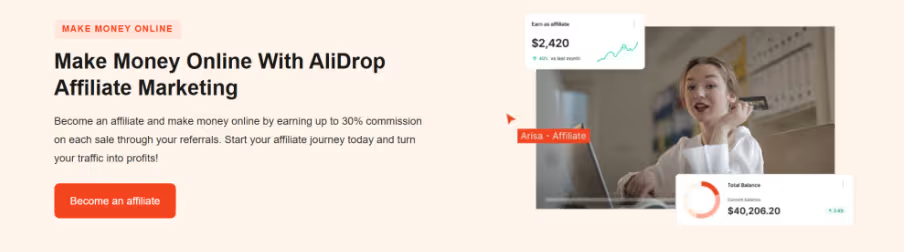
Unlike dropshipping, you don’t handle orders or customer interactions.
Why Affiliate Marketing Attracts Beginners
Affiliate marketing is appealing because:
- It requires minimal setup
- There’s no need to manage products
- You don’t deal with customers
This makes it one of the easiest ways to start earning online.
The Hidden Challenge
The biggest challenge in affiliate marketing is traffic. Without:
- Website visitors
- Social media reach
- Content visibility
You won’t earn anything. This means your success depends heavily on your ability to attract and convert an audience.
Dropshipping vs Affiliate Marketing: Core Differences
At first glance, both models seem similar. You don’t hold inventory, and you can work online. But the core difference is ownership.
Dropshipping Gives You Control
With dropshipping, you control:
- Your store
- Your pricing
- Your branding
- Your customer experience
You’re building a business.
Affiliate Marketing Limits Control
With affiliate marketing, you:
- Promote someone else’s product
- Earn a fixed commission
- Depend on external platforms
You’re supporting someone else’s business.
Why This Difference Matters
Control impacts everything:
- Profit margins
- Growth potential
- Stability
The more control you have, the more you can optimize and scale.
Key Differences Between Dropshipping and Affiliate Marketing in 2026
Before diving into specific factors like costs, earnings, and effort, it’s important to understand how these two models compare at a fundamental level. While both are popular ways to make money online, they operate very differently behind the scenes. Dropshipping puts you in control of a full business—from pricing to customer experience—while affiliate marketing focuses on promoting existing products for a commission.
This section breaks down the most critical differences that actually impact your results. From how much you need to invest to how quickly you can earn, each factor plays a role in shaping your journey. By understanding these differences clearly, you’ll be able to choose a model that aligns with your goals, budget, and expectations instead of following generic advice.
1. Startup Costs and Investment Requirements
One of the biggest deciding factors for beginners is how much money is needed to start.
Affiliate Marketing Costs
Affiliate marketing is known for its low barrier to entry. Typical costs include:
- Domain and hosting (if using a website)
- Basic tools for content or SEO
- Optional marketing tools
In many cases, people start with minimal investment.
Dropshipping Costs
Dropshipping requires a slightly higher investment. Common expenses include:
- Store setup
- Apps and integrations
- Advertising budget
Even though you don’t buy inventory, marketing costs play a big role.
What This Means for Beginners
If you have:
- Very limited funds → affiliate marketing is safer
- A small budget for testing → dropshipping offers faster opportunities
Your financial situation should guide your choice.
2. Time to First Earnings
Everyone wants to know how quickly they can start earning.
Affiliate Marketing Timeline
Affiliate marketing typically takes time because:
- You need to build traffic
- Content takes time to rank
- Trust must be established
It’s common for beginners to wait months before seeing consistent income.
Dropshipping Timeline
Dropshipping can produce faster results. With the right approach:
- You can launch quickly
- Test products immediately
- Generate sales within weeks
This makes it attractive for people looking for quicker feedback.
The Trade-Off
Affiliate marketing is slower but more stable once it works. Dropshipping is faster but requires active involvement.
3. Income Potential and Scalability
This is one of the most important comparisons.
Affiliate Marketing Income
Affiliate income depends on:
- Traffic volume
- Conversion rates
- Commission percentages
You earn a percentage of each sale, which limits your earning potential. Scaling requires:
- More content
- More audience growth
- More time investment
Dropshipping Income
Dropshipping allows:
- Flexible pricing
- Higher margins
- Upselling and bundling
You can increase profits by optimizing your store and marketing strategies.
Long-Term Growth Potential
Dropshipping offers:
- Greater scalability
- More control over profits
Affiliate marketing offers:
- Simplicity
- Lower risk
Your choice depends on whether you prioritize ease or growth.
4. Daily Effort and Workload
This is where many people realize passive income isn’t truly passive.
Affiliate Marketing Workload
You’ll spend time on:
- Content creation
- SEO optimization
- Social media posting
- Audience engagement
Even though there’s no customer service, the effort is consistent.
Dropshipping Workload
You’ll handle:
- Order management
- Customer support
- Marketing campaigns
- Product research
Dropshipping requires more operational work.
Which Feels More Passive
Affiliate marketing feels more passive once content is established. Dropshipping becomes easier only after systems are built.
5. Risk Factors and Stability
Every business model comes with risks.
Affiliate Marketing Risks
- Dependence on platforms
- Changes in commission structures
- Algorithm updates
- Loss of traffic sources
You don’t control the ecosystem.
Dropshipping Risks
- Supplier reliability
- Customer complaints
- Ad performance fluctuations
- Refunds and returns
However, you control your business decisions.
Risk Comparison
Affiliate marketing is lower risk but less stable long-term. Dropshipping has higher risk but offers more control.
6. Passive Income Potential Reality Check
This is where expectations need to be clear.
Affiliate Marketing Passive Potential
Affiliate marketing can become passive because:
- Content continues to generate traffic
- Links keep earning commissions
However:
- You need to maintain content
- Competition can impact rankings
Dropshipping Passive Potential
Dropshipping is not passive at the start. Over time, you can:
- Automate processes
- Outsource tasks
- Build systems
The Honest Truth
Neither model is passive immediately. Affiliate marketing becomes passive faster. Dropshipping becomes scalable and system-driven later.
7. Long-Term Business Value
Thinking long-term is what separates successful entrepreneurs from beginners.
Affiliate Marketing Limitations
You don’t own:
- The product
- The customer
- The pricing
If a program ends, your income stops.
Dropshipping Advantages
You build:
- A brand
- Customer relationships
- A scalable business
This creates long-term value.
Why Ownership Matters
Owning your business gives you:
- Stability
- Flexibility
- Growth opportunities
This is why many people eventually transition from affiliate marketing to ecommerce.
Which Model Is Better for Beginners
Choosing the right model depends on your situation.
Affiliate Marketing Is Better If
- You have a limited budget
- You enjoy content creation
- You prefer low risk
- You’re patient
Dropshipping Is Better If
- You want faster results
- You’re comfortable with ads
- You want to build a brand
- You’re ready for active work
There Is No One-Size-Fits-All Answer. The best model is the one you can stick with consistently.
Can You Combine Both Models
You don’t have to choose just one.
How the Hybrid Approach Works
You can:
- Use affiliate marketing to build traffic
- Launch a dropshipping store later
- Promote products through content
Or:
- Run a dropshipping store
- Create affiliate-style content to drive traffic
Why This Works
Combining both models allows you to:
- Reduce risk
- Diversify income
- Learn multiple skills
This approach is becoming more popular in 2026.
How to Start Dropshipping Efficiently
If you decide to go with dropshipping, efficiency matters. Starting the right way can save time and money.
Focus on the Right Foundation
You need:
- Reliable suppliers
- Fast product sourcing
- Easy store setup
Simplify Your Workflow
Instead of handling everything manually, using a platform like AliDrop can help you:
- Access curated products
- Reduce setup time
- Focus on scaling instead of operations
This allows you to spend more time on what actually drives growth—testing products and improving marketing.
Common Mistakes to Avoid
Avoiding common mistakes can speed up your progress.
Affiliate Marketing Mistakes
- Choosing random products
- Ignoring SEO
- Expecting quick results
- Not building trust
Dropshipping Mistakes
- Poor product selection
- Weak branding
- Over-reliance on ads
- Ignoring customer experience
Learning from these mistakes can give you a strong advantage.
Final Verdict: Which One Should You Choose
Passive income isn’t a shortcut—it’s a process. Both dropshipping and affiliate marketing can help you build income online in 2026. But they require effort, consistency, and patience.
There’s no universal winner—but there is a better choice for your goals. If you want:
- Simplicity → affiliate marketing
- Speed → dropshipping
- Long-term business → dropshipping
- Content-driven income → affiliate marketing
Affiliate marketing is a great starting point. Dropshipping offers more long-term growth potential.
The smartest move is choosing based on your strengths—not trends. The key is not chasing the easiest option—but committing to the one that aligns with your goals. Ready to simplify your dropshipping? Stop wasting time on manual order management and start scaling your profits. Click here to Sign up for AliDrop and automate your store today.
FAQs About Dropshipping vs Affiliate Marketing
Is dropshipping better than affiliate marketing for beginners?
Affiliate marketing is generally more beginner-friendly due to its low startup costs and minimal technical requirements. However, dropshipping offers a more comprehensive learning experience in ecommerce, providing you with greater control over branding, customer data, and long-term business scalability. Your choice should depend on whether you prioritize ease of entry or the ability to build a fully independent brand from scratch.
Can you make passive income with dropshipping?
Si bien el dropshipping a menudo se comercializa como algo totalmente pasivo, requiere un esfuerzo inicial significativo para investigar productos, construir una tienda y optimizar los embudos de marketing. Una vez que tus sistemas estén establecidos y tengas proveedores confiables, puedes automatizar muchas tareas operativas o subcontratar la atención al cliente.
¿Cuánto tiempo tarda el marketing de afiliación en generar ingresos?
El cronograma de ingresos de los afiliados varía mucho según su audiencia actual y los canales de marketing que elija emplear. Los métodos orgánicos como el SEO y los blogs suelen tardar de seis a doce meses en obtener suficiente autoridad y tráfico para generar ventas consistentes.
¿Qué modelo tiene un mayor potencial de ingresos?
El dropshipping generalmente ofrece un mayor potencial de ingresos porque tienes la libertad de establecer tus propios precios minoristas y márgenes de beneficio. Por el contrario, el marketing de afiliación te limita a un porcentaje de comisión fijo establecido por el propietario del producto, lo que dificulta aumentar significativamente las ganancias sin un tráfico masivo.
¿Es posible hacer ambas cosas al mismo tiempo?
La combinación de ambos modelos es una estrategia muy eficaz para diversificar las fuentes de ingresos y mitigar los riesgos asociados con la confianza en una única plataforma. Una vez que identifiques los productos o las categorías de alto rendimiento, puedes hacer la transición al envío directo de esos artículos para obtener mayores márgenes y crear una marca con seguidores dedicados.


%201.svg)


