


Choosing the right supplier is one of the most important decisions you’ll make in dropshipping. It directly affects your shipping times, product quality, customer satisfaction, and ultimately your profits.
Two of the most popular platforms in 2026 are CJ Dropshipping and Spocket. At first glance, both seem similar. They offer product sourcing, order fulfillment, and integrations with ecommerce platforms. But once you dig deeper, you’ll realize they serve very different types of businesses.
Some sellers prefer CJ Dropshipping for its flexibility and massive product range. Others choose Spocket for faster shipping and premium suppliers.
So which one is better? The answer depends on your goals, budget, and target audience. In this guide, we’ll break down:
- Key differences between CJ Dropshipping and Spocket
- Pricing, shipping, and product quality comparison
- Pros and cons of each platform
- Which one is best for your business model
By the end, you’ll know exactly which platform fits your dropshipping strategy.
Overview of CJ Dropshipping and Spocket
Before comparing features, it’s important to understand how each platform operates.
What Is CJ Dropshipping?
CJ Dropshipping is a global sourcing and fulfillment platform. It acts as a middleman between suppliers and store owners, handling product sourcing, warehousing, packaging, and shipping. Its biggest strengths are:
- Large product catalog
- Custom sourcing capabilities
- Flexible pricing
CJ is often used by sellers who want to test multiple products or operate in competitive niches.
What Is Spocket?
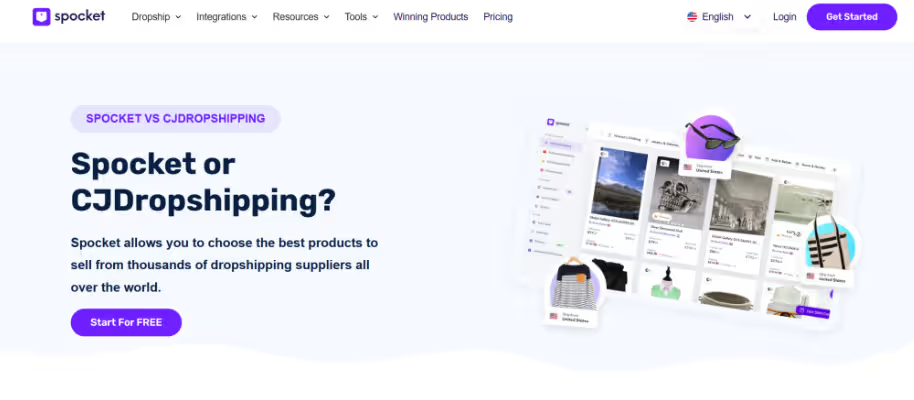
Spocket connects you with suppliers primarily based in the US and Europe. It focuses on high-quality products and faster delivery times. Its main advantages include:
- Faster shipping (2–7 days in many cases)
- Curated product selection
- Branded invoicing options
Spocket is designed for sellers who want to build a premium brand with reliable shipping.
The best choice depends on what you’re optimizing for:
- Speed and customer trust → Spocket
- Variety and operational depth → CJdropshipping
How these platforms actually differ
Both tools are “dropshipping platforms,” but they solve different problems. Spocket tends to emphasize:
- curated products and supplier quality
- easier setup and usability
- US/EU supplier availability (depending on products)
- brand-friendly details like branded invoicing
CJdropshipping tends to emphasize:
- wide global product sourcing (often China-forward)
- sourcing services and fulfillment workflows
- broader operational tooling for scaling logistics
So the real question isn’t “which is best,” it’s “which aligns with how you want to win.” Let’s explore them in detail now-
1. Supplier network and product selection
A dropshipping platform is only as good as what you can sell profitably.
Spocket product approach
Spocket is commonly described as more curated, with a supplier network that highlights US/EU supplier availability and products that are positioned as higher quality and easier to brand.
That typically works well for:
- home and lifestyle products
- beauty tools and accessories (non-regulated)
- fashion basics and niche accessories
- giftable items where delivery speed matters
This “curated” approach can be a hidden advantage. You’re less likely to drown in endless low-quality listings, and more likely to build a store that feels cohesive.
CJdropshipping product approach
CJdropshipping is often described as having a very large, globally sourced catalog, with broader category coverage and deeper sourcing potential—especially if you want to request sourcing for specific products.
That typically works well for:
- trend-heavy product testing
- high SKU stores
- categories where you want many variations quickly
- sellers who want sourcing flexibility
The tradeoff is that with a larger catalog comes more variability—quality, delivery outcomes, and supplier consistency can differ by product.
Decision tip: If you want fewer “product roulette” surprises, Spocket’s curated angle is attractive. If you want breadth and don’t mind tighter QA processes, CJdropshipping can be powerful.
2. Shipping speed and delivery expectations
Shipping is one of the biggest profit-killers in dropshipping. Slow delivery increases:
- refund requests
- chargebacks
- “where is my order” tickets
- negative reviews
Spocket shipping strength
Multiple comparisons emphasize Spocket as a better fit when you want faster delivery expectations for US/EU customers due to its supplier positioning.
This is especially valuable if you’re building a brand that relies on repeat purchases. Faster delivery often translates into better customer trust and higher lifetime value.
CJdropshipping shipping strength
CJdropshipping is frequently positioned around having broad fulfillment and logistics capabilities, including multiple warehouses and fulfillment services.
That can be a major plus, but outcomes depend heavily on:
- which product you choose
- where it ships from
- where your customer lives
- which shipping option is selected
Decision tip: If your core market is US/EU and you want a “less risky” customer experience, Spocket often wins on this dimension. If you need global reach and deeper fulfillment options, CJdropshipping can compete well—if you manage expectations correctly.
3. Product quality and consistency
Quality drives refunds. Refunds destroy margins.
Spocket quality positioning
Spocket is often positioned as being more “quality-first” and curated, which can improve consistency across your catalog—especially when you’re trying to build a brand, not just test random products.
This matters more than most sellers realize. A store with 30 strong, consistent products will usually outperform a store with 500 inconsistent ones.
CJdropshipping quality reality
CJdropshipping offers broader access to products and sourcing, but because the network is wider, quality can vary more by listing and supplier.
This doesn’t mean CJ is “low quality.” It means you should build a stronger QA process:
- order samples
- focus on winners
- don’t scale ads until delivery + product outcomes are stable
4. Pricing and fees: what you’re really paying for
Dropshipping profitability isn’t “sale price minus product cost.” It’s:
sale price − (product cost + shipping + platform fees + payment fees + ad costs + refunds)
Spocket pricing style
Spocket typically operates with a membership model where features and supplier access scale by plan tier. The benefit is predictable tooling and a curated experience; the tradeoff is that some capabilities may sit behind higher tiers depending on your needs.
This is often easier for beginners because the workflow feels clearer and you’re not constantly stitching together tools.
CJdropshipping pricing style
CJdropshipping’s cost structure can feel more operational—costs may show up in product pricing, shipping choices, service fees for certain options, or add-on services depending on your workflow.
This can be great for advanced sellers who know exactly what they need and want flexibility.
Decision tip: If you want clarity and “predictability,” Spocket is usually simpler. If you want flexibility and operational services, CJdropshipping can be worth it—just track your true landed cost carefully.
5. Automation and order fulfillment workflow
Automation isn’t just convenience. It’s how you prevent mistakes at scale.
Spocket automation experience
Comparisons frequently describe Spocket as user-friendly and streamlined, especially for product import, supplier discovery, and fulfillment steps.
This is ideal when you want:
- fewer moving parts
- clean fulfillment steps
- a simple daily ops routine
CJdropshipping automation experience
CJdropshipping is often described as offering more operational breadth, but with a steeper learning curve.
This can be a strength when you need:
- deeper sourcing workflows
- multiple service options
- complex fulfillment variations
Decision tip: If you’re a beginner or you want speed-to-launch, Spocket tends to feel easier. If you’re an operator who’s comfortable managing systems, CJdropshipping can give you more levers.
6. Branding options: how “premium” can your store feel?
Branding is the difference between “a store that sells” and “a store customers remember.”
Spocket branding support
One commonly highlighted advantage for Spocket is brand-friendly details such as branded invoicing, which can help your store feel more professional.
This matters if you’re building a store designed for repeat purchases, referrals, and long-term positioning.
CJdropshipping branding support
CJdropshipping is frequently positioned as offering a broader set of services, which may include branding-related options depending on what you use.
If your strategy is to evolve from pure dropshipping into a more controlled supply chain, CJ’s service ecosystem may appeal.
7. Integrations and platform compatibility
Your tool must match your sales channel.
Both platforms are commonly compared in the context of Shopify-based stores, and most discussions assume Shopify as the main integration.
When you evaluate integrations, don’t just check “supported.” Confirm:
- variant mapping accuracy
- tracking sync reliability
- refunds/cancellations workflow
- inventory updates and out-of-stock behavior
These are the issues that cause silent chaos in ecommerce operations.
8. Customer support and learning curve
Support matters most when something breaks during scaling.
Spocket learning curve
Multiple comparisons frame Spocket as simpler to use and more beginner-friendly.
This reduces time-to-launch and reduces the chances you’ll abandon the store because the ops feel overwhelming.
CJdropshipping learning curve
CJdropshipping is often described as more complex, with a steeper learning curve—especially when you explore its full sourcing and fulfillment ecosystem.
That complexity can be worth it if you want the operational depth, but it’s not ideal if you want a “clean and simple” routine.
Best use cases: who should choose what
Here’s how to decide based on your store strategy.
Choose Spocket if
- Your audience is primarily US/EU and delivery expectations are high
- You want curated suppliers and more consistent product quality
- You want a smoother, simpler workflow to launch and scale
- You’re building a brand-first store, not a trend-chasing catalog
This approach tends to support long-term stability, which is how dropshipping becomes a serious side hustle and not just a short experiment.
Choose CJdropshipping if
- You want a broad catalog and sourcing flexibility
- You’re comfortable managing a more complex operational toolset
- You want deeper fulfillment services and logistics options
- You plan to test many products and iterate quickly
If your goal is rapid experimentation at scale, CJdropshipping can offer more volume-oriented flexibility.
The real deciding factor: your customer promise
Most dropshipping stores fail because their operations can’t match their marketing. If you promise:
- fast shipping
- premium quality
- easy returns
Then your platform choice must support that promise.
That’s why many comparisons frame Spocket as a better match for faster shipping expectations and a more curated product experience. And why CJdropshipping is often framed as a better match for wide sourcing capability and fulfillment services—if you manage the learning curve.
A practical test plan before you commit
Don’t choose based on marketing pages alone. Test like an operator.
Step 1: Choose 3 products you’d actually run ads for
Pick products that represent your niche:
- one low price point
- one mid price point
- one “premium” product
Step 2: Order samples and track the full timeline
Measure:
- time to process
- time in transit
- packaging quality
- product quality
- accuracy (variants, color, size)
Step 3: Map the customer support workload
During the test, document:
- how tracking is communicated
- what happens when delays occur
- how quickly issues are resolved
Step 4: Build your pricing with a refund buffer
Even the best platform will have exceptions. Build a small refund buffer into your margins so you can handle issues without destroying profitability.
This is how dropshipping becomes a legitimate route to make money online and eventually build passive income behavior—through systems, not luck.
SEO and store growth: which platform supports long-term scaling?
Your platform won’t rank your store. Your content and pages will. But supplier quality and shipping reliability affect:
- reviews
- repeat purchases
- refund rate
- customer support load
If you want organic growth and compounding traffic, you want a catalog you can confidently promote.
That’s where Spocket’s curated positioning can help if you’re building a brand-like store with stronger product consistency. CJdropshipping can work too, especially if you’re disciplined about sampling and focusing on proven products—just don’t scale random items without validation.
Final Verdict : Which Platform Should You Choose
Choosing between CJ Dropshipping and Spocket ultimately comes down to how you want to build your business—not just what looks better on paper.
If your priority is flexibility, product variety, and lower upfront costs, CJ Dropshipping gives you the freedom to experiment and test aggressively. On the other hand, if your goal is to build a more reliable, brand-focused store with faster delivery and consistent product quality, Spocket offers a smoother path. It reduces operational friction and helps you create a better customer experience, which is crucial for long-term growth.
There is no universal winner here. The smartest approach is aligning the platform with your stage:
- Use CJ Dropshipping for testing and learning
- Use Spocket when you want to refine and scale
As the dropshipping space becomes more competitive in 2026, success is less about the tool you choose and more about how you use it. The right strategy, consistent testing, and customer-focused execution will always matter more than the platform itself.
FAQs About CJ Dropshipping vs Spocket
Which is better, CJ Dropshipping or Spocket for beginners?
Spocket is usually the easier option for beginners because the platform feels simpler to navigate and the supplier experience is more curated. CJ Dropshipping gives you more flexibility and product variety, but it can feel overwhelming at first. If you want a smoother start, Spocket is easier. If you want more control and experimentation, CJ may suit you better.
Is CJ Dropshipping cheaper than Spocket?
In many cases, CJ Dropshipping is cheaper because it does not require the same kind of monthly subscription structure and often offers lower product costs. Spocket can feel more expensive upfront, especially if you want access to better features and premium suppliers. However, the higher cost may be worth it if faster shipping and product consistency matter to your store.
Does Spocket offer faster shipping than CJ Dropshipping?
Yes, Spocket generally offers faster shipping, especially for customers in the US and Europe, because many of its suppliers are located in those regions. CJ Dropshipping can still offer decent delivery times, but they often vary more depending on the product and warehouse location. If shipping speed is a major selling point for your brand, Spocket usually has the edge.
Can I use CJ Dropshipping and Spocket together?
Yes, you can use both platforms together, and many sellers do exactly that to balance flexibility and customer experience. For example, CJ Dropshipping can be useful for testing a wider range of products, while Spocket can help you scale products that need faster shipping and more reliable fulfillment. This approach gives you more room to optimize as your store grows.
Which platform is better for building a brand?
Spocket is generally better for branding because it focuses more on product quality, faster delivery, and a more polished customer experience. These factors make it easier to build trust and create a premium feel around your store. CJ Dropshipping can also support branding, but it usually requires more effort and tighter control over sourcing and fulfillment.


%201.svg)



%20(1).avif)
