

AliExpress still works for product research, test orders, or low-cost sourcing. It just stops working if you take listings at face value.
AlExpress itself is legit, since it’s backed by Alibaba Group. But regulators and brand owners regularly flag problematic listings, hidden-link schemes, and unreliable seller behavior across certain parts of the marketplace. That gap is where fake suppliers hide, and new buyers keep falling for it.
If you want to avoid wasted ad spend, endless refund disputes, counterfeit inventory, or margins so thin they disappear, then you tighten up how you buy. This means avoiding fake suppliers on AliExpress.
In this guide, we’ll break down what AliExpress is, how it works, and how fake listings show themselves. You will learn what supplier verification should look like in 2026, and which trusted suppliers AliExpress users lean on when random storefronts feel too risky.
What is AliExpress?
AliExpress is a cross-border online retail marketplace owned by Alibaba Group. It launched in 2010 as a business-to-consumer marketplace where third-party sellers can sell directly to buyers around the world, usually without minimum order quantities. That is one reason people still compare it to eBay more than Alibaba.com.
That distinction matters when you are trying to avoid fake AliExpress suppliers. Alibaba is used more for factory sourcing and bulk orders, while AliExpress is built for ready-listed items, quick test buys, and small order sizes. If you are asking is AliExpress safe, the better answer is this: the platform is real, but seller quality varies a lot, so supplier verification matters more here than on a closed catalog.
A lot of people also search why is AliExpress so bad after a poor order. Usually, they are reacting to slow shipping, weak listing accuracy, fake AliExpress reviews, or counterfeit goods passed off through vague photos and generic store names. That frustration is real, and recent EU action against AliExpress over illegal goods and hidden links shows the problem is not just buyer paranoia.
If you are building a store, it helps to know where AliExpress fits in a broader sourcing stack. A lot of sellers still test products through AliExpress dropshipping, then move to tighter supplier verification once a product starts getting repeat sales.
How Does AliExpress Work?
Here is how AliExpress works:
AliExpress is a marketplace, not a single seller
When you open a product page on AliExpress, you are not buying from AliExpress itself in most cases. You are buying from an independent seller using AliExpress as the marketplace layer, which is why product quality, shipping speed, packaging, and after-sale support can vary widely from store to store.
That setup is the first reason fake stores on AliExpress keep showing up. The platform can host real businesses, factories, trading firms, and weak operators side by side. So a polished listing is never enough proof that you are dealing with trusted suppliers AliExpress buyers should use.
Payment stays on platform first
AliExpress uses its own payment and dispute layer, which is one reason the platform is safer than paying a random seller directly on WhatsApp or by bank transfer. Buyer protection generally covers orders that do not arrive or arrive far from the listing description, as long as the claim is made inside the protection window.
This is where supplier verification saves time and money. If a seller asks you to pay outside the app, change the order in chat, or settle a problem off platform, walk away. AliExpress scammers do this because they want the protection layer gone before the product lands.
Shipping is tied to the seller, warehouse, and lane
Many AliExpress orders still ship from China, though some listings now offer local warehouse dispatch. Delivery speed depends on where the item sits, what shipping line the seller uses, and how honestly the seller handles stock and dispatch times.
This is why trusted suppliers AliExpress buyers use tend to show cleaner shipping logic. They do not promise a five-day arrival on a rock-bottom item with vague stock status. They show realistic lanes, clearer dispatch dates, and fewer contradictions between the listing page and checkout page.
Disputes start after delivery problems or bad product match
If the item never arrives, or arrives damaged, incomplete, or wrong, the buyer can open a dispute through the platform. AliExpress then reviews the case if the seller does not fix it first, which is why you should keep screenshots, unboxing video, and size or spec proof.
Many buyers skip this discipline and regret it later. They confirm receipt too early, forget the order window, or trust a private promise from the seller. That is how fake shops on AliExpress keep surviving even when their listings are weak.
If you want a cleaner system than manual catalog checks, tools like the Alidrop marketplace and an AI Shopify store builder can reduce how much time you spend jumping between random listings and store cards.
How to Spot Fake AliExpress Products Online
Here is how you can spot fake AliExpress products online:
Count the design details, do not just stare at the hero image
One of the clearest lessons from counterfeit comparisons is that fake goods often get the broad shape right while missing the small geometry. On a branded item, that could be the number of grooves, holes, screws, stitch lines, vents, or embossed marks. If those counts do not match the official product page, treat the listing as suspect.
This matters because fake products often look fine at thumbnail size. Once you zoom in, the layout falls apart. A counterfeit seller may copy the silhouette but miss face grooves, logo thickness, spacing, molding depth, or material finish. That is the kind of miss serious supplier verification is built to catch.
Audit fonts, logo weight, and hidden branding tricks
Counterfeit sellers often mask the front-facing logo while leaving clues elsewhere. You may see a blurred logo, a bag shown from the back, a cropped label, or a close-up that avoids the trademark entirely. EU regulators specifically called out hidden-link tactics on AliExpress, where legitimate-looking listings are used to route buyers toward illegal goods.
That means you should not trust the first image alone. Open the full description, scroll the variant photos, and inspect buyer-uploaded images. If the front image looks generic but the review photos suddenly reveal the real branded item, you are not looking at a normal listing.
Read reviews backward, not forward
Five-star comments with no photos and vague praise are weak evidence. Fake AliExpress reviews often look short, repetitive, and emotionally flat, with little detail on sizing, materials, hardware, smell, finish, or packaging. What you want are recent photo reviews, mid-range reviews, and comments that mention specifics.
Start with the newest photo reviews and then read the three-star and four-star comments. Those usually tell you what the seller got wrong without the drama of one-star rage or the emptiness of copied five-star praise. This one move catches a lot of fake AliExpress suppliers before you waste a test order.
Compare material transitions, not marketing words
Bad listings hide behind soft phrases like premium, luxury, or high quality. Ignore that. Look at the seam edges, gloss level, hardware color consistency, zipper teeth, grip texture, print sharpness, stitch density, and how materials meet at corners.
Cheap replicas often fail in those transition points. The surface might look close, but the edge paint, molded finish, logo stamp depth, or internal lining texture looks off. That is also why product sound, flex, and wear show up fast in real-world comparisons even when the item looks close on day one.
Watch for image-search traps and masked counterfeit listings
The AliExpress portal and app make image-led shopping easy, but image search can also pull you into hidden-link style listings that use one image to hook traffic and another item to complete the order. The AliExpress fake store app complaint buyers raise again and again is not always about the app itself. Often, it is about buyers only seeing the top image card and missing the true listing details deeper on the page.
If the item title is strangely generic, the thumbnail shows a luxury piece, and the actual listing title says something like “VIP fast shipping” or “women casual bag,” slow down. That mismatch is one of the oldest counterfeit tells on the platform.
A good way to tighten listing quality once you shortlist products is to rewrite and compare item copy with an AI product description writer. If the seller copy is too vague to survive a simple rewrite, that is already a warning sign.
How to Spot Fake Stores on AliExpress?
Want to learn how to spot fake stores on AliExpress? Here’s how you do it, let’s walk through different scenarios:
Case 1: Hidden-link counterfeit stores
The EU’s 2026 action against AliExpress matters here because regulators did not just talk about random bad listings. They called out “hidden links,” where a legitimate-looking product page acts as a path to illegal goods, including counterfeit items. AliExpress agreed to binding commitments around hidden-link detection, yet the Commission also said the platform had fallen short in tackling illegal products.
How were these stores spotted? The tells were consistent: generic titles, legal-looking thumbnails, off-brand listing text, and the real product only appearing in deeper images, variant codes, or buyer photos. If a store behaves like that across several listings, you are probably looking at a fake store AliExpress buyers should skip.
Case 2: Bait-and-switch sellers sending nonsense instead of goods
Just last year, a Georgia buyer reported ordering a drill on AliExpress and receiving a printed photo of the drill instead. He also reported that another tool order turned into a single screw rather than the actual product. That is an extreme case, but it shows how bad AliExpress scam stores can look normal until delivery day.
How was it spotted? Not from the store design alone. The real tell came from the delivery itself, the mismatch between item value and what arrived, and the seller’s failure to resolve it cleanly. That is why supplier verification cannot stop at storefront appearance. You need listing logic, review depth, and post-delivery proof habits too.
What fake stores on AliExpress usually have in common
Many fake stores on AliExpress rely on speed, confusion, and thumbnail-level trust. They rotate generic names, sell across unrelated categories, copy images badly, and avoid clear brand or model references. You will also notice shaky spec sheets, awkward size charts, and review sections that feel too neat.
AliExpress fake sellers also love contradiction. The title says one thing, the variant says another, the spec block is incomplete, and the store bio feels empty. When that pile-up starts, stop treating the listing like a bargain and start treating it like evidence.
Most Popular AliExpress Scammers and Cases
Here are some popular examples of AliExpress scammers online and other such cases to watch out for:
Hidden-link counterfeit operators
These sellers keep the main listing clean enough to survive moderation, then steer buyers toward the real counterfeit item through coded variants, buried photos, or off-page chat. Regulators in Europe made this tactic a formal issue in their AliExpress action, which tells you it is not just a niche trick.
Bait-and-switch fulfillment scammers
This is the worst form of fake shops on AliExpress. The listing promises a real product, but the package that shows up is a photo, a screw, a tiny accessory, or some filler object meant to game delivery records. The 2025 drill case is a public example of that pattern.
Counterfeit brand part sellers
A late-2025 anti-counterfeit operation involving Specialized and AliExpress led to two manufacturing operations being dismantled, seven people arrested, and over $1.6 million in fake bicycle goods seized. That case showed how counterfeit supply can sit behind polished listings until brand checks and test buys expose it.
Off-platform payment and chat movers
Some AliExpress scammers try to pull buyers into WhatsApp, email, or private payment after first contact on the platform. The reason is simple. Once payment and promises move off AliExpress, buyer protection gets weaker and proof gets messier.
How to Spot Fake AliExpress Suppliers
Fake AliExpress suppliers rarely fail on one signal alone. They fail on clusters. A listing may look fine, but the store logic, review pattern, pricing, and shipping claims do not line up. That is where supplier verification starts doing real work.
Use these checks before you place even a small test order:
- Check category logic: If one store sells golf clubs, luxury bags, car sensors, wigs, and pet toys at the same time, treat it carefully. Real sellers can carry broad catalogs, but fake AliExpress suppliers often spread across random categories because they chase short-term clicks, not repeat buyers.
- Inspect order-to-review balance: High order counts with almost no detailed photo reviews are a warning sign. The gap can mean weak customer follow-through, but it can also point to fake AliExpress reviews, low order quality, or a listing that changed after earlier sales.
- Compare title, photo, and variant language: Supplier verification gets easier when you read the listing like a contract. If the hero image shows one thing, the variant menu uses code words, and the title hides the true item behind vague wording, you are probably looking at listing camouflage.
- Test the seller’s replies: Ask one specific question about size, material, packaging, or warehouse location. Trusted suppliers AliExpress buyers return to usually reply with direct answers. Fake AliExpress suppliers answer with pasted lines, dodge the question, or push you toward off-platform chat.
- Check brand exposure risk: If the seller is hinting at a known trademark while refusing to name it openly, pause. Use the USPTO’s official trademark search system when you suspect a protected mark, especially if you plan to resell the product in the US.
- Watch pricing that makes no structural sense: A suspiciously low price is not just a bargain. It can signal counterfeit stock, a bait-and-switch move, or a loss-leader listing meant to bring you into the store before the seller changes terms in chat.
AliExpress Supplier Verification Checklist
Supplier verification is not one screenshot and a gut feeling. It is a short, repeatable system. Run it every time, even when the store looks polished.
Here is a clean checklist you can use:
- Store age and consistency Check how long the store has been active, then see if product quality and reviews look steady across time. Trusted suppliers AliExpress buyers stick with usually look consistent month to month, not random and chaotic.
- Recent photo reviews Ignore the oldest praise first. Start with the newest buyer photos, then cross-check packaging, finish, logo placement, size, hardware, and color. This is one of the fastest supplier verification habits you can build.
- Spec match against official product pages If you are buying a branded or technical item, compare the listing against the official brand page. Count ports, grooves, attachments, stitch lines, accessory contents, and model naming. Small mismatches expose a lot of fake AliExpress suppliers.
- Local warehouse truth check If the seller claims US or EU stock, verify that shipping times and delivery pricing match that promise. If you want shorter lanes by default, look through best US and EU suppliers instead of trusting a random warehouse badge.
- Trademark and resale risk Before reselling anything branded, search the mark. If you need a factory-style alternative route, compare the logic behind Alibaba suppliers instead of trying to force brand resale through murky AliExpress listings.
- Niche sourcing fit Do not buy from a general store if your niche has tighter supplier routes. Grocery, local-market, and country-specific categories often need their own path, like top grocery dropshipping suppliers or guides that find reliable Indian dropshipping suppliers here.
- Cross-market sanity check If an item is trending across marketplaces, compare the product on AliExpress with Temu suppliers and other sources. Supplier verification gets stronger when you stop treating one listing as the whole market.
Best and Most Trusted Suppliers AliExpress for 2026
If you want trusted suppliers AliExpress users can work with in 2026, the safer route is not blind store hopping. It is using sourcing platforms, supplier networks, and directories that put more structure around catalog quality, fulfillment, and seller access.
1. Alidrop
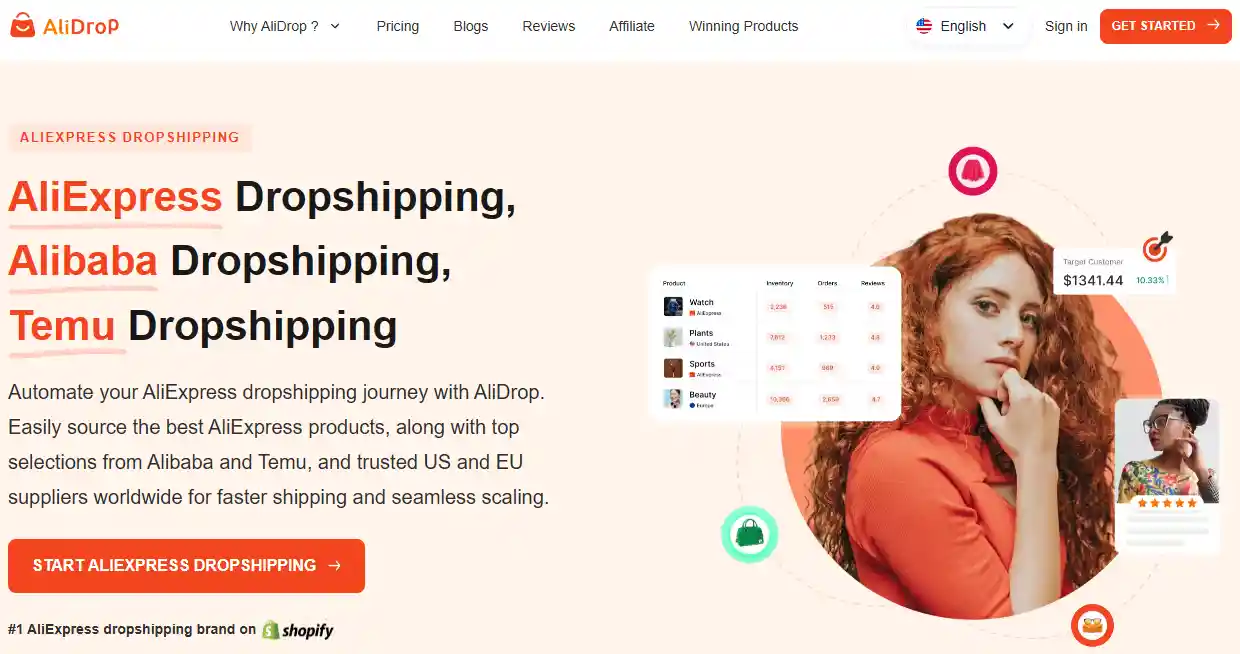
Alidrop is designed for AliExpress, Alibaba, and Temu dropshipping.
It helps you easily source the best AliExpress products online. You get access to trusted US and EU suppliers worldwide for faster shipping and seamless scaling. Alidrop has 100M+ monitored products and makes over 50M+ annual sales.
You can use its one-click product import to add products instantly to your store. It also seamlessly integrates AliExpress with Shopify, in addition to eBay and Amazon.
Here’s what else you get with Alidrop:
- 24/7 VIP customer support
- Custom branding options
- AI Shopify Store builder
- Reliable product and supplier data that’s updated daily
2. Spocket
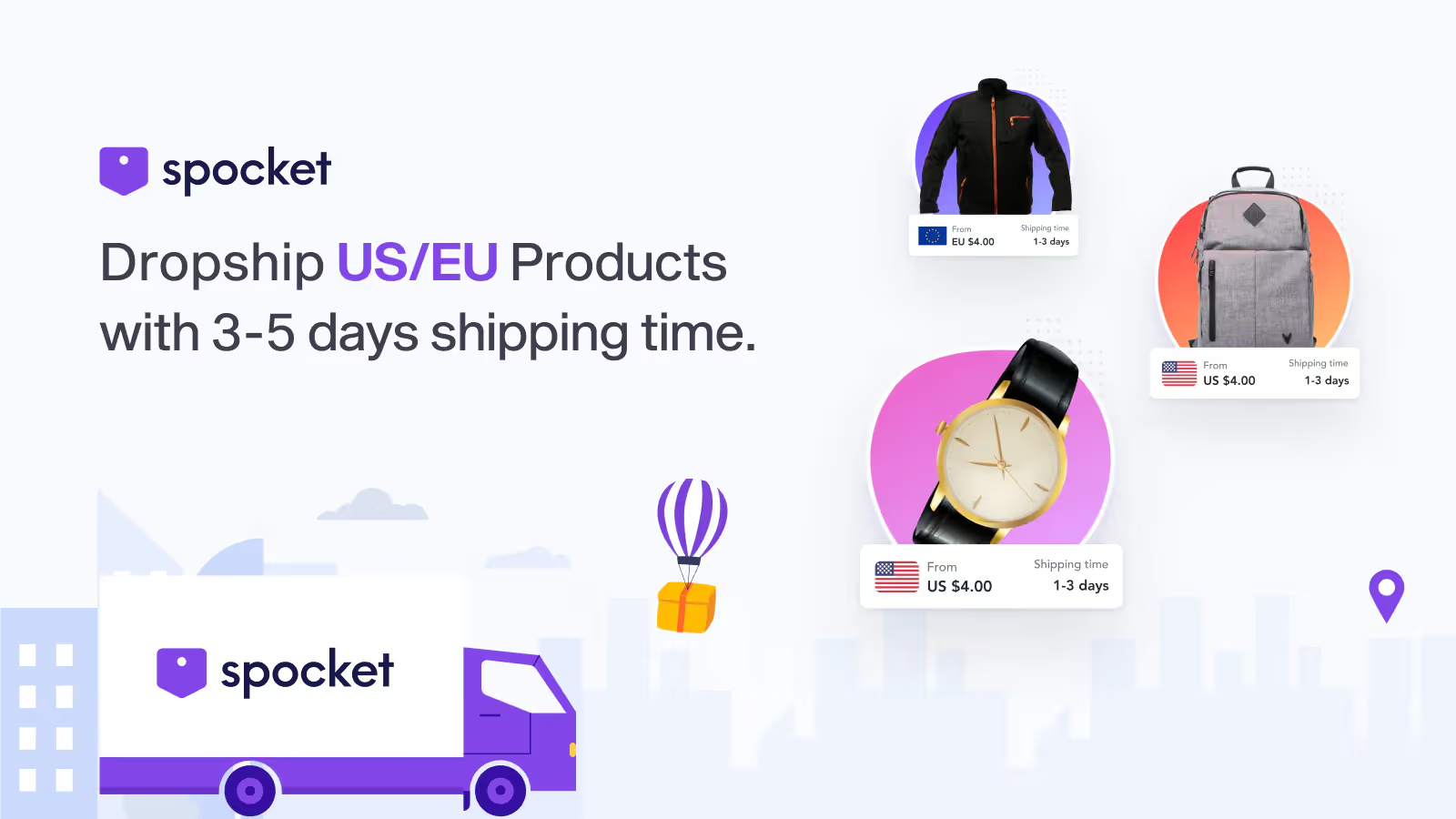
Spocket earns the second spot because it leans hard into US and EU supplier access, which solves one of the biggest pain points behind why is AliExpress so bad complaints: long delivery times paired with weak consistency. Spocket is great for finding reliable AliExpress dropshipping suppliers worldwide. You can use the filters on the app to narrow down suppliers by regions and markets. Every supplier listed in their directory is pre-vetted and verified. You can also trust Spocket’s catalog of trending dropshipping products.
Here is why else you should use Spocket:
- Automated inventory sync, bulk orders, and product imports
- 24/7 VIP customer service support
- Branded invoicing
- Private and white label dropshipping services
- Print-on-demand services
- 100M+ trending products and 20M+ winning dropshipping products
- Profit margin calculator and other tools included
3. SaleHoo

SaleHoo works well for buyers who want a vetted directory layer before they commit to suppliers. Its site says the directory includes over 8,000 vetted dropshippers, wholesalers, and private label manufacturers, along with filters and market research tools. That is a big plus if you are tired of guessing which listings are backed by trusted suppliers AliExpress shoppers can actually rely on. SaleHoo is not built around the chaos of one-off marketplace browsing. It is built around narrowing the field first, then contacting or choosing suppliers with more structure behind them. For supplier verification, that changes the workflow in a good way. You spend less time staring at random thumbnails and more time comparing supplier credibility in a controlled list.
- Directory-style supplier search instead of random catalog drift
- Vetted supplier network across dropship and wholesale paths
- Handy filters for niche and sourcing type
- Market research tools on top of supplier discovery
- Good fit for sellers who want more screening before buying
4. Syncee
Syncee is a solid option for merchants who want a marketplace where stores and suppliers connect across multiple ecommerce platforms. Its site positions it as a dropshipping and wholesale marketplace where online stores can source from brands and suppliers without holding inventory. That can be useful when you are trying to get away from fake AliExpress suppliers and move toward catalog relationships that feel more stable.
Syncee also suits merchants who want to add complementary products from other brands rather than relying only on open-market listings. In practice, it works best for sellers who care about catalog quality, repeatability, and a cleaner sourcing experience. Supplier verification still matters, but Syncee gives you a tighter starting point than a random AliExpress store search.
- Marketplace links online stores with wholesale and dropship suppliers
- Works across multiple ecommerce platforms
- No inventory holding required
- Useful for curated catalogs, not just trend chasing
- Better fit for merchants who want steadier supplier relationships
5. HyperSKU

HyperSKU is worth including because it offers direct sourcing, custom branding support, and fast global fulfillment rather than a loose public marketplace model. Its site says it serves more than 200,000 ecommerce sellers and supports product sourcing, branding, and daily order handling. It also claims delivery to 40-plus countries in seven days through its app-facing materials. That puts it in a different lane from raw AliExpress store browsing.
If supplier verification is your pain point, HyperSKU can be easier to manage because you are dealing with a sourcing partner structure, not just unknown storefront cards. It is a stronger pick once your store already has order flow and you want fewer random supplier surprises in packaging, stock status, or dispatch speed.
- Direct sourcing path rather than open marketplace browsing
- Custom branding support for growing stores
- Built around fulfillment and daily order handling
- Useful once order volume becomes steady
- Better suited to stores that want tighter operational control
6. Doba
Doba rounds out the list because it brings product listing, order processing, inventory syncing, and supplier access into one system. Its site highlights selected suppliers, one-click setups, real-time price and stock updates, and account support. For merchants who keep getting burned by fake AliExpress suppliers, that kind of structure matters. Doba is not a magic shield, but it gives you more organized supplier access than scrolling an open marketplace all day. It also suits people who want product sourcing plus operational help in the same stack. If your weak point is not just supplier verification but keeping prices, stock, and orders lined up after launch, Doba is worth a serious look in 2026.
- Selected supplier network instead of open catalog chaos
- Real-time stock and price syncing
- One-click listing and order workflow support
- Better fit for stores that want operational order after launch
- Useful for merchants who want sourcing plus catalog upkeep in one tool
Conclusion
So now we have covered how to spot fake AliExpress suppliers. You’ll have to back up with your own judgement and intuition as well. Don’t read everything you believe online and be sure to double check reviews from clients. Take a peek on YouTube, verify with other customers, and make sure you are contacting the right sellers by talking to them directly via official sources.
With that said, we wish you the best of luck on your AliExpress dropshipping journey! To find the top and trusted AliExpress dropshipping suppliers for your store, use Alidrop today!
Fake AliExpress Suppliers FAQs
Is AliExpress safe for dropshipping in 2026?
AliExpress is safe at the platform level in the sense that it is a real marketplace with buyer protection and dispute tools. The risk sits at the seller level. That is why supplier verification, review checks, and test orders matter so much. A platform can be legitimate while still hosting fake AliExpress suppliers, hidden-link listings, or sloppy stores that create refund problems.
How do I verify an AliExpress supplier before placing a large order?
Start with recent photo reviews, listing consistency, direct questions to the seller, trademark checks for branded goods, and one small test order. Then compare the item against the official brand page or a trusted catalog. Good supplier verification is never one signal. You want the store, listing, pricing, shipping, and post-sale communication to line up without contradictions.
What are the biggest warning signs of fake stores on AliExpress?
The biggest red flags are generic store names, unrelated product categories, vague titles, blocked logos, hidden-link behavior, odd variant codes, and review sections with little real detail. Fake stores on AliExpress also tend to show one product in the thumbnail and another product logic in the description. If the page keeps changing shape as you inspect it, step back.
Can I resell branded AliExpress items in the US?
You should be very careful. If the item uses a protected trademark or looks like a copy of a known brand, resale can create legal trouble and customer complaints. Search the mark in the USPTO database first, then decide if the item is truly generic or if it looks like counterfeit stock. This is one of the most ignored parts of supplier verification.
Why do some AliExpress listings have blurred logos or generic names?
That usually points to moderation avoidance. Sellers may blur logos, crop product fronts, use coded titles, or hide the real branded item in review photos or variant options. Regulators have called out hidden-link tactics on AliExpress, so buyers should treat these listings as risk-heavy. If you see that pattern, do not assume the store is clever. Assume it may be unsafe.


%201.svg)