

If you’ve been researching dropshipping tools, Sellvia is one name that keeps popping up. It’s often positioned as an all-in-one solution that promises fast store setup, ready-to-sell products, and quick shipping—especially within the US.
At first glance, it sounds like the perfect shortcut. But that’s exactly where most beginners get confused. The real question isn’t just “Is Sellvia legit?” It’s also “Is Sellvia the right tool for how I want to build my business?”
Because here’s the truth—Sellvia is a legitimate platform, but it comes with trade-offs. Some users love the simplicity, while others feel limited by its structure.
In this article, we’ll break everything down in detail:
- What Sellvia actually does
- Real user feedback patterns
- Pros and limitations
- Hidden expectations
- Whether it’s worth using in 2026
By the end, you’ll have a clear, realistic answer—not just hype.
What Is Sellvia and How Does It Work
Before deciding if Sellvia is legit, you need to understand what it actually offers. Sellvia is a dropshipping ecosystem that combines product sourcing, store setup, and order fulfillment into one platform. It’s designed to reduce the complexity beginners face when starting an ecommerce business.
Core Functionality of Sellvia
Sellvia operates through a simplified workflow:
- You set up an online store
- You import products from Sellvia’s catalog
- Customers place orders on your store
- Sellvia handles fulfillment and shipping
The key difference compared to traditional dropshipping is that Sellvia emphasizes faster shipping through US-based fulfillment, which helps improve customer experience.
What Makes Sellvia Different
Sellvia tries to stand out by offering:
- Pre-built product pages
- Optimized descriptions and images
- Integrated store-building tools
- Faster delivery times compared to overseas suppliers
For beginners, this reduces setup time significantly. But it also means you’re operating within a more controlled ecosystem.
Is Sellvia Legit or a Scam
Let’s answer the main question directly.
Sellvia is legit. It is a real platform with active users, working systems, and a functioning fulfillment process. However, legitimacy does not automatically mean it’s the best choice for everyone.
Why Some People Question Its Legitimacy
Negative opinions often come from:
- Misunderstood pricing structures
- Expectations of instant success
- Lack of business knowledge
Some users expect Sellvia to handle everything, including marketing and sales. When that doesn’t happen, they assume the platform is the problem.
What the Overall Feedback Suggests
Review patterns show a mix of experiences:
- Positive feedback focuses on ease of use and faster shipping
- Negative feedback often mentions billing confusion and limitations
This is common with tools that simplify complex processes—they help beginners start faster but may feel restrictive later.
Real User Experiences What People Actually Say
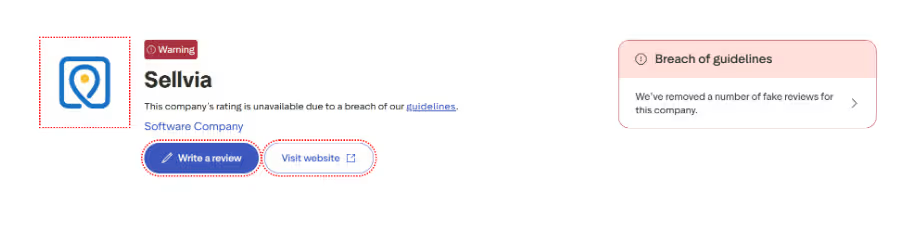
Looking at real user feedback gives a more balanced view than marketing claims. and Trustpilot is one of the places where Sellvia gets a mix of strong praise and sharp criticism. At the moment, the Trustpilot page shows 800+ total reviews, with 60% 5-star reviews and 30% 1-star reviews. Trustpilot also displays a warning that the company’s rating is unavailable due to a breach of its guidelines, and notes that it removed a number of fake reviews for the company.
Positive Experiences
Many users highlight the following benefits:
- Easy onboarding process
- Quick store setup
- Pre-built product content
- Faster delivery compared to traditional suppliers
For beginners, these features remove many early barriers. Some users report:
- Saving hours on product listing
- Getting stores live quickly
- Reduced operational complexity
Negative Experiences
At the same time, recurring complaints include:
- Upselling after initial signup
- Limited product variety
- Pricing concerns
- Customer support delays
Some users also feel that:
- The platform becomes expensive over time
- Scaling options are limited
- Customization is restricted
What This Means
Sellvia delivers on its promise of simplicity—but that simplicity comes with limitations. Your experience depends on:
- Your expectations
- Your goals
- Your level of experience
Key Features of Sellvia
To truly evaluate Sellvia’s value, you need to look beyond the marketing promises and understand how its core features function in a real-world business environment. Each feature is designed to solve a specific dropshipping hurdle, but they also influence how you manage your store long-term.
US-Based Fulfillment
Sellvia’s biggest advantage is faster shipping within the US. This leads to:
- Better customer satisfaction
- Fewer refund requests
- Higher trust levels
Ready-Made Product Pages
Sellvia provides:
- Product descriptions
- Images
- Pricing suggestions
This saves significant time during setup.
Built-In Store Builder
The platform includes tools for:
- Creating a store
- Importing products
- Managing orders
This makes it beginner-friendly.
Automated Order Processing
Orders are handled automatically, reducing manual effort. This allows you to focus more on:
- Marketing
- Scaling
Sellvia Pros and Cons - What You Need to Know Before Getting Started
Before deciding whether Sellvia is the right platform for your dropshipping journey, it’s important to look beyond the surface-level features and understand both its strengths and limitations. Like any ecommerce tool, Sellvia is designed to simplify certain aspects of the business while introducing trade-offs in others.
This section breaks down the key advantages and drawbacks based on how the platform actually performs in real-world use. By understanding what Sellvia does well—and where it may fall short—you can make a more informed decision and avoid common beginner mistakes.
Pros of Using Sellvia
Sellvia has clear advantages, especially for new sellers.
1. Faster Shipping Compared to Traditional Dropshipping
Speed improves:
- Customer experience
- Conversion rates
- Repeat purchases
2. Beginner-Friendly Setup
You don’t need technical expertise to get started. Everything is simplified:
- Store creation
- Product import
- Order handling
3. Time-Saving Features
Pre-built content reduces workload significantly. You can:
- Launch faster
- Focus on marketing
4. All-in-One Solution
Instead of using multiple tools, Sellvia combines everything into one platform. This unified structure eliminates the technical friction of connecting separate apps for sourcing, store management, and shipping. For a beginner, this means having a central dashboard where you can oversee your entire operation without needing to jump between different subscriptions or complex API integrations.
Cons of Using Sellvia
Despite its advantages, Sellvia is not without drawbacks.
1. Limited Product Selection
Compared to broader marketplaces:
- The catalog is smaller
- Niche options may be limited
2. Upselling and Pricing Structure
Some users report:
- Additional costs after signup
- Upsell-heavy onboarding
This can feel unexpected if not understood beforehand.
3. Reduced Flexibility
Operating within a closed ecosystem means:
- Less customization
- Fewer integrations
- Limited scaling options
4. Not Ideal for Global Markets
Sellvia is heavily focused on the US. This limits:
- International expansion
- Global targeting
Who Sellvia Is Best For
Sellvia is strategically positioned for specific types of entrepreneurs who prioritize speed and simplicity over granular control. It works particularly well for those who fit the following profiles:
- First-Time Entrepreneurs: Individuals who want to avoid the "analysis paralysis" of choosing from millions of products and instead want a curated, proven selection to test the waters of ecommerce.
- Side-Hustlers with Limited Time: Since Sellvia provides ready-made descriptions, high-quality media, and automated order fulfillment, it is ideal for those who can only dedicate a few hours a week to their business.
- US-Market Specialists: Business owners who focus exclusively on the American consumer base and need to compete with Amazon-like shipping speeds to maintain high customer satisfaction scores.
Who Should Avoid Sellvia
While Sellvia offers a streamlined entry point, it is not a universal solution for all ecommerce business models. Its structured ecosystem and US-centric focus can create friction for sellers who require more flexibility, international reach, or a lower entry cost.
Advanced Dropshippers
The platform is designed to be a "walled garden," which can hinder experienced dropshippers who want to implement custom features or unique workflows. If you find yourself needing the following, you may feel restricted:
- Full control
- Custom workflows
- Advanced strategies
Advanced users often outgrow the "done-for-you" model because it limits their ability to differentiate their brand from other Sellvia users who are selling the same products with the same descriptions.
Global Sellers
Since Sellvia’s infrastructure is optimized for US fulfillment, sellers targeting Europe, Asia, or other global markets will find the delivery times and shipping costs non-competitive. Expanding your business beyond North America becomes a significant challenge within this ecosystem.
- Sellvia’s US-centric model can be limiting
Budget-Conscious Beginners
For those starting with extremely limited capital, the monthly subscription fees and the costs associated with premium "add-on" services or store setups can eat into thin margins. Beginners on a tight budget might find it more sustainable to start with more flexible, lower-cost sourcing methods.
- The pricing structure may not suit you
Common Misconceptions About Sellvia
Many misunderstandings lead to disappointment because the platform's simplified setup and heavy marketing can sometimes create unrealistic expectations for instant or passive success.
“Sellvia Will Make Me Money Automatically”
No platform guarantees success. You still need:
- Marketing strategy
- Product research
- Optimization
“It’s a Fully Done-For-You Business”
Sellvia simplifies setup—but you still need to:
- Drive traffic
- Convert customers
- Manage growth
“Fast Shipping Equals High Sales”
Shipping helps—but it’s only one part of the equation. While quick delivery is crucial for maintaining customer satisfaction, conversion rates and high sales ultimately depend on the product's market appeal, competitive pricing, effective advertising strategies, and a seamless, user-friendly store experience.
Sellvia vs Traditional Dropshipping Platforms
Understanding the differences helps you make a better decision, as the key distinctions lie in the critical trade-offs between immediate simplicity, shipping speed, and long-term scalability when comparing Sellvia to traditional dropshipping platforms.
Where Sellvia Excels
- Faster shipping
- Simplified setup
- Pre-built content
Where It Falls Short
- Limited product variety
- Less flexibility
- Higher perceived cost
The trade-off is simplicity vs scalability.
Is Sellvia Worth It in 2026
Sellvia can be worth it—but only under the right conditions. Specifically, it provides the most value when your business strategy aligns with its structured, US-centric model. If you prioritize a rapid market entry with minimal technical friction, the platform’s "done-for-you" approach justifies the cost.
However, the investment is only sustainable if you are comfortable with a smaller, curated product catalog and are focused on the American consumer base where their fulfillment speed is a competitive advantage.
It’s Worth It If You Want
- A quick start
- Minimal setup complexity
- US-focused selling
It’s Not Ideal If You Want
- Full control
- Global reach
- Long-term flexibility
Think of Sellvia as a starting tool—not a long-term solution for everyone.
Final Verdict: Is Sellvia Legit?
Yes, Sellvia is a legitimate and functional platform that helps beginners start dropshipping quickly. It is an excellent choice if you prioritize simplicity and are targeting the US market with its specialized fulfillment model. However, it is not a perfect shortcut to success and comes with significant trade-offs.
While it removes technical friction for first-time entrepreneurs, the "walled garden" ecosystem can be restrictive. It is not the ideal solution for those who require full creative control, global reach, or long-term flexibility to scale beyond North America. Like any dropshipping tool, it is only as effective as the strategy behind it, and success ultimately depends on your marketing execution and product selection.
If your goal is long-term growth and scalability, you need a system that adapts as you grow. Start building a more flexible and powerful dropshipping business today with AliDrop—the adaptable solution designed for maximum growth and global flexibility.
FAQs About Sellvia’s Legitimacy
Is Sellvia legit or a scam?
Sellvia is a legitimate dropshipping platform based in the US, specializing in ecommerce solutions. While it is not a scam, user experiences vary significantly based on individual business expectations and how they utilize the "done-for-you" ecosystem. Positive feedback often highlights the platform's ability to help users launch a business quickly, whereas negative reviews typically stem from a misunderstanding of its subscription-based pricing and the limitations of its curated catalog.
Does Sellvia actually work?
The platform functions as a comprehensive fulfillment and store-building tool that automates much of the back-end technical work. However, "working" depends on the user's ability to drive traffic and manage marketing. Sellvia provides the infrastructure—store, products, and shipping—but the business owner is still responsible for the strategy, ad spend, and customer acquisition necessary to generate sales.
Is Sellvia good for beginners?
Sellvia is highly recommended for beginners because it removes the technical barriers associated with traditional dropshipping. By offering pre-built product listings, optimized descriptions, and a streamlined store setup, it allows first-time entrepreneurs to skip the complex phases of product research and web development, though it does require a monthly investment.
What are the main drawbacks of Sellvia?
The primary drawbacks include a limited product variety compared to global marketplaces like AliExpress and a pricing structure that involves upselling for premium features. Additionally, the platform is heavily focused on the US market, which reduces flexibility for those looking to scale globally or those who want total creative control over their branding and product selection.
Is Sellvia worth it in 2026?
In 2026, Sellvia remains a strong choice for those prioritizing speed and a US-centric fulfillment model. It provides excellent value for side-hustlers and new sellers who want to test the waters without technical friction. However, advanced users or those with a very tight starting budget might prefer more flexible, lower-cost solutions that allow for deeper customization and international growth.


%201.svg)