 English
 Portuguese
 French
 German
 Italian
 Spanish


A practical method for finding reliable suppliers on Alibaba: search and filters, RFQs, a shortlist template and the first message to send.
Winning products, one-click import to Shopify and orders placed with suppliers.
Try AliDrop for $17-day free trial · 4.8 ★ on Shopify · Cancel anytimeTo find suppliers on Alibaba, write a one-page spec for your product, search with specific keywords on the Manufacturers tab, filter for Trade Assurance and Verified Supplier, post a Request for Quotation, and message 15 to 30 suppliers with the same numbered questions. Score the replies, keep the best five, and order samples from two or three of them before you list anything.
That's the whole method. The rest of this guide shows how to do each step properly, which filters are worth clicking, what to put in your first message, and the signals that tell you a supplier will actually work with a small online store. If you want the bigger picture of how Alibaba dropshipping works (costs, shipping, pros and cons), start there and come back. This post is only about finding the right people to buy from.
Before you search: write a one-page spec
Most sellers open Alibaba, type "phone case", and drown in 40 pages of near-identical listings. The sellers who find good suppliers fast do 15 minutes of prep first. Write down:
- The exact product: material, size, colours, any feature that matters (for example, "magnetic silicone case for iPhone 16, matte finish, 4 colours").
- Your target landed cost: the most you can pay per unit, including shipping, and still sell at a profit.
- Your order pattern: single units shipped to customers, a 50-unit test batch, or monthly restocks. This decides which suppliers make sense.
- Where your customers are: the US, UK, EU, Australia. Shipping options, compliance and duties all depend on it.
- Must-haves: certifications your market needs (CE for the EU, CPSIA for US children's products, FCC for US electronics), branded packaging, or no invoice in the parcel.
Save it as a short document. You'll paste parts of it into searches, RFQs and messages, and every supplier will quote on the same basis, which makes the comparison honest.
How to find suppliers on Alibaba, step by step
- Create a free buyer account on Alibaba.com so you can message suppliers, save favourites and post RFQs.
- Search on the Manufacturers tab (or switch your results to suppliers) with a specific keyword plus one spec, such as "silicone phone case magnetic" instead of "phone case".
- Apply the risk filters first: Trade Assurance and Verified Supplier. Then add supplier country, certifications and MOQ if your search lets you.
- Post a Request for Quotation (RFQ) with your spec, quantity and target price, so suppliers you didn't find can come to you.
- Open 30 or so supplier profiles and spend about five minutes on each. Drop anyone whose product range, business type or answers don't fit.
- Message 15 to 30 suppliers with the same short, numbered questions.
- Score the replies in a spreadsheet and keep three to five.
- Order samples from the top two or three and compare them side by side before you commit.
Here's how to do each of those well.
Search like a buyer, not a browser
Alibaba's search box has three modes worth knowing. Products shows listings. Manufacturers shows companies, which is what you want when you're building a supplier list. Image Search lets you upload a photo of the item (a screenshot from TikTok or a competitor's store works) and returns visually similar listings, which is often faster than guessing the keyword Chinese sellers use. There's also Search with File, where you upload your spec sheet.
Keyword tips that make a real difference:
- Use the manufacturer's vocabulary. Sellers list "TPU" and "PU leather", not "soft plastic" or "vegan leather".
- Add one spec, not five. "Stainless steel insulated tumbler 20oz" works; a full sentence returns noise.
- Try two or three synonyms and note which one returns factories rather than resellers.
- Search the product type in the category tree too. Some of the best factories have poor English titles and only show up there.
Filters that actually narrow the list
Filters are where most of the work happens. A typical search for a popular product returns hundreds of suppliers. Two or three filters can cut that to a few dozen you can actually review. Not every badge means what it sounds like, though, so here's what each one tells you and what it doesn't.
| Filter or badge | What it tells you | What it doesn't tell you |
|---|---|---|
| Trade Assurance | The supplier accepts orders paid through Alibaba, with payment protection if the order isn't shipped or arrives wrong | That the product is good. It only means you have a way to claim a refund |
| Verified Supplier | An accredited third party checked the company's licences, registration and operations | Product quality or delivery record. It verifies who the company is |
| Verified manufacturer / factory listings | The company has been checked as a producer, not only a reseller | Whether they'll take small orders. Factories often have higher MOQs |
| Years on Alibaba | How long the storefront has existed. 3 to 5+ years is a reasonable comfort level | Whether the business is good now. Old accounts can change hands |
| Response rate and time | How quickly they usually answer buyers | Whether the answers will be useful |
| Ready to ship | The item is in stock and can ship in small quantities without custom production | That the supplier will dropship single units to your customers |
| MOQ | The smallest order they accept on that listing | The real minimum. MOQs are often negotiable for samples and test orders |
| Certifications and export markets | The supplier claims ISO, CE, FCC or similar and already sells to your region | That the certificate covers your exact product. Ask for the report |
Start with Trade Assurance and Verified Supplier. They remove most of the riskiest listings in one click. Then filter by the country or region you ship to, and by the certifications your market requires. Only after that should you sort by price.

For context on why filtering matters: Alibaba's Trade Assurance page lists roughly 200,000 suppliers and about 280 million products covered by the program. Nobody can review that by hand. You need the filters to do the first cut.
Use Alibaba's Dropshipping section if you want single-unit shipping
Classic Alibaba is a wholesale marketplace. Most suppliers expect cartons, not one parcel per customer. If you want suppliers that already ship single orders, Alibaba now has a separate Dropshipping section (linked as "Dropshipping" in the top menu). In October 2026 it advertises 1M+ in-stock items, local warehouses and 48-hour dispatch, and lets you filter by:
- Shipping from: United States, Europe, China, India, Vietnam.
- Collections: 48H Dispatch, Free shipping, Verified warehouse, TikTok Shop US Ready, and a "Fulfillment Ready" set.
- Profit margin and product price ranges, plus supplier country and category.
- Rankings: most imported, best-selling and most popular products.

This is the fastest route to dropship-friendly suppliers on Alibaba. The trade-off: you're choosing from a pre-filtered catalog, so niche or custom products are thinner here than in the main marketplace. Many sellers use both, the Dropshipping section for products they'll test, and the main marketplace for products they plan to customise later.
Post an RFQ and let suppliers come to you
A Request for Quotation flips the search. You describe what you want once, and suppliers who think they can make it send you quotes. It's free for buyers. The form takes a description, files or images, quantity and target price, and there's an option to have Alibaba's AI draft the RFQ from a few keywords.
RFQs work best when they're specific. Include:
- Product name with material and size.
- Quantity for the first order and an expected monthly volume.
- Target unit price, and whether that's the product price or landed in your country.
- Destination country and shipping preference (express for samples, air or sea for stock).
- A line saying you need samples first, and, if relevant, that you need single-unit dropshipping.
Wise's guide to sourcing from Alibaba says buyers can typically expect several quotes within 24 hours. Expect some low-effort replies too. Treat RFQ responses as extra names for your list, then check them like any other supplier.
How to read a supplier profile in five minutes
Once you have 30 or so names, you need a quick way to cut the list in half. Open each profile and check six things:
- Business type. Manufacturer, trading company, or both. Trading companies aren't bad (they often accept smaller orders and mix products), but you should know which one you're dealing with.
- Product range. A factory that makes 200 kinds of silicone goods is a specialist. A storefront selling phone cases, garden hoses and wedding dresses is a reseller.
- Years on Alibaba and main markets. Several years of history and existing sales to your region are good signs.
- Response rate and time. Under 24 hours is normal for a supplier who wants small buyers.
- Reviews and transaction history. Read the recent ones, especially any about packaging and delivery times.
- Photos. Original photos of the actual product and factory, not the same stock images you saw on ten other listings.
This is a first pass, not a full background check. Before you pay for anything beyond samples, run the deeper checks in our guide on how to source safely on Alibaba, which covers verification reports, scams, Trade Assurance claims and inspections.
Signs a supplier will work with dropshippers
A great wholesale factory can still be the wrong partner for a small store. These are the signals that a supplier fits a dropshipping or small-batch model:
- Low or flexible MOQ. "1 piece" or "2 pieces" on Ready to ship listings, or a clear yes when you ask for a 20 to 50 unit test order.
- Single-order shipping. They'll ship one item to one customer address, with tracking, and give you a dispatch time in days (2 to 3 is good).
- Blind shipping. No invoice, price tag or supplier marketing in the parcel. Ask directly; many will do it, some charge for it.
- Warehouse stock near your customers. US or EU warehouse stock is a big advantage for delivery times. The Dropshipping section's "Shipping from" filter shows this.
- Usable product media. Clean photos and videos you're allowed to use on your store.
- Willing to stay on-platform. Small orders paid through Alibaba keep Trade Assurance protection. A supplier who pushes you to pay by personal transfer for a $40 order is a supplier to skip.
- A path to scale. When a product sells, can they hold stock for you, add your logo, or move to a small bulk order at a better price?
Build a shortlist you can compare
Make a simple spreadsheet before you send a single message. The point is to compare suppliers on the same columns rather than on which reply sounded nicest.
| Column | Why it matters |
|---|---|
| Supplier name and link | So you can find them again in a month |
| Manufacturer or trader | Affects price, MOQ and how much control you have over quality |
| Years on Alibaba, Verified, Trade Assurance | Your baseline risk check |
| Unit price at 1, 50 and 500 units | Shows how pricing moves as you scale |
| MOQ (listed and negotiated) | What you can actually order today |
| Sample cost and shipping to you | Your real cost of testing |
| Dispatch time and shipping options to your market | Decides your delivery promise |
| Dropship / blind shipping (yes, no, fee) | The deal-breaker for single-unit orders |
| Reply time and reply quality (1 to 5) | A preview of how problems will be handled later |
A worked example of why the price columns matter: supplier A quotes $3.20 per unit at 500 units but $6.50 for single units plus $9 shipping. Supplier B quotes $4.10 flat with $5.50 shipping to the US from a local warehouse. For a dropshipping test, B lands at $9.60 against A's $15.50, even though A looks cheaper on the search page.
What to send in your first message
Short messages with numbered questions get faster, more complete answers. Long life stories and "best price?" messages get ignored or a copy-paste reply. Here's a template you can adapt:
Hi, I run an online store selling to customers in the US. I'm interested in your [product name, link]. Could you answer these questions?
1. Price per unit for 1, 50 and 500 pieces?
2. Can you ship single orders directly to my customers, with tracking? How many days to dispatch?
3. Can you ship without an invoice or price in the parcel?
4. Shipping cost and delivery time to [country] for one unit?
5. Sample price, and can I pay through Trade Assurance?
6. Do you have [certification] test reports for this item?
Thank you, [name]
Send it through Alibaba's messaging, not WhatsApp or email at this stage, so there's a record on the platform. Then judge the replies. Good suppliers answer every question in order, flag problems honestly ("blind shipping costs $0.30 extra" or "this colour has a 15-day lead time"), and send documents when asked. Vague answers, a sudden price change after you ask about samples, or pressure to pay off-platform are reasons to drop them.
Mistakes that waste weeks
- Comparing three suppliers instead of thirty. With a small list, one slow reply stalls everything. Message 15 to 30 and expect half to answer.
- Sorting by lowest price first. The cheapest listing is often a reseller using someone else's photos, or a lower-grade version of the product.
- Asking about everything at once. Ten products and custom packaging in a first message reads like a time-waster. Ask about one product.
- Skipping samples. Photos hide stitching, smell, weight and packaging. A $30 sample can save a $3,000 refund problem.
- Ignoring compliance. If your market needs CE, FCC or CPSIA, ask for the test report up front. "Yes, we have" without a document doesn't count.
- Leaving the platform too early. Pay small orders through Alibaba so you keep Trade Assurance cover while trust is still being built.
When Alibaba isn't the best place to look
Alibaba suppliers shine when you want lower unit costs, customisation and a path to bulk orders. For pure single-unit testing, AliExpress is often simpler, because every listing is set up for one-piece retail orders. Our Alibaba vs AliExpress comparison covers that choice in detail. If delivery speed is the priority, look at US and EU suppliers that ship domestically.
Once you've picked a supplier, the next steps are the order itself (see how to buy from Alibaba for payment methods, shipping options and customs) and getting the product into your store. Note that Alibaba's official Shopify app currently shows as "not currently available on the Shopify App Store" on its listing page, so check our guide on importing Alibaba products to Shopify for the options that work today.
Where AliDrop fits
AliDrop is built for the part that comes after you find a product: getting it into a Shopify store and getting orders to the supplier. It lets you source from AliExpress, Alibaba and Temu plus vetted US and EU suppliers, import products to Shopify in one click, and send orders to suppliers automatically. It also has a winning-products feed and a product analyzer if you're still deciding what to sell. You can read more about Alibaba sourcing with AliDrop or see the plans and pricing.
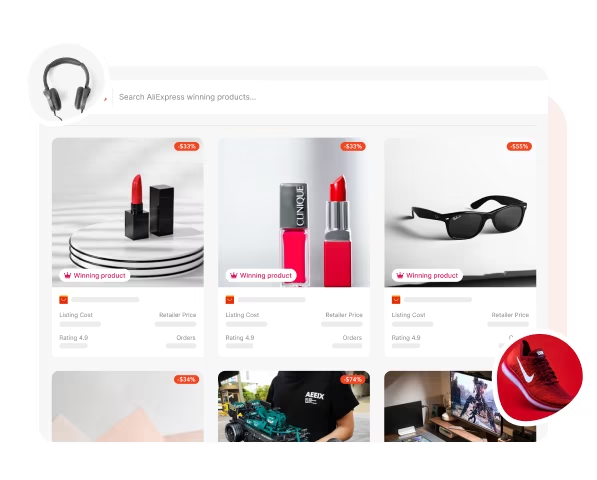
It doesn't replace the work in this guide. You still need to judge suppliers, order samples and ask the right questions. What it removes is the copy-pasting of listings and orders once you've chosen. AliDrop costs $1 for the first 7 days, so you can test it with a real product before paying for a plan.
Your next step
Pick one product today. Write the one-page spec, run the search with Trade Assurance and Verified Supplier switched on, post one RFQ, and send the six-question message to 15 suppliers. By the end of the week you'll have real quotes to compare instead of a page of tabs. When you're ready to connect the winner to your store, start with AliDrop for $1 for the first 7 days and read the full Alibaba dropshipping overview for costs and shipping.
Alibaba Suppliers FAQs
How do I find suppliers on Alibaba?
Write a short product spec, search on the Manufacturers tab with a specific keyword, and filter for Trade Assurance and Verified Supplier. Post a Request for Quotation so more suppliers come to you, then message 15 to 30 of them with the same numbered questions. Compare the replies in a spreadsheet and order samples from the best two or three.
How do I know if an Alibaba supplier is reliable?
Start with the basics: Verified Supplier status, Trade Assurance, several years on Alibaba, a focused product range and fast, complete replies. Then ask for test reports and order a sample. For deeper checks, such as verification reports, scam patterns and inspections, use a full vetting process before paying for stock.
Which Alibaba filters should I use first?
Trade Assurance and Verified Supplier remove most of the riskiest listings, so apply them first. After that, filter by supplier country or shipping location, certifications your market needs and MOQ. Sort by price last, because the cheapest listings are often resellers or lower-grade versions of the product.
Do Alibaba suppliers dropship single orders?
Some do. Alibaba's Dropshipping section lists in-stock products from suppliers set up for single orders, with filters such as 48H Dispatch and shipping from the US or Europe. In the main marketplace, look for Ready to ship listings with a 1-piece MOQ and ask each supplier directly whether they ship single units with tracking and without an invoice.
Is it better to contact a manufacturer or a trading company?
Manufacturers usually offer better prices and more control over customisation, but often want larger orders. Trading companies tend to accept smaller orders and can combine products from several factories. For a dropshipping test, either can work. What matters is knowing which one you're dealing with and comparing them on the same terms.
How many suppliers should I contact on Alibaba?
Aim for 15 to 30 first messages for each product. Response rates vary, and some replies will be vague or off-spec, so a long list protects you from stalling on one slow supplier. Score each reply on price, MOQ, dispatch time and answer quality, then narrow to three to five for samples.
Is the Alibaba RFQ free to use?
Yes, posting a Request for Quotation is free for buyers. You describe the product, quantity and target price, and suppliers send quotes back. Quotes often arrive within a day for common products. Treat RFQ replies as new names for your shortlist and check them the same way as suppliers you found yourself.
Should I pay Alibaba suppliers outside the platform?
Not for early or small orders. Paying through Alibaba keeps Trade Assurance protection if the order isn't shipped or arrives wrong. A supplier who pushes for a personal bank transfer or a payment app for a small order is a warning sign. Move off-platform only with a long, proven relationship, if ever.