

Starting an online business in India no longer requires huge investment or inventory—and that’s where AliExpress dropshipping in India comes in. This model lets you sell products online without stocking them yourself, making it one of the easiest ways to enter the ecommerce space. With rising internet users and a booming digital market, dropshipping has quickly become a popular side hustle and full-time income source. However, many beginners still wonder about legality, shipping challenges, and whether AliExpress works in India today. In this guide, you’ll learn exactly how to start AliExpress dropshipping in India, choose reliable suppliers, set up your store, and overcome common challenges to build a profitable business from scratch.
What Is AliExpress Dropshipping in India?
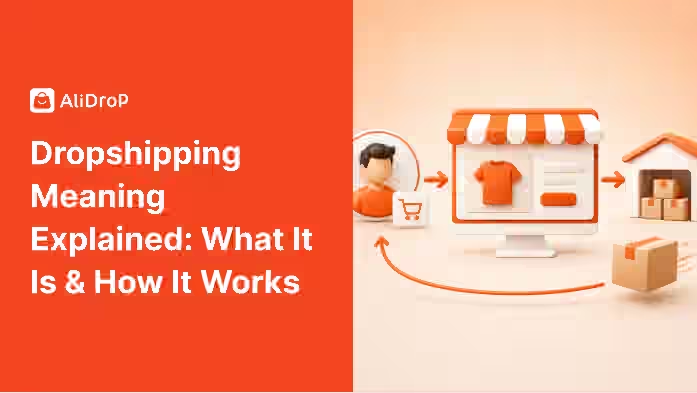
AliExpress dropshipping in India is a business model where you sell products through your online store, but the supplier ships the order directly to the customer. You do not buy inventory in advance. For Indian beginners, this makes it a practical way to test products with lower upfront cost, especially in categories like accessories, home items, beauty tools, and lifestyle products.
.avif)
How AliExpress Dropshipping Works
Here’s the model in simple terms:
- You create a store on Shopify or WooCommerce.
- You list products sourced from AliExpress or similar suppliers.
- A customer places an order on your store.
- You forward that order to the supplier.
- The supplier packs and ships it directly to your customer.
Your profit is the difference between your selling price and the supplier cost, after ads, payment fees, and refunds.
Why It’s Popular in India Right Now
India is a strong market for new ecommerce sellers because online buying keeps expanding. IBEF says India had 270 million online shoppers in 2024, and the ecommerce market is projected to grow from US$125 billion in 2024 to US$345 billion by 2030. That is why many people search for how to start dropshipping in India and low investment online business ideas.
What makes this model attractive:
- Low starting cost compared with traditional retail
- No warehouse needed
- Easy to test products before scaling
- Good fit for a side hustle in India
- Works well with Shopify-based selling and social media marketing
Is AliExpress Dropshipping Legal in India?
Yes, AliExpress dropshipping in India is legal in principle, but your business still has to follow Indian tax, import, and compliance rules. The model itself is not illegal. Problems usually happen when sellers ignore GST, use the wrong invoices, or sell imported goods without understanding customs and import obligations.
GST and Business Registration Requirements
If you want to run a serious dropshipping business in India, get the basics right early.
What matters most:
- GST registration may be required depending on your business setup and where/how you sell.
- If you import goods commercially, DGFT says an IEC is mandatory for import/export activity.
- You should operate through a proper business structure such as:
- Sole proprietorship
- Partnership
- LLP
- Private limited company
Practical tip: even if you start small, keep clean invoices, payment records, supplier records, and refund logs from day one. It makes compliance much easier later.
Import Rules and Customs Duties
This is where many beginners get confused. When products come from outside India, customs rules may apply based on the product category, declared value, and tariff classification. CBIC publishes customs tariff resources, and DGFT governs import policy and licensing rules.
Keep these points in mind:
- Imported goods can attract customs duty and IGST
- Duty depends on the HS code and item type
- Some categories may have policy restrictions or extra compliance requirements
- Wrong product classification can create delays or penalties
Common Legal Mistakes to Avoid
Avoid these common issues:
- Selling without proper GST or business records
- Ignoring customs implications on imported products
- Using misleading delivery timelines
- Not disclosing refund and return terms clearly
- Selling restricted or compliance-heavy products without checking import rules
Can You Still Use AliExpress in India?
This is the biggest intent question, and the honest answer is: not as smoothly as before.
Current Status of AliExpress Shipping to India
As of April 2026, AliExpress access for Indian buyers/sellers remains inconsistent. India-focused tracking sources report that while parts of the site may still be viewable, checkout and direct shipping to India are often unreliable or blocked for regular users, which makes pure AliExpress-based dropshipping harder than it used to be.
That means if you build your entire business around standard AliExpress shipping to India, you may face:
- Checkout issues
- Supplier inconsistency
- Long delivery timelines
- Limited shipping support for Indian addresses
- Higher refund pressure from delayed orders
Workarounds and Alternatives
Some sellers try workarounds, but they are not ideal for a beginner-friendly brand.
Common options include:
- Freight forwarders
- Third-country routing
- Non-AliExpress Chinese suppliers
- India-based dropshipping suppliers
- Curated supplier platforms with faster delivery options
When to Consider Private Suppliers
You should consider private or curated suppliers when:
- You want faster shipping to India
- You need more stable stock
- You want better product quality control
- You plan to scale ads and reduce refund risk
- You want branded packaging or stronger customer experience
This is exactly where platforms like AliDrop become more useful. Instead of depending only on unpredictable AliExpress shipping, AliDrop helps sellers source products through a more streamlined setup and gives access to faster supplier options, which is often a better fit for Indian ecommerce brands.
Why Start AliExpress Dropshipping in India?
Even with the shipping challenges, the business model still appeals to beginners because it lowers the barriers to starting an online store.
Low Investment and Risk
This model is attractive because you do not have to buy stock upfront. That means:
- Lower starting capital
- Less dead inventory risk
- Easier product testing
- Better flexibility for beginners
For someone trying to build a make money online stream or launch a side hustle with limited funds, that matters.
Huge Online Market Opportunity
India’s ecommerce opportunity is large and growing. IBEF projects the market at US$345 billion by 2030, and Invest India highlights strong digital adoption and millions of MSMEs moving online. This creates room for niche stores, trend-led products, and mobile-first shopping experiences.
Ideal Side Hustle or Passive Income Stream
Let’s keep this realistic: dropshipping is not passive on day one. You still need to handle product research, pricing, support, and marketing. But once your store, product pages, and ad funnels are in place, it can become a scalable online income model.
Why many beginners still choose it:
- You can start part-time
- You can operate from home
- You can test multiple products quickly
- You do not need a warehouse team
- You can grow into a branded store later
How to Start AliExpress Dropshipping in India
If you want to make AliExpress dropshipping in India work, focus on the basics first: pick the right niche, choose dependable suppliers, build a clean store, and set clear delivery expectations. You do not need a huge budget to start, but you do need a system that feels trustworthy to Indian buyers.
Choose a Profitable Niche
Your niche shapes everything: your audience, ad costs, margins, and repeat sales. A good niche is not just “trending.” It should solve a real need, have room for profit, and be easy to market.
Look for products that are:
- useful or problem-solving
- visually appealing on Instagram and short-form video
- lightweight and easy to ship
- priced well enough to leave margin after ads and gateway fees
Good starting categories often include:
- home and kitchen tools
- beauty and personal care accessories
- pet products
- fitness accessories
- car and bike utility items
Avoid products that are already overexposed or too generic. If every other seller is pushing the same item, it becomes harder to stand out and easier to get dragged into price wars.
A simple rule helps here: pick a niche where you can build a brand, not just upload random products.
Find Reliable Suppliers
Your supplier matters more than your product idea. A winning product can fail if shipping is slow, packaging is poor, or quality is inconsistent.
Before adding any item to your store, check:
- supplier ratings and store history
- written reviews and photo reviews
- number of orders
- shipping methods available
- estimated delivery timelines
- response quality when you ask questions
Do not choose a supplier only because the product is cheap. In many cases, slightly higher product cost with better shipping is the smarter choice. Faster delivery and fewer complaints usually protect your margins better than rock-bottom pricing.
As your store grows, it often makes sense to move beyond random marketplace sellers and use a more reliable supplier ecosystem. That is where platforms like AliDrop can help, especially if you want faster sourcing, smoother product imports, and better consistency.
Create Your Online Store
Once you have a niche and supplier shortlist, the next step is building your store. For most beginners, the best options are Shopify and WooCommerce.
Shopify is a better fit if you want:
- easy setup
- cleaner apps and integrations
- less technical work
- faster launch
WooCommerce works well if you want:
- more control
- lower software cost
- flexibility with WordPress
No matter which platform you choose, keep your store simple. Indian buyers decide fast, and a cluttered website can hurt trust immediately.
Your store should include:
- a clear homepage
- easy-to-browse categories
- mobile-friendly design
- contact page
- shipping policy
- return and refund policy
- trust badges and secure checkout cues
A clean, credible store always performs better than one stuffed with too many products and too much text.
Add Products to Your Store
This is where many new sellers lose sales. Uploading a product is easy. Presenting it properly is what gets conversions.
Every product page should clearly answer:
- what the product does
- why it is useful
- who it is for
- why someone should buy it now
Your product page should include:
- strong, benefit-led titles
- short and easy-to-scan descriptions
- clear images from multiple angles
- lifestyle visuals or demo videos if available
- pricing that leaves room for marketing and discounts
Do not copy supplier descriptions word for word. They usually sound generic and reduce trust. Rewrite them in simple language that speaks directly to your customer. If you want to speed this up, tools like Smartli can help create cleaner, conversion-focused product descriptions that are easier to optimize for SEO and readability.
Set Up Payment Gateways in India
A smooth checkout experience is essential for dropshipping in India. If payment fails or feels confusing, customers will leave.
Popular choices include:
- Razorpay
- PayU
- Stripe, where supported for your business setup
For Indian ecommerce, payment mix matters. Many shoppers still trust Cash on Delivery, especially when buying from a new store. At the same time, prepaid orders are easier for you to manage and reduce fake orders.
A practical approach is:
- offer COD to improve trust
- offer a small discount on prepaid orders
- keep checkout short and mobile-friendly
This gives customers flexibility while protecting your margins.
Best Payment Methods for AliExpress in India
Payment is a two-sided issue in this model. You need one setup to collect money from your customers and another to pay your suppliers smoothly.
Credit and Debit Cards
Credit and debit cards are still the most common way to pay international suppliers. They are practical, easy to manage, and widely accepted.
They work best when:
- international usage is enabled
- your bank allows foreign transactions
- you monitor currency conversion charges
For supplier payments, cards are usually the simplest choice.
UPI and Wallet Options
For your Indian customers, UPI is essential. It is fast, familiar, and trusted. Digital wallets can also help reduce drop-offs during checkout.
Useful customer payment options include:
- UPI
- wallet-based payments
- cards
- COD
The more comfortable your checkout feels to Indian users, the better your conversion rate tends to be.
International Payment Challenges
This is where new sellers often get stuck. International transactions can fail for many reasons, from card restrictions to currency issues.
Common problems include:
- cards not enabled for global transactions
- failed supplier payments
- extra forex charges
- refund delays on cross-border payments
Test your payment setup early. It is much better to discover these issues before orders start coming in.
Shipping Time and Delivery Challenges in India
Shipping is one of the biggest friction points in AliExpress dropshipping in India. Customers today expect speed, so how you communicate delivery matters almost as much as the delivery itself.
Average Delivery Time from AliExpress
Shipping time depends on the supplier, product category, and method used. In many cases, delivery can take anywhere from 15 to 45 days, and sometimes longer during peak periods.
This is why you should never promise fast delivery unless the supplier can actually meet it.
How to Handle Customer Expectations
The best way to reduce complaints is to be honest before the customer buys.
You should:
- show estimated delivery times clearly
- send instant order confirmation
- provide tracking updates
- mention delays upfront on the product or shipping page
Many refund requests happen because the customer feels uninformed, not just because the parcel is late.
Tips to Reduce Delivery Delays
You cannot control logistics completely, but you can reduce the risk.
A few smart ways to do that:
- work only with suppliers that have a strong shipping history
- avoid products with inconsistent stock
- skip high-risk periods like major holiday rushes
- prioritize suppliers offering better shipping options
- move to stronger supplier networks once you start scaling
When delivery becomes a repeated issue, that is often the point where sellers shift to better sourcing systems instead of relying only on standard marketplace suppliers.
Common Challenges of AliExpress Dropshipping in India
This model can work, but only if you go in with realistic expectations. The main risks are manageable, but ignoring them can quickly damage your store.
Long Shipping Times
Long shipping remains the most common issue. It affects customer trust, repeat purchases, and refund rates. If your branding looks premium but delivery feels slow and uncertain, customers notice the gap.
Product Quality Issues
Not every supplier delivers the same quality shown in photos. That is why product testing matters. A good-looking listing is not enough. If possible, order samples before scaling.
Payment and Refund Problems
Refund handling can become messy when international suppliers, local customers, and payment gateways are all involved. Keep records for every order, refund, and communication. It saves time and protects you during disputes.
Platform Restrictions
One more challenge is platform reliability. Access, payment acceptance, and shipping availability linked to AliExpress and India can be inconsistent. That uncertainty is one reason many sellers eventually look for more stable supplier options and curated platforms like AliDrop when they want to grow seriously.
Best Alternatives to AliExpress for India
For many sellers, AliExpress dropshipping in India is a good starting point, but not always the best long-term option. Shipping delays, inconsistent supplier quality, and changing platform access often push store owners to look for more stable sourcing models. That is why choosing the right alternative can directly affect customer satisfaction, repeat orders, and profit.
Private Suppliers and Faster Shipping
Private suppliers are often the next step for sellers who want more control. Unlike open marketplaces, private suppliers usually offer a more direct relationship, clearer communication, and better consistency.
They are a strong option if you want:
- faster shipping times
- better stock reliability
- improved product quality control
- branded packaging opportunities
- smoother order fulfillment as you scale
This becomes especially important when you start running ads seriously. Slow fulfillment can eat into margins fast through refunds, chargebacks, and poor reviews.
Indian Dropshipping Suppliers
Local suppliers are also worth considering if your main goal is to serve Indian customers faster. They may not always offer the same product variety as global marketplaces, but they can reduce one major pain point: delivery time.
Indian dropshipping suppliers can help with:
- quicker delivery across India
- fewer customs-related complications
- easier returns and replacements
- better customer experience for impulse-buy products
This option works well for sellers who want to build trust quickly and avoid long delivery windows that hurt conversions.
Why Many Sellers Switch from AliExpress
Most sellers do not leave AliExpress because the model is bad. They switch because growth becomes harder when fulfillment is unpredictable. Once your store starts getting traction, supplier quality and shipping speed matter more than cheap sourcing alone.
Common reasons sellers move away from AliExpress include:
- inconsistent shipping to India
- limited reliability at checkout or fulfillment
- product quality variation
- slower communication with suppliers
- difficulty building a premium customer experience
This is where AliDrop stands out as a stronger alternative. Instead of depending fully on the uncertainty of open marketplace sourcing, AliDrop helps sellers access a more dependable supplier ecosystem, simplify product imports, and build a store around better delivery and smoother operations. For Indian sellers who want to grow beyond the trial stage, that shift can make a real difference.
Tips to Succeed in AliExpress Dropshipping in India
Starting is one thing. Building a store that survives refunds, ad costs, and customer expectations is another. If you want lasting results, focus less on shortcuts and more on the parts of the business that buyers actually notice.
Focus on Branding, Not Just Products
A random product store can get sales, but a branded store earns more trust. Branding makes your business feel intentional instead of temporary.
That means:
- choosing a clear niche
- using a clean store design
- writing product copy in your own voice
- keeping visuals consistent
- creating a simple but credible brand identity
Even if you are selling popular products, the brand experience is often what separates your store from dozens of similar sellers.
Use Faster Shipping Suppliers
Shipping experience can make or break your reputation. Many customers are willing to wait a bit, but very few are happy with vague timelines or poor communication.
To improve results:
- choose suppliers with better delivery history
- avoid products with unstable stock
- test shipping before scaling
- shift to better supplier systems once you find winning products
Better shipping usually means fewer complaints, fewer refunds, and stronger repeat purchase potential.
Optimize Product Pages for Conversion
Your product page should not just describe the item. It should answer doubts and push the sale.
Make sure your page includes:
- a strong headline
- clear benefits, not just features
- simple bullet points for quick scanning
- high-quality images or demo visuals
- visible shipping and return information
- pricing that feels attractive but still leaves margin
A good product page reduces friction. A weak one sends traffic away, even if the product itself is strong.
Build Trust with Customers
Trust matters even more in dropshipping in India, where buyers are cautious about delivery, payment safety, and product quality.
Simple trust signals include:
- clear contact information
- transparent shipping timelines
- easy-to-find return policy
- real-looking product photos
- secure checkout badges
- tracking updates after purchase
A store that feels honest will usually outperform one that only tries to look flashy.
Is AliExpress Dropshipping in India Profitable?
Yes, AliExpress dropshipping in India can be profitable, but only when the numbers make sense and the customer experience is handled well. Profit does not come from cheap sourcing alone. It comes from niche selection, pricing, ad efficiency, and supplier reliability.
Profit Margins Explained
In most cases, your margin comes from the gap between the supplier cost and your selling price, minus your business expenses.
Your real profit is affected by:
- product cost
- shipping charges
- payment gateway fees
- ad spend
- discounts and offers
- refunds and returns
A product with a large markup can still be unprofitable if refund rates are high or customer acquisition costs are too expensive. That is why smart sellers look at net margin, not just selling price.
Realistic Expectations
This is not instant passive income. In the early phase, you will spend time on research, testing, support, and optimization. Some products will fail. Some ads will not work. That is normal.
A realistic beginner path usually looks like this:
- test a few products first
- expect to learn before you earn consistently
- improve your store based on real customer behavior
- reinvest early profits into better suppliers and marketing
The model can work, but it works best for people who treat it like a business, not a shortcut.
Scaling Your Store
Once you find a product-market fit, scaling becomes easier. At that stage, your focus shifts from “Can I get sales?” to “Can I fulfill well and grow profitably?”
To scale effectively:
- double down on winning products
- improve shipping speed
- raise average order value with bundles
- build email and retargeting flows
- move to more reliable suppliers
- strengthen branding and customer retention
This is usually where serious sellers stop depending only on basic AliExpress sourcing and move toward stronger systems like AliDrop, especially when they want to grow with fewer fulfillment issues and a more stable brand experience.
Conclusion
AliExpress dropshipping in India still offers a real opportunity for beginners who want to start an online business with lower upfront risk. It gives you a way to test products, enter ecommerce, and build a store without holding inventory. But success depends on making smart choices around niche, suppliers, shipping, and customer trust.
If you want better long-term results, do not rely only on the cheapest sourcing option. Focus on dependable fulfillment, stronger branding, and a smoother buying experience from the start. If you are ready to build a more scalable store with better supplier options, explore AliDrop and take the smarter route to launching your dropshipping business.
Aliexpress Dropshipping India FAQs
Is AliExpress dropshipping allowed in India?
Yes, AliExpress dropshipping in India is legal, but you must follow GST rules, import regulations, and maintain proper invoices to run a compliant ecommerce business.
Can I still use AliExpress for dropshipping in India?
AliExpress access in India is limited, but some sellers still use it with workarounds or switch to faster, more reliable dropshipping suppliers for better delivery.
How much money do I need to start dropshipping in India?
You can start dropshipping in India with ₹5,000–₹15,000, covering store setup, basic marketing, and essential tools to test products with low risk.
Which payment gateway is best for dropshipping in India?
Razorpay, PayU, and Cash on Delivery are the best payment options for dropshipping in India, offering smooth checkout and higher trust among Indian customers.
How long does AliExpress shipping take to India?
AliExpress shipping to India typically takes 15–45 days, depending on the supplier, shipping method, and logistics partner handling the delivery.
Is dropshipping profitable in India?
Yes, dropshipping in India can be profitable if you choose the right niche, use reliable suppliers, and optimize marketing and pricing strategies effectively.
What are the best alternatives to AliExpress in India?
Top alternatives include private suppliers, Indian vendors, and curated platforms offering faster shipping, better quality control, and more reliable dropshipping operations in India.


%201.svg)