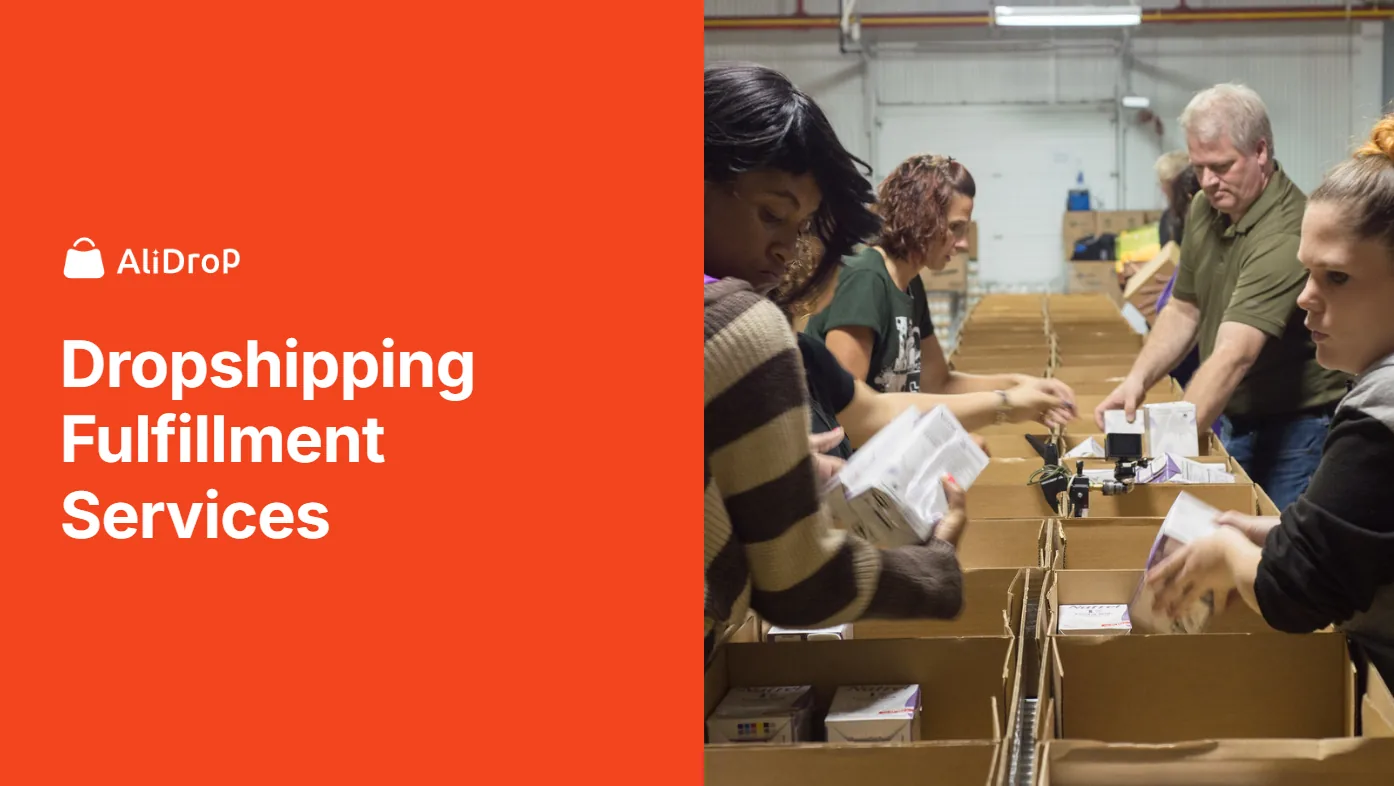


Dropshipping fulfillment services are the companies that store, pick, pack and ship orders for a store that never touches its own stock. In practice that means one of four setups: the supplier ships each order (AliExpress, Temu, US/EU suppliers), a sourcing agent ships for you, a dropship fulfillment center holds a small batch of your products (CJdropshipping, Zendrop), or a full 3PL warehouse ships inventory you've bought in bulk (ShipBob, ShipMonk, Amazon Multi-Channel Fulfillment).
The right choice depends on your order volume, how much cash you can tie up in stock, and how fast your customers expect delivery. This guide explains how each model works, compares real providers using the pricing published on their own sites in October 2026, and walks through the math on when moving from supplier fulfillment to a 3PL actually pays.
What dropshipping fulfillment services actually do
Fulfillment is everything that happens between "customer clicks pay" and "parcel lands on the doorstep." When you dropship, someone else does the physical part, but you still own the outcome. If a parcel is late or damaged, the customer emails you, not the warehouse.
Here's the order flow most stores run on:
- The customer orders on your Shopify store and pays your retail price.
- The order is routed to whoever holds the product: a supplier, an agent or a warehouse. This is either manual (you place the order yourself) or automatic through an app.
- You pay the fulfiller the product cost plus shipping (supplier model), or a per-order pick-and-pack fee plus postage (warehouse model).
- The item is picked, packed and labelled, then handed to a carrier.
- The tracking number syncs back to your store so the customer gets a shipping confirmation.
- Returns and problems go to whatever address and process you agreed with the fulfiller. Sort this out before you launch, not after the first complaint.
If you want the step-by-step version of the order side, our walkthrough of how dropshipping orders work covers it in detail.
The four types of fulfillment for dropshipping
1. Supplier-fulfilled dropshipping
This is classic dropshipping. You list a product, and when it sells, the supplier ships it straight to your customer. Marketplaces like AliExpress, Alibaba and Temu work this way, as do US and EU supplier networks. You hold no stock and pay nothing until an order comes in.
The trade-off is control. Packaging, delivery speed and quality all depend on the supplier. Shipping from China to the US typically takes one to several weeks depending on the method, while domestic US/EU suppliers ship in days.
2. Sourcing agents
An agent buys from factories or marketplaces on your behalf, checks quality, and ships orders out of their own small warehouse, usually in China. They're useful once you sell enough of a product to want custom packaging or consolidated orders, but before you'd commit to a US warehouse. Agents normally earn a markup or service fee on each order, so get the full price breakdown in writing and compare it to buying direct.
3. Dropship fulfillment centers
This is the hybrid model and the one most people mean by "dropshipping fulfillment services." Companies like CJdropshipping and Zendrop run their own warehouses. You can keep dropshipping one order at a time from their catalog, or send a small batch of a proven product to their US warehouse so it ships domestically. Minimums are far lower than a traditional 3PL.
4. Third-party logistics (3PL)
A 3PL stores inventory you own and ships it when orders arrive. ShipBob, ShipMonk, eFulfillment Service and Amazon Multi-Channel Fulfillment (MCF) are examples. Technically, once you're paying a 3PL you're no longer dropshipping, because you've bought the stock. It's the usual next step for stores that have found a product that sells every day. We compare the two business models side by side in dropshipping vs 3PL.
| Model | Who owns the stock | Cash needed up front | Control over packaging | Best for |
|---|---|---|---|---|
| Supplier-fulfilled | Supplier | None | Low | Testing products, new stores |
| Sourcing agent | Agent or you (small batches) | Low | Medium | Proven products shipped from China |
| Dropship fulfillment center | Supplier, or you for warehoused batches | Low to medium | Medium | First move into domestic stock |
| 3PL warehouse | You | High (bulk inventory) | High | Steady daily sales of a few SKUs |
Dropship fulfillment companies compared (October 2026 pricing)
Most lists of dropshipping fulfillment services skip the pricing because a lot of 3PLs only quote on request. Here's what each provider actually publishes on its own pricing page right now. Prices are in USD and were checked on 20 October 2026; they change, so confirm before you sign anything.
| Provider | Type | Published pricing model | Minimums | Worth knowing |
|---|---|---|---|---|
| AliExpress (via an app such as AliDrop) | Supplier-fulfilled | Pay product + shipping per order; app subscription separate | None | Largest catalog; delivery speed varies by seller and shipping method |
| Spocket | US/EU supplier marketplace | Plans from $39.99/mo after a 7-day trial | None | Mostly US/EU suppliers, faster domestic delivery |
| Zendrop | Supplier + fulfillment center | Free $0, Pro $49/mo, Plus $79/mo; automated fulfillment on paid plans | None to dropship | Also runs a US 3PL for stock you own |
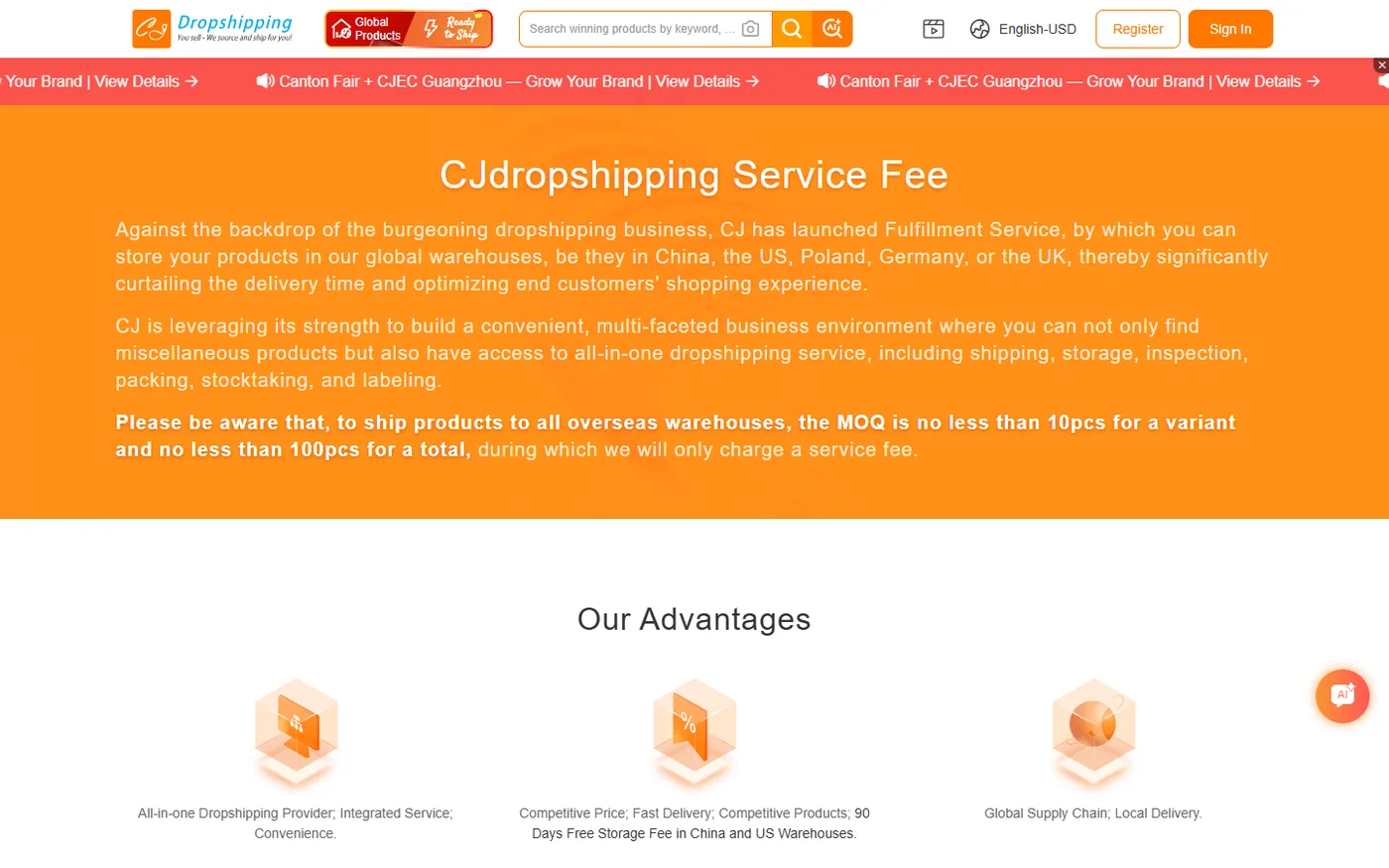
| CJdropshipping | Supplier + fulfillment center | Pay per order; warehouse service fees by weight (US outbound from $0.50 for the first item up to 0.5 kg) | 10 pcs per variant, 100 pcs total to stock overseas warehouses | Advertises 90 days of free storage in its China and US warehouses |
| ShipBob | 3PL | Custom quote covering implementation, receiving, storage and pick/pack/ship | Set in quote | Multi-warehouse network; quote form asks for monthly shipments, so it suits steady volume |
| ShipMonk | 3PL | Custom quote; storage, pick-and-pack, receiving and returns billed separately | Monthly minimum = order volume x first-item pick fee, minus 20% | Platform and onboarding fees are set in the quote |
| eFulfillment Service | 3PL | Pay-as-you-go quote | No set-up fees, no order minimums, no long-term contracts | Single Michigan fulfillment center; friendly to small sellers |
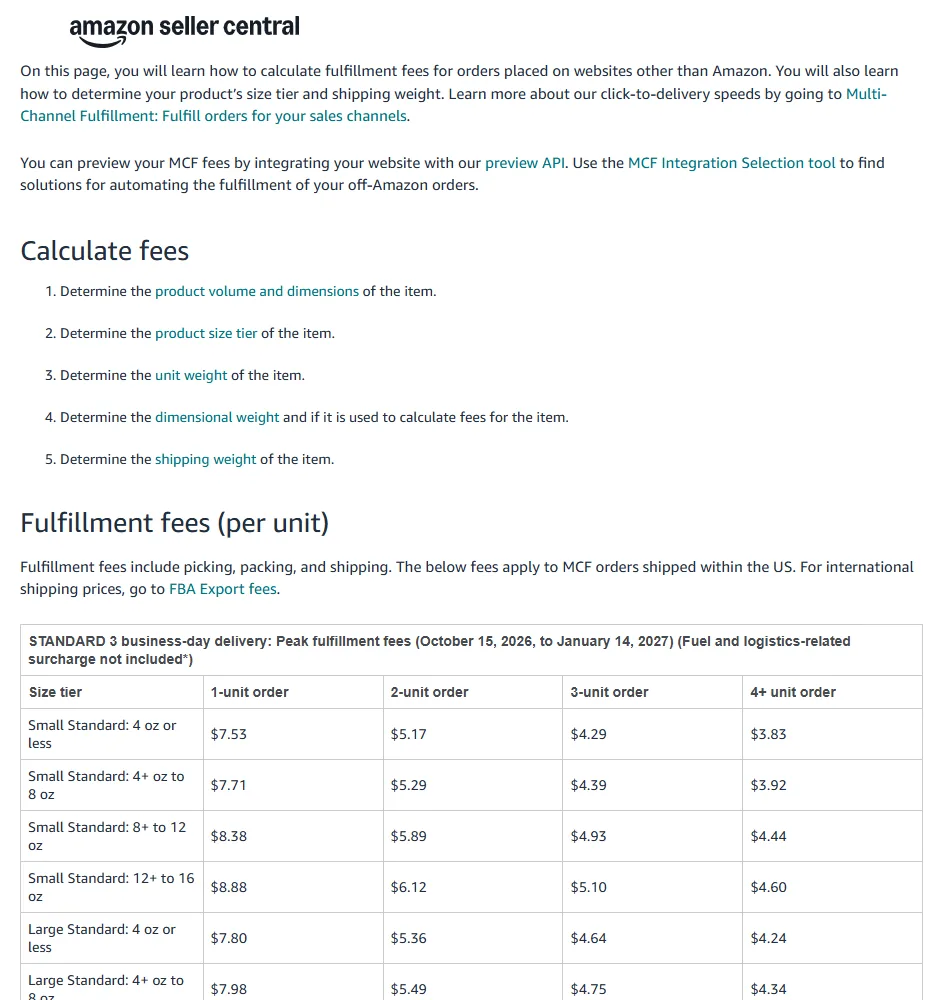
| Amazon MCF | 3PL (Amazon network) | Public per-unit rate card that includes pick, pack and shipping | None beyond FBA inventory | Peak fees apply 15 Oct 2026 to 14 Jan 2027, plus a 3.5% fuel and logistics surcharge |
Sources: Zendrop pricing, CJdropshipping service fee page, ShipMonk pricing FAQ, eFulfillment Service pricing and terms, and the Amazon MCF fee page. ShipBob and Spocket figures come from their own pricing pages.
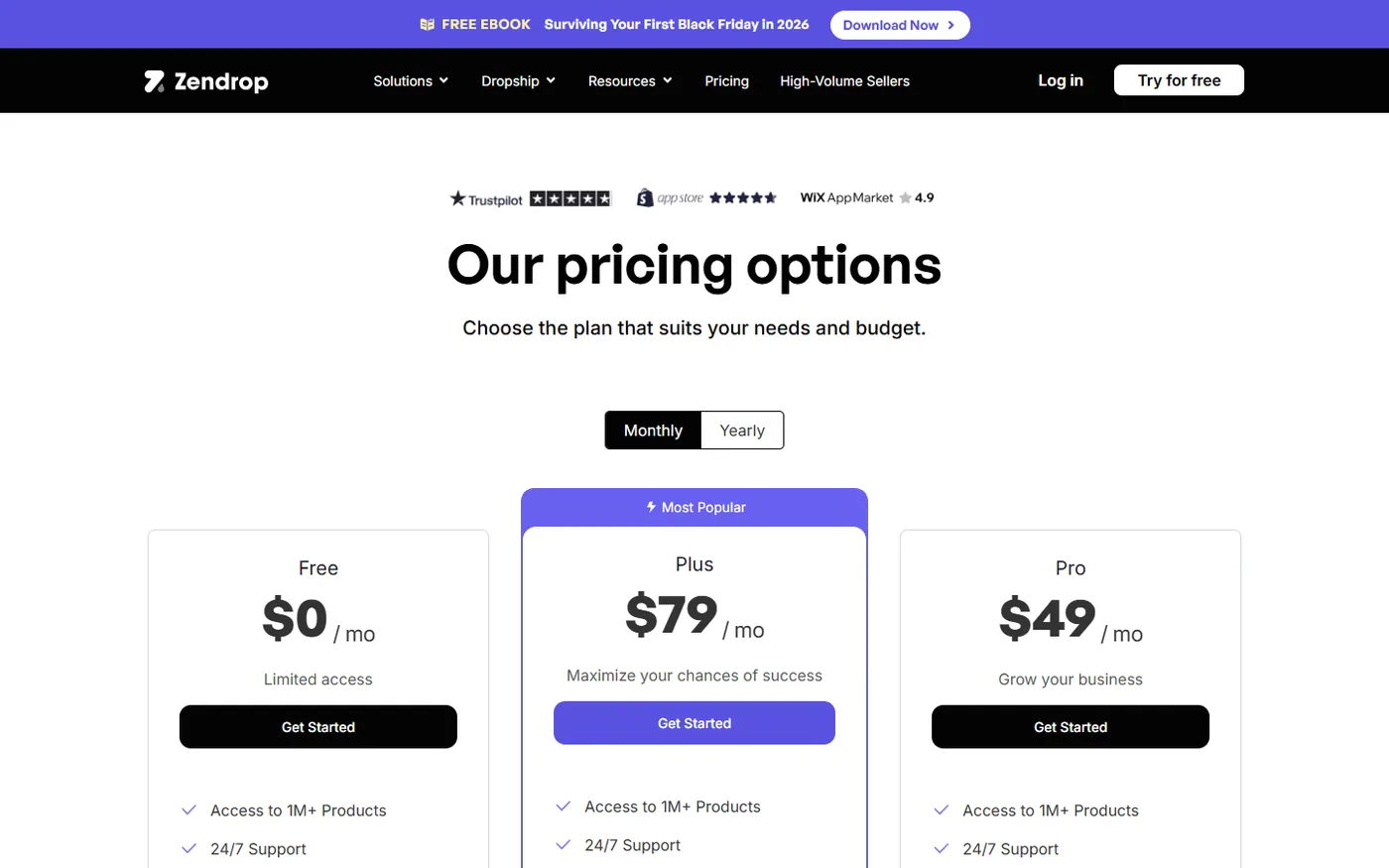
Two things jump out about these fulfillment services for dropshipping. First, the dropship fulfillment centers (CJ, Zendrop) let you start without buying inventory, then move a winning product into their US warehouse with a small batch. Second, Amazon MCF is the only full 3PL here with a public rate card, which makes it a handy benchmark when you're comparing quotes from the others.
If CJ is on your shortlist, read our CJ Dropshipping review before you send stock anywhere.
3PL vs dropshipping: the real cost per order
The usual advice is "switch to a 3PL once you hit X orders a month." The number people quote varies wildly, and much of that advice comes from 3PLs themselves. A better test is to price one order both ways.
Take a 6 oz product you sell for $34.99. The supplier and bulk prices below are example figures; the freight and fulfillment fees are real published rates.
| Cost line | Supplier-fulfilled | Bulk stock in Amazon MCF |
|---|---|---|
| Product cost | $8.50 (example supplier price) | $5.50 (example bulk price for 500 units) |
| Freight to the US | $4.50 tracked shipping (example) | $0.81 (CJ's published China-to-US sea rate of $4.04/kg x 0.2 kg) |
| Import duty | Charged per parcel | $0.83 (15% used for illustration; your rate depends on the HTS code) |
| Pick, pack and last-mile delivery | Included above | $7.98 (MCF 4+ to 8 oz small standard, 1 unit, peak $7.71 + 3.5% surcharge) |
| Cost per order | $13.00 + duty | $15.12 |
| Gross profit at $34.99 | $21.99 before duty | $19.87 |
| Delivery promise | Depends on supplier and method | 3 business days (MCF standard) |
| Cash tied up | $0 | About $3,570 for 500 landed units |
On a single-unit order, the 3PL is not cheaper here. You'd need roughly 11% more orders at $19.87 profit to match the same gross profit from supplier fulfillment ($21.99 / $19.87 = 1.107). So the switch pays only if faster delivery lifts your conversion rate, cuts refunds and "where is my order" tickets, or raises average order value by at least that much.
That last point matters more than most guides admit. Amazon's own rate card drops sharply for multi-unit orders: a 2-unit order of small standard items under 4 oz costs $5.17 per unit at peak versus $7.53 for one unit. If you can sell bundles or "buy 2" offers, warehouse fulfillment gets cheaper per item fast.
The duty change that shifted the math
Since 29 August 2025, low-value parcels entering the US no longer qualify for duty-free de minimis treatment, whatever country they ship from (Federal Register notice). For supplier-fulfilled stores selling to the US, every parcel from overseas now carries duty and customs processing. When you import in bulk, you deal with duty once per shipment instead of on every order, which narrows the gap in the table above. We explain the practical impact in AliExpress dropshipping after the de minimis rule ended.
When to switch from supplier fulfillment to a 3PL
Use these signals rather than a single order count. If three or more apply, it's time to price a 3PL or a fulfillment-center batch seriously.
- One product carries the store. A single SKU (or a handful) has sold every day for six to eight weeks, and you can forecast roughly how many you'll sell next month.
- You'd sell the stock within 90 days. Storage gets expensive when stock sits. CJ, for example, charges US storage per cubic meter per day after its free window, rising sharply for stock older than 360 days.
- Delivery complaints are costing you. Refunds, chargebacks and slow-delivery reviews are eating more than the per-order difference you calculated above.
- Customers buy more than one item. Multi-unit orders make warehouse fees far cheaper per item.
- You want branding. Custom boxes, inserts and a consistent unboxing only really work when your stock sits in one place.
- You can afford to be wrong. If the product stops selling, could you absorb the cost of 500 units? If not, start smaller.
We go deeper on the warehousing decision in dropshipping vs warehousing: when to switch your model.
How to move a winning product without breaking your store
- Order samples first from the supplier you'll buy in bulk from, and check packaging, weight and dimensions. Your 3PL fee depends on the size tier.
- Get two or three quotes using your real numbers: monthly orders, units per order, SKU count and product dimensions. Ask about monthly minimums, receiving fees and peak-season surcharges.
- Start with a small batch. A dropship fulfillment center that accepts around 100 units lets you test domestic shipping before you commit to a full container.
- Run both routes in parallel. Keep the supplier-fulfilled listing live as backup while the first batch is received and checked in.
- Update your shipping policy and product pages with the new delivery times only once stock is live in the warehouse.
- Set a reorder point. Divide stock on hand by daily sales; reorder when you have enough days left to cover production plus freight time.
The middle ground: faster delivery without buying stock
Not every store needs a warehouse to fix slow shipping. Plenty of sellers get most of the speed benefit by switching their bestsellers to suppliers that already hold stock in the US or Europe, and leaving everything else on AliExpress.
This is where AliDrop fits. It's an AliExpress dropshipping app that connects to Shopify, imports products in one click, and handles automated order fulfillment by sending your orders to the supplier for you. Alongside AliExpress, Alibaba and Temu products, it gives you access to vetted US and EU suppliers advertising 2 to 5 day shipping, so you can move a bestseller to a domestic supplier without paying for inventory or storage.
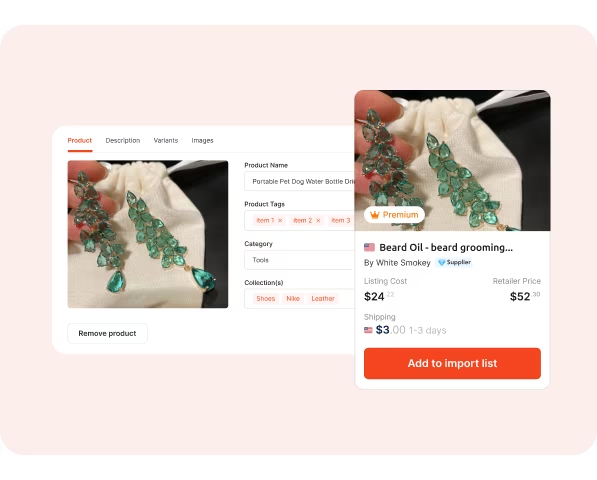
A reasonable path for most stores looks like this: test products with supplier fulfillment, move proven winners to US/EU suppliers for faster delivery, and only buy inventory for a 3PL once one product sells predictably. If you want to try that first step, AliDrop costs $1 for the first 7 days, then plans start at $39/month (see AliDrop pricing).
Questions to ask any dropshipping fulfillment service
Whichever model you pick, get written answers to these before your first order goes through:
- Does it integrate with your store? Orders should flow in and tracking should flow back automatically. Copying orders by hand stops working at around 20 a day.
- What's the real all-in cost per order? Product, shipping, pick fee, packaging, plus any surcharges. Ask for an example invoice.
- Are there minimums? Monthly fee minimums, inventory minimums (CJ's 100-unit rule for overseas warehouses) or contract length.
- What happens during peak season? Many providers raise fees from mid-October to mid-January. Amazon MCF publishes its peak rates; others bury them in the contract.
- How are returns handled? Find out where returns go, who inspects them and what each return costs.
- How do damage and loss claims work? Ask how long you have to file a claim and what proof you need.
- What happens to unsold stock? Removal, disposal and long-term storage fees can wipe out the profit on a product that stalls.
Mistakes sellers make with order fulfillment for dropshipping
- Switching on gut feeling. A good week isn't a trend. Wait until the sales pattern holds, then do the per-order math.
- Comparing pick fees but ignoring postage. A cheap pick-and-pack fee with expensive shipping rates is still expensive. Compare the total landed cost per order.
- Forgetting dimensional weight. A light but bulky product can be billed as if it weighs much more. Measure the packed box.
- Promising delivery times the fulfiller can't hit. Put the slowest realistic delivery time on your product page, not the best case.
- Running one supplier with no backup. Keep a second source for every bestseller so a stockout doesn't kill your ad campaigns.
Choosing between dropshipping fulfillment services
For a new store, supplier fulfillment is still the sensible start: no stock, no minimums, and you only pay when someone buys. Once a product proves itself, move it to faster US/EU suppliers or a small batch in a dropship fulfillment center. Save the full 3PL for products that sell predictably every day, and run the per-order numbers before you sign.
If you'd like to automate the supplier side and add US/EU suppliers to your Shopify store, start AliDrop for $1 for the first 7 days and route your next order automatically.
Dropshipping Fulfillment FAQs
What are dropshipping fulfillment services?
They're the companies that store, pick, pack and ship orders for a dropshipping store. That can be the supplier itself (AliExpress or a US/EU supplier), a sourcing agent, a dropship fulfillment center like CJdropshipping or Zendrop that holds small batches of stock, or a 3PL warehouse that ships inventory you've bought in bulk.
What is the difference between 3PL and dropshipping?
With dropshipping, the supplier owns the stock and ships each order, so you need no inventory or upfront cash. With a 3PL, you buy inventory in bulk and pay a warehouse to store and ship it. A 3PL gives you faster delivery and control over packaging, but ties up cash and adds storage and pick fees.
How much do dropshipping fulfillment services cost?
Supplier-fulfilled orders cost the product price plus shipping, plus any app subscription. 3PLs charge receiving, storage and pick-and-pack fees plus postage. As a benchmark, Amazon MCF's published 2026 peak fee for a single small item under 4 oz is $7.53 including shipping, before its 3.5% surcharge.
When should I switch from dropshipping to a 3PL?
Switch when one product sells predictably every day for several weeks, you can sell the stock within about 90 days, and slow delivery is costing you refunds or conversions. Price one order both ways first. On single-unit orders a 3PL can cost more per order, so the speed has to win back that difference.
Do dropship fulfillment companies have minimum order requirements?
It depends on the model. Supplier-fulfilled dropshipping has no minimums. CJdropshipping asks for at least 10 pieces per variant and 100 in total to stock its overseas warehouses. ShipMonk sets a monthly minimum from your order volume and pick fee, while eFulfillment Service advertises no order minimums or set-up fees.
Can I use a 3PL and dropship at the same time?
Yes, and many stores do. A common setup keeps bestsellers in a US warehouse for fast delivery while the rest of the catalog stays supplier-fulfilled. Just make sure each product routes to the right fulfiller automatically and that your shipping policy shows different delivery times where they apply.
Does AliDrop fulfill orders automatically?
AliDrop's automated order fulfillment sends your Shopify orders to the supplier, so you don't place each one by hand. You can source from AliExpress, Alibaba and Temu, or use vetted US and EU suppliers that advertise 2 to 5 day shipping. It costs $1 for the first 7 days, then plans start at $39 a month.