 English
 Portuguese
 French
 German
 Italian
 Spanish


Dropshipping suppliers in South Africa we checked in October 2026, plus a full setup guide: CIPC, the new SARS VAT threshold, customs on imports, payment gateways, couriers and Takealot.
Winning products, one-click import to Shopify and orders placed with suppliers.
Try AliDrop for $17-day free trial · 4.8 ★ on Shopify · Cancel anytimeDropshipping in South Africa works, but the local supplier pool is small. In October 2026 the realistic options are a handful of local dropshipping suppliers in South Africa that hold stock in the country (such as GadgetGyz and ZA Dropshipping) plus global suppliers that ship to South African addresses (AliExpress, CJdropshipping and Printful). Whichever you pick, you'll also need a local payment gateway, a courier plan, and a clear idea of how SARS treats VAT and imported parcels.
This guide covers both halves of the job: a supplier list we checked site by site this month, and a step-by-step setup for dropshipping in South Africa, including CIPC, the new 2026 VAT threshold, customs on parcels from overseas, PayFast and Yoco, couriers, and Takealot.
Is dropshipping legal in South Africa?
Yes. Dropshipping is a normal retail model in South Africa. You're selling goods, so the usual rules for an online shop apply:
- Business registration. You can trade as a sole proprietor under your own name and ID. Many sellers register a private company with the CIPC once sales are steady. CIPC lists a private company registration fee of R125, and name reservation costs R50 when filed electronically.
- Income tax. Profit from your store is taxable. Sole proprietors declare it on their personal return with SARS. A company files its own return.
- VAT. SARS now applies a compulsory VAT registration threshold of R2.3 million in taxable supplies over 12 months, up from R1 million, and administers it from 1 April 2026. Voluntary registration is possible once taxable supplies pass R120,000. Many older guides, including some big competitors, still quote R1 million. Details are in the SARS Budget 2026 FAQs.
- Consumer law. Section 44 of the Electronic Communications and Transactions Act gives online buyers a seven-day cooling-off period after delivery, with a full refund due within 30 days of cancellation. The Consumer Protection Act also covers defective goods. Your supplier's returns terms need to support both.
- POPIA. You collect names, addresses and phone numbers, so publish a privacy policy and only share customer data with your supplier and courier.
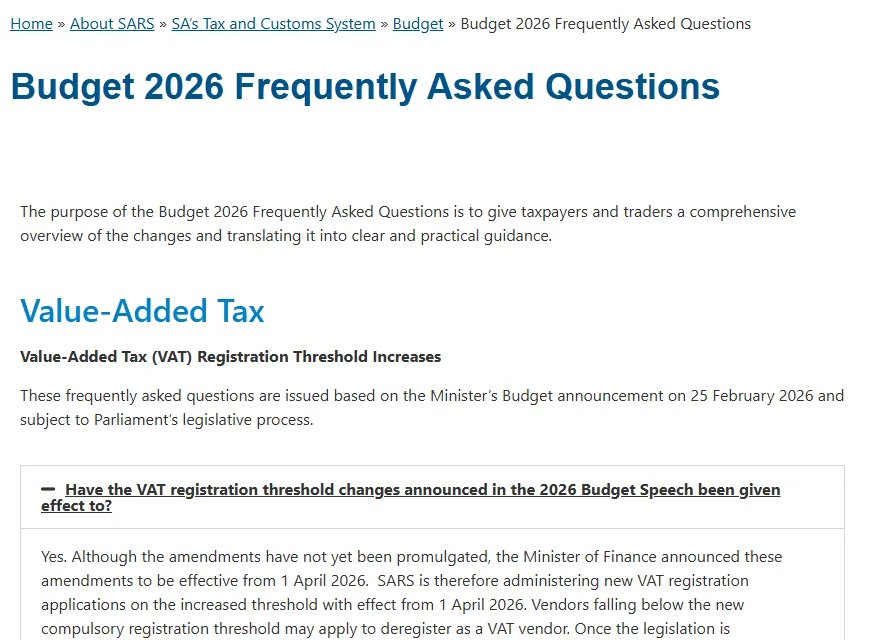
One caveat from that SARS page: the threshold change was announced in the Budget and is being administered, but the amending legislation hadn't been promulgated when we checked. If you're close to R2.3 million, speak to a tax practitioner. For the general picture, our guide to dropshipping taxes, VAT and duties explains how the pieces fit.
Best dropshipping suppliers in South Africa (checked October 2026)
We visited every supplier from the earlier version of this list. Several had closed, never offered dropshipping, or were store builders rather than suppliers, so they're gone. Here's what's left of the local dropshipping suppliers in South Africa, plus the global suppliers South African sellers actually use.
| Supplier | Ships from | Best for | Works with | Watch out for |
|---|---|---|---|---|
| GadgetGyz | Bellville, Cape Town | Electronics, networking, backup power | Any store (manual orders, API or product feed) | Ships in GadgetGyz packaging, not blind |
| ZA Dropshipping | Local SA stock | General merchandise | Shopify app | Thin public reviews, no published fees |
| AliExpress (via AliDrop) | Mostly China (check each listing) | Widest range, testing products | Shopify | Longer delivery, customs charges on arrival |
| CJdropshipping | China (no SA warehouse found) | Low product cost, sourcing requests | Shopify, WooCommerce and others | Transit times vary by shipping line |
| Printful | Overseas print centres | Print-on-demand apparel and gifts | Shopify, WooCommerce and others | Buyer may pay import fees on delivery |
1. GadgetGyz: local electronics dropshipping
GadgetGyz is a Cape Town electronics retailer (Bellville) with a proper dropship programme. You apply for free, get trade pricing once approved, and GadgetGyz couriers each order to your customer anywhere in South Africa from its own stock. Categories include computer peripherals, networking and Wi-Fi, audio, smart home, gaming and backup power, which is a strong niche given load-shedding demand for power stations and UPS units.

How orders flow: you place one test order through normal checkout, then forward each customer order either by hand or automatically through its order-relay API, and you can pull a private CSV or XML feed to keep prices current. The honest limitation is packaging. GadgetGyz says orders ship in standard GadgetGyz boxes and it doesn't offer fully unbranded shipping, so tell your customers who'll deliver their parcel.
2. ZA Dropshipping: a Shopify app with local stock
ZA Dropshipping sells itself as a South African supplier with thousands of locally stocked products. Its Shopify app (free to install, launched on the Shopify App Store in June 2024) syncs orders to its system. You pay for each order through its payment gateway, and it ships with tracking. The listing mentions home and garden, health and beauty, electronics, baby products, furniture and hardware.

Be careful with this one. The app had a single public review when we checked, the site doesn't publish product prices or fees before sign-up, and much of the site imagery dates from 2021 to 2023. Order samples, test delivery times to Johannesburg, Cape Town and Durban, and ask for the price list in writing before you build a store around it.
3. AliExpress, connected through AliDrop
AliExpress ships to South Africa and has the widest catalogue of any option here. It's the practical way to test ten products cheaply before you commit to a local supplier. The trade-offs are longer delivery and import charges at the door (covered below). AliExpress dropshipping with AliDrop lets you import products to Shopify in one click and send orders to suppliers automatically, so you're not copying addresses by hand. Before you add a supplier, check its South Africa delivery estimate on the product page.
4. CJdropshipping
CJdropshipping is a China-based supplier and fulfilment network with low product costs and a sourcing service for items you can't find elsewhere. We found no South African warehouse, so orders travel from China and transit time depends on the line you choose in CJ's shipping calculator. Our CJdropshipping vs AliDrop comparison shows where each one fits.
5. Printful for print-on-demand
Printful prints and ships custom T-shirts, hoodies, mugs and posters with no stock on your side. South Africa isn't on its list of restricted destinations, so you can sell to local buyers, but parcels come from Printful's overseas centres. That means longer delivery and possible import fees for your customer, so price local designs with that in mind.
Other dropshipping suppliers in South Africa worth knowing
- Temu. Some South African sellers source from Temu. Our Temu dropshipping in South Africa guide covers how it works and the risks.
- US and EU suppliers. Fast within their own regions, but most of their shipping profiles target the US, UK and EU. Only use them for South African buyers if the supplier quotes a South Africa rate you can live with.
- Parcelninja. Not a supplier, but a South African fulfilment warehouse. When a product proves itself, moving a small batch of stock there (packed in your own branding) is the usual next step up from pure dropshipping.
Suppliers we removed and why
Dropstore's site now shows "Store unavailable". Planet54's domain didn't load. Mantality, Mintys Wholesalers, Cosmetic SA and Faithful to Nature are retailers or wholesalers with no dropship programme on their sites. Shopstar is a South African store builder, not a supplier. Zendrop focuses on US and EU fulfilment. If one of the retailers will agree to dropship for you, get the terms in writing; otherwise treat them as places to buy stock, not dropship partners.
Customs and VAT on parcels shipped from overseas
This is where most dropshipping in South Africa goes wrong. When your customer buys from your store and the parcel ships from China or the US, the parcel is imported into South Africa in your customer's name, and SARS charges customs duty and 15% import VAT on it.
- Low-value parcels under R500 used to pay only a flat customs charge. Since 1 September 2024 they also attract VAT, as VATcalc reported when SARS scrapped the exemption.
- Couriers and the Post Office usually collect these charges, often with a handling fee, before handing over the parcel. A customer who didn't expect to pay may refuse delivery, and you lose the sale and the item.
- The personal-import customs code (70707070) is meant for goods for personal use. If you buy stock to resell, you need to register as an importer with SARS. Since 20 November 2025 SARS automatically rejects further declarations once a private person's imports under that code pass R150,000 in a calendar year.
What to do about it: show "duties and VAT may be payable on delivery" on overseas product pages and at checkout, favour local stock for anything over a few hundred rand, and keep China-shipped products to light, low-value items where the extra cost doesn't kill the sale. Our sibling post on AliExpress import tax and customs duties explains how duty is worked out in other markets for comparison.
How to start dropshipping in South Africa: step by step
- Pick a niche that suits local delivery. Backup power, phone and laptop accessories, pet products, home organisation and print-on-demand designs with local humour all work with the suppliers above. Avoid bulky furniture until you have a local supplier for it.
- Choose suppliers and order samples. Order to your own address from each supplier. Time the delivery, check the packaging, and note what's printed on the box.
- Register what you need. Start as a sole proprietor or register a company on CIPC's BizPortal. Get your tax number in order with SARS, and diarise the VAT threshold.
- Build the store. Shopify is the most common choice and connects to AliDrop, Printful, CJ and ZA Dropshipping. WooCommerce suits sellers who already run WordPress. Shopstar is a South African store builder with local payment options built in. If you're on Shopify, our sibling guide to dropshipping on Shopify with AliExpress walks through the setup.
- Connect a local payment gateway. See the table below.
- Set delivery rates and times honestly. Use separate shipping profiles for local stock (days) and overseas stock (weeks), and say which is which on the product page.
- Write your policies. Returns (with the seven-day ECTA cooling-off), delivery, privacy (POPIA) and terms. Make sure each supplier's returns process matches what you promise.
- Launch and market. Start with organic Instagram, TikTok and WhatsApp Business, then test small Meta or Google ad budgets once your first orders arrive on time.
Payment gateways for South African stores
Shopify Payments isn't available in South Africa, according to Shopify's list of supported countries, so you'll connect a third-party gateway. Shopify then charges its own third-party transaction fee on top of the gateway's fee (2% on the Basic plan, less on higher plans), so check both when you compare costs.
| Gateway | What it's known for | Good fit if |
|---|---|---|
| PayFast | Cards, instant EFT and other local methods in one checkout | You want the most familiar checkout for SA shoppers |
| Yoco | Online payments plus card machines | You also sell at markets or pop-ups |
| Peach Payments | Cards and alternative methods for growing merchants | You expect higher volumes and want negotiated rates |
| Ozow | Instant EFT straight from the buyer's bank | Many of your buyers don't use credit cards |
| Paystack | Cards and local payment methods, Stripe-owned | You want a simple developer-friendly setup |
Fees change often, so take each gateway's current rate from its own pricing page rather than a blog table.
Couriers and delivery
- The Courier Guy and Aramex cover door-to-door delivery across the country and are what most local suppliers use.
- Pargo runs a pick-up point network in retail stores, handy for customers who aren't home during the day or live in complexes with strict access.
- Bob Go is a shipping and order-management platform from the Bob Group that compares couriers and books parcels from one dashboard.
If your supplier ships for you, ask which courier they use and whether tracking numbers reach you the same day. Shoppers will message you, not the supplier, when a parcel goes quiet.
Can you dropship on Takealot?
Not in the usual sense. Takealot fulfils marketplace orders from its own distribution centres. Sellers either keep stock in a Takealot DC or use Leadtime, where you hold the stock and deliver to a Takealot DC within a short window after an order. Either way, goods go to Takealot first, not straight from your supplier to the buyer. Takealot can still work if a local supplier delivers to the DC for you, but that's closer to wholesale. Amazon.co.za and Bob Shop are other local marketplaces; read each one's seller rules before listing dropshipped goods.
A worked example in rand
Say you sell a portable power bank for R599 on Shopify, sourced from a local supplier at R350 trade price with R99 delivery to your customer.
- Gateway fee at roughly 3%: about R18
- Shopify third-party transaction fee on Basic (2%): about R12
- Supplier and delivery: R449
- Left over: about R120 per order, before ads and returns
That's 20% before marketing. If you spend R60 on ads to win each sale, you keep R60. It's a thin but real margin, and it's why choosing products with a higher price point matters more in South Africa than in markets with cheaper delivery.
Where AliDrop fits
AliDrop is an AliExpress dropshipping app for Shopify. For South African sellers it's most useful as the testing and sourcing layer: import products from AliExpress, Alibaba and Temu in one click, check what's trending, send orders to suppliers automatically, and then move winners to a local supplier or a small batch of local stock.
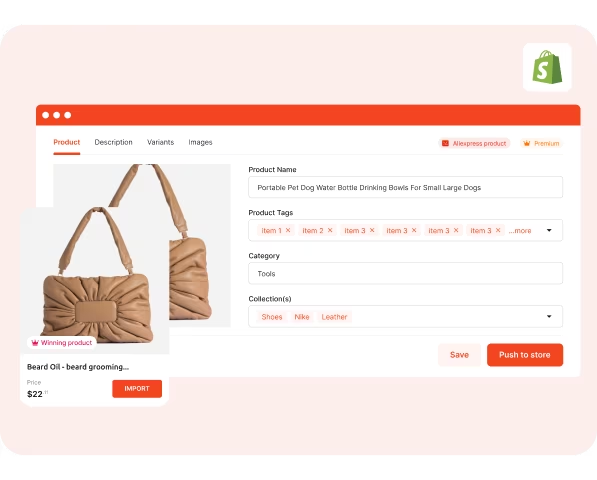
You can start a 7-day trial for $1, then plans start at $39 a month; see AliDrop pricing for every plan.
The short version
The best dropshipping suppliers in South Africa are the ones whose delivery you've timed yourself. Use local suppliers like GadgetGyz for anything bulky or pricey, use AliExpress to test cheap products, warn customers about import charges on overseas parcels, connect a local gateway, and keep an eye on the new R2.3 million VAT threshold. Dropshipping in South Africa rewards sellers who are upfront about delivery times. When you're ready to start testing products, open your AliDrop account with the $1 seven-day trial.
South Africa Dropshipping FAQs
Is dropshipping legal in South Africa?
Yes. Dropshipping is legal in South Africa as long as you follow normal retail rules. Declare your profit to SARS, register for VAT if your taxable sales pass the compulsory threshold, honour the seven-day cooling-off period for online purchases under the ECT Act, handle defective goods under the Consumer Protection Act, and protect customer data under POPIA.
Who are the best dropshipping suppliers in South Africa?
For locally stocked goods, GadgetGyz (electronics, Cape Town) runs a free-to-join dropship programme, and ZA Dropshipping offers a Shopify app with local stock, though it has few public reviews. For range and testing, most sellers add AliExpress through an app like AliDrop, CJdropshipping for low-cost sourcing, and Printful for print-on-demand products.
Do I need to register for VAT as a dropshipper in South Africa?
Only once your taxable supplies pass the compulsory threshold. SARS is administering a threshold of R2.3 million over 12 months from 1 April 2026, up from R1 million, and you can register voluntarily from R120,000. The amending law hadn't been promulgated when we checked, so confirm with SARS or a tax practitioner if you're close.
Will my customers pay customs on dropshipped parcels?
Usually, if the parcel ships from overseas. SARS charges customs duty and 15% import VAT on imported goods, and since September 2024 low-value parcels under R500 also attract VAT. Couriers normally collect these charges before delivery. Warn buyers at checkout, or use local suppliers for higher-value products to avoid refused deliveries.
Which payment gateway should I use for dropshipping in South Africa?
Shopify Payments isn't available in South Africa, so you'll use a local gateway. PayFast is the most familiar checkout for local shoppers, Yoco suits sellers who also trade in person, Ozow is strong for instant EFT, and Peach Payments and Paystack suit growing stores. Compare each gateway's current fees plus Shopify's third-party transaction fee.
Can I dropship on Takealot?
Not directly. Takealot ships marketplace orders from its own distribution centres, so sellers keep stock in a Takealot warehouse or use Leadtime, delivering stock to a Takealot DC shortly after each order. Your supplier can't ship straight to the buyer. It can still work if a local supplier delivers to the DC for you, but that's closer to wholesale.
How much money do I need to start dropshipping in South Africa?
You can start with a few thousand rand. Budget for your store platform subscription, a domain, product samples from each supplier, and a small test ad budget. Registering a private company with CIPC costs about R125 plus R50 for a name reservation, but you can also start as a sole proprietor and register later.

I’m a content writer and strategist specializing in eCommerce, dropshipping, and B2B SaaS business. I create practical, easy-to-follow content that helps entrepreneurs start, grow, and scale their online stores. From product research and marketing strategies to automation tools and side hustles, my goal is to simplify complex topics into actionable insights.