

You need a reliable way to source products for your store without wasting hours vetting suppliers or dealing with long shipping times. The wrong choice can mean frustrated customers, returns piling up, and profit margins that shrink faster than you expected. Choosing between supplier directories and automation platforms means understanding what each type of tool actually does for your business. This SaleHoo vs Alidrop comparison breaks down the features, pricing structures, integrations, and real-world performance of both platforms so you can pick the right sourcing solution for your needs.
What Is SaleHoo?
.webp)
SaleHoo is a wholesale and dropshipping directory founded in Christchurch, New Zealand. The platform provides access to over 8,000 verified suppliers and more than 2.5 million products across multiple categories. You pay a subscription fee to access the directory, where you can search for suppliers by product type or category.
The directory works differently than most people expect. You search for products to find suppliers who carry those items, not the other way around. Each supplier profile includes contact information, payment methods accepted, minimum order requirements, shipping details, and years in business. Many suppliers include product catalogs you can browse directly through the platform.
SaleHoo vets suppliers before adding them to the directory. This screening process filters out potential scams and unreliable vendors. The platform also includes Market Research Labs, where you can view sell rates, average prices, and competition levels for products listed on online marketplaces. You'll also find Product Trends, which highlights trending items based on marketplace data.
The platform includes educational resources and guides on topics like supplier communication, product sourcing strategies, and how to build relationships with wholesalers. There's also a community forum where members share experiences and advice. Customer support is available through live chat, phone, and email during business hours.
What Is Alidrop?
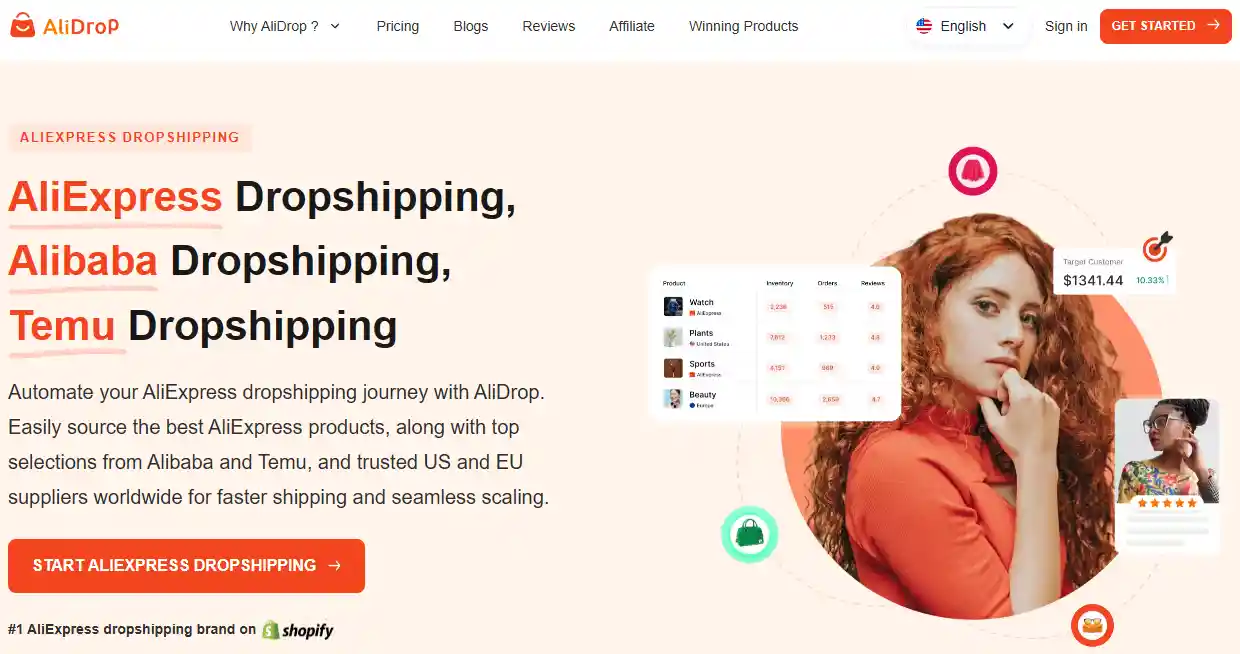
Alidrop is an automation platform designed for dropshippers who want to streamline product imports and order fulfillment. The tool connects your store to multiple supplier networks, including the Alidrop marketplace, which features curated products with faster shipping options.
You can source products from AliExpress dropshipping suppliers, Alibaba suppliers, Temu suppliers, and the best US and EU suppliers through a single dashboard. The platform automates product imports, inventory updates, and order processing, which saves time compared to manual workflows.
Alidrop includes an AI Shopify store builder that helps you set up a store quickly without coding. The AI product description writer generates titles and descriptions that are optimized for search engines and conversions. Custom branding options allow you to add your logo and packaging to products.
The platform integrates with Shopify, Amazon, eBay, and other major e-commerce platforms. Orders placed in your store automatically forward to suppliers, who then handle fulfillment and shipping. You get access to product analytics that show profit margins, sell rates, and competition levels. Customer support is available around the clock through chat and email.
Pros and Cons of SaleHoo
Here are the pros of using SaleHoo:
Advantages of Using SaleHoo
- Pre-vetted supplier network: Every supplier in the directory goes through a verification process that checks business legitimacy, Better Business Bureau ratings, and product quality standards. You skip the risk of working with scam operations or unreliable vendors.
- Product research tools: Market Research Labs provides data on more than 40,000 products, including sell rates, average pricing, and competition levels. Product Trends highlights items gaining traction before they become saturated markets.
- Educational resources: The platform includes guides on supplier communication, pricing negotiations, and product sourcing strategies. Templates help you draft professional emails when contacting suppliers for the first time.
- Community support: The member forum connects you with other store owners who share supplier recommendations, niche ideas, and lessons from their own experiences.
- One-time payment option: The lifetime access plan means you pay once and keep directory access without recurring monthly charges.
Disadvantages of Using SaleHoo
Now here are the cons of using SaleHoo:
- Manual order processing: You need to handle order fulfillment yourself. There's no automation for inventory syncing, price updates, or order forwarding to suppliers.
- No platform integrations: The directory doesn't connect directly to Shopify, WooCommerce, or other store platforms. You'll manually upload product details, images, and pricing to your store.
- Inconsistent supplier quality: While suppliers are vetted, some offer discounted retail pricing rather than true wholesale rates. You need to compare multiple suppliers to find competitive pricing.
- Limited niche coverage: Certain product categories have fewer supplier options than others. Fitness supplements and specialized niches may only have one or two suppliers listed.
- Catalog accuracy issues: Some products appear in directory searches but aren't available in the supplier's actual catalog. You need to verify product availability directly with suppliers.
Pros and Cons of Alidrop
Here are the pros of using Alidrop:
Advantages of Using Alidrop
- Automation features: Product imports, inventory updates, and order processing happen automatically. You don't need to manually check stock levels or forward orders to suppliers.
- Multiple supplier networks: You can source from Asian suppliers, North American vendors, and European wholesalers through one dashboard. This gives you flexibility for shipping times and product variety.
- AI-powered tools: The store builder and product description generator reduce setup time. You can launch a store with optimized listings faster than building everything from scratch.
- Platform integrations: Direct connections to Shopify, Amazon, and eBay mean you can manage multiple sales channels from the same tool.
- Custom branding options: You can add your logo and custom packaging to products, which helps build brand recognition and repeat customers.
Disadvantages of Using Alidrop
Now here are the cons of using Alidrop:
- Learning curve for automation: New users need time to set up automation rules, configure product imports, and connect supplier networks properly.
- Dependency on integrations: If a platform integration breaks or changes, your automated workflow stops until the connection is fixed.
SaleHoo vs Alidrop: Features
The SaleHoo vs Alidrop features comparison reveals two different approaches to product sourcing.
SaleHoo provides a searchable directory with supplier profiles, contact details, and product catalogs. You can filter searches by location, minimum order quantity, shipping options, and years in business. Market Research Labs shows product performance data from online marketplaces. Product Trends highlights items gaining momentum. Email templates help you draft supplier outreach messages.
Alidrop automates the entire workflow from product research to order fulfillment. You can import products with one click, and the platform syncs inventory and pricing automatically. The AI store builder creates product pages with optimized descriptions. Custom branding lets you add logos and packaging. Product analytics show profit margins and competition levels in real time.
SaleHoo focuses on connecting you with suppliers and providing data to make sourcing decisions. Alidrop eliminates manual tasks by handling imports, updates, and order processing automatically. SaleHoo works best when you want full control over supplier selection and relationship building. Alidrop suits store owners who prioritize speed and automation over hands-on supplier management.
SaleHoo vs Alidrop: Integrations
The Alidrop vs SaleHoo comparison shows a major difference in how each platform connects to your store.
SaleHoo operates as a standalone directory with no direct e-commerce integrations. You log into the platform to search for suppliers and products, then manually add listings to your Shopify, WooCommerce, or other store. Product details, images, and pricing need to be entered by hand or through CSV uploads. Inventory levels require manual monitoring and updates.
Alidrop integrates directly with Shopify, Amazon, eBay, and AliExpress. Products import to your store with descriptions, images, and pricing already formatted. Inventory syncs automatically, so sold-out items are removed from your listings. Orders placed in your store forward to suppliers without manual intervention. Price changes from suppliers update in your store catalog automatically.
If you prefer control over every listing and don't mind manual work, SaleHoo's approach gives you flexibility. If you want to automate repetitive tasks and scale faster, Alidrop's integrations save hours each week. The right choice depends on whether you value hands-on control or automated efficiency more.
SaleHoo vs Alidrop: Dropshipping Products and Niches
Both platforms offer access to products across multiple categories, but the sourcing methods differ.
SaleHoo's directory includes electronics, home goods, fashion, beauty products, pet supplies, and sporting equipment. You'll find suppliers for gaming accessories, kitchen appliances, fitness gear, and health supplements. Some niches have dozens of suppliers to choose from, while specialized categories may only list one or two vendors.
Product availability varies by supplier. You need to verify that items shown in directory searches are actually in stock and available for the minimum order quantities you need. The platform doesn't track inventory in real time, so you'll contact suppliers directly to confirm product details.
Alidrop provides access to trending products through its marketplace, along with items from Asian, North American, and European supplier networks. Categories include electronics, fashion, home decor, beauty products, and seasonal items. The marketplace highlights winning products based on recent sales data and competition analysis.
Products import with current pricing and inventory status. The platform tracks stock levels automatically and removes sold-out items from your store. You can browse by niche, profit margin, or shipping time. For specific product categories like groceries, you can check out top grocery dropshipping suppliers through the platform's guides. You can also find reliable Indian dropshipping suppliers here if you're sourcing from that region.
SaleHoo offers more supplier variety for researching wholesale options across broad markets. Alidrop provides curated winning products with faster automation for quick store setup. Your niche focus and sourcing strategy determine which approach fits better.
SaleHoo vs Alidrop: Pricing
The SaleHoo vs Alidrop pricing structures reflect their different business models.
SaleHoo offers two directory access plans. The annual plan costs $67 and renews each year. The lifetime plan costs $127 as a one-time payment with no recurring fees. Both plans include full directory access, Market Research Labs, and educational resources. There's also a seven-day trial for one dollar if you want to test the directory before committing.
Dropshipping automation through SaleHoo costs $27 per month for the basic plan, which includes one sub-user account and automation for one store with 500 product imports from AliExpress. The premium plan costs $97 per month, includes three sub-user accounts, automates three stores, and allows unlimited product imports.
Alidrop uses a subscription model with four tiers. After a seven-day free trial, monthly plans range from $1 to $299 per month depending on product limits and features. The Starter plan at $1 per month includes 50 unique products after the trial period, then increases to $39 per month. The Professional plan starts at $1 per month during trial, then $59 per month for 500 products. The Empire plan costs $99 per month for 5,000 products and includes VIP chat support. The Unicorn plan costs $299 per month for 25,000 products with full automation features.
Yearly billing on Alidrop provides discounts ranging from five to eight months off the monthly rate. The Professional yearly plan costs $24 per month, Empire costs $57 per month, and Unicorn costs $79 per month when billed annually.
SaleHoo's one-time directory payment works best for store owners who plan to use the platform long-term and don't need automation. Alidrop's monthly pricing suits businesses that want to scale product volume gradually without large upfront costs.
SaleHoo vs Alidrop: Shipping, Returns, and Refunds
Shipping policies and return handling differ between supplier directories and automation platforms.
SaleHoo connects you directly with suppliers who set their own shipping terms. Each supplier profile lists shipping methods, delivery times, and geographic coverage. You'll find suppliers who offer worldwide shipping, others limited to specific regions, and some with expedited options. Shipping costs depend on the supplier's rates and your negotiation skills.
Return policies vary by supplier. Some accept returns for defective products, others offer exchanges only, and a few have no-return policies. You need to clarify these terms when establishing supplier relationships. The directory shows which suppliers accept returns, but you'll handle customer service and return coordination yourself.
Alidrop works with suppliers who fulfill orders through established shipping networks. Products from US and EU suppliers typically ship within three to seven business days. Asian suppliers generally take longer, ranging from 10 to 30 days depending on the shipping method selected. The platform shows estimated delivery times for each product before you import it.
Return handling depends on the supplier network and product type. Some suppliers accept returns for defective items within a specific timeframe. Others process refunds without requiring product returns. You coordinate returns through the Alidrop dashboard, which forwards requests to the appropriate supplier. The platform doesn't handle returns directly but facilitates communication between you and suppliers.
SaleHoo gives you direct control over shipping negotiations and return policies with each supplier. Alidrop provides estimated shipping times and standardized return processes through its supplier networks. Your preference for hands-on control versus streamlined processes determines which approach fits your customer service strategy.
SaleHoo vs Alidrop: UI and Ease of Use
The user experience differs significantly between these two platforms.
SaleHoo uses a straightforward directory interface. You search for products or browse categories, then apply filters for location, minimum order quantity, or shipping options. Supplier profiles display contact information, product catalogs, and business details in a clean layout. The dashboard shows saved searches, bookmarked products, and forum activity. Navigation is simple, and most features are accessible within a few clicks.
The learning curve is minimal for basic directory searches. New users can find suppliers and browse catalogs within minutes of signing up. The platform provides templates and guides for supplier outreach, which helps beginners draft professional emails. Market Research Labs requires more time to understand, as interpreting sell rates and competition data takes practice.
Alidrop offers a dashboard-focused interface with multiple tabs for product imports, order management, and analytics. The AI store builder walks you through setup with prompts and templates. Product imports happen through a point-and-click interface where you select items to add to your store. The analytics section displays graphs and metrics for tracking performance.
Initial setup takes longer than SaleHoo because you need to connect your store, configure automation rules, and set up supplier networks. Once configured, daily operations require less manual work. The interface prioritizes automation controls over simple directory searches, which means more buttons and settings to navigate.
SaleHoo suits users who want quick access to supplier information without complex setup processes. Alidrop works better for store owners comfortable with automation tools and willing to invest time upfront for long-term efficiency gains.
SaleHoo vs Alidrop: The Verdict?
The Alidrop vs SaleHoo review shows two tools designed for different stages and strategies in e-commerce.
Choose SaleHoo when you want direct relationships with verified suppliers, prefer to negotiate pricing and terms yourself, or need access to a broad range of wholesale vendors across multiple niches. The platform works best for store owners who don't mind manual product uploads and order processing. The one-time payment option makes sense for long-term users who plan to source products regularly without recurring costs.
Choose Alidrop when you prioritize automation over hands-on supplier management, need to import and launch products quickly, or want integrated connections to multiple sales channels. The platform suits store owners who value time savings and are comfortable with subscription pricing that scales with product volume. Custom branding and AI-powered tools help you differentiate your store without hiring designers or copywriters.
You might use both platforms together. Research suppliers through SaleHoo's directory for wholesale relationships, then use Alidrop for automated dropshipping products that fill gaps in your catalog. This hybrid approach gives you control over key supplier relationships while maintaining speed and automation for trending products.
Your business model determines the better fit. Manual control and wholesale relationships favor SaleHoo. Automation and rapid scaling favor Alidrop. Neither platform replaces the need for product research, competitive pricing analysis, or customer service quality.
Conclusion
Choosing between these platforms means understanding what stage your business is in and what you value most. Supplier directories give you research tools and verified contacts, while automation platforms handle repetitive tasks and speed up scaling. Some store owners benefit from using both approaches at different times or for different product categories. The right sourcing strategy depends on your available time, technical comfort level, and long-term business goals. Test both platforms during their trial periods to see which workflow fits your daily operations better.
SaleHoo vs Alidrop Review FAQs
Can I use both SaleHoo and Alidrop together for my store?
You can run both platforms simultaneously without conflicts. SaleHoo works well for researching wholesale suppliers and building direct relationships, while Alidrop handles automated dropshipping for trending products. Many store owners use directories like SaleHoo for core product lines where they negotiate pricing, then add Alidrop automation for seasonal items or testing new niches. The tools serve different purposes in your sourcing workflow and don't overlap functionally.
Which platform offers faster shipping times for customers?
Alidrop typically provides faster delivery through its US and EU supplier networks, with most orders shipping within three to seven business days. SaleHoo connects you with various suppliers who set their own shipping terms, so delivery times vary widely depending on which vendors you choose to work with. If fast shipping is your priority, focus on SaleHoo suppliers based in your target market or use Alidrop's North American and European supplier options.
Do these platforms handle customer returns and refunds?
Neither platform processes returns directly. SaleHoo connects you with suppliers who each have their own return policies, which you need to negotiate and manage yourself. Alidrop forwards return requests to suppliers through its dashboard, but you still coordinate the process and communicate policies to your customers. Both approaches require you to handle customer service and return logistics as the store owner.
Which tool is better for beginners with no e-commerce experience?
Alidrop offers a more beginner-friendly start with its AI store builder, automated product imports, and guided setup process. The platform handles technical tasks like inventory syncing and order forwarding automatically. SaleHoo requires more manual work and supplier communication skills, but the educational resources and email templates help beginners learn proper sourcing practices. If you want to launch quickly, start with Alidrop. If you prefer learning supplier relationships from the ground up, start with SaleHoo.
Can I test products from both platforms before committing to a paid plan?
Both platforms offer trial periods where you can test features before paying full price. SaleHoo provides a seven-day trial for one dollar, giving you directory access to research suppliers and browse Market Research Labs. Alidrop offers a seven-day free trial where you can import products, test automation features, and connect your store. Use these trial periods to verify that supplier availability, product variety, and platform features match your specific niche needs.
How do pricing structures compare for long-term users?
SaleHoo's lifetime directory access at $127 becomes more cost-efficient than monthly subscriptions after the first year of use. Alidrop's monthly pricing makes sense if you need automation features and plan to scale product volume gradually. For store owners who source products continuously over multiple years, SaleHoo's one-time payment provides better long-term value. For businesses that need automation right away and may adjust subscription tiers as they grow, Alidrop's flexible monthly plans offer more control over costs.


%201.svg)